Descrizione del prodotto
HangZhou STAR MACHINE TECHNOLOGY CO.,LTD. è un produttore professionale con 20 anni di esperienza nella produzione di catene per motociclette. Disponiamo di un team tecnico all'avanguardia, attrezzature di lavorazione e collaudo di ultima generazione e un team di assistenza clienti a livello mondiale. I nostri prodotti sono venduti principalmente in Russia, Uzbekistan, Malesia, Germania, Egitto, Brasile, Cina continentale e Zhejiang. Qualità affidabile e prezzi competitivi: non vediamo l'ora di collaborare con voi! Non esitate a contattarci in qualsiasi momento per qualsiasi esigenza o domanda. Vi forniremo prodotti di alta qualità a prezzi vantaggiosi, oltre a consulenza e supporto tecnico.
INFORMAZIONI DI BASE
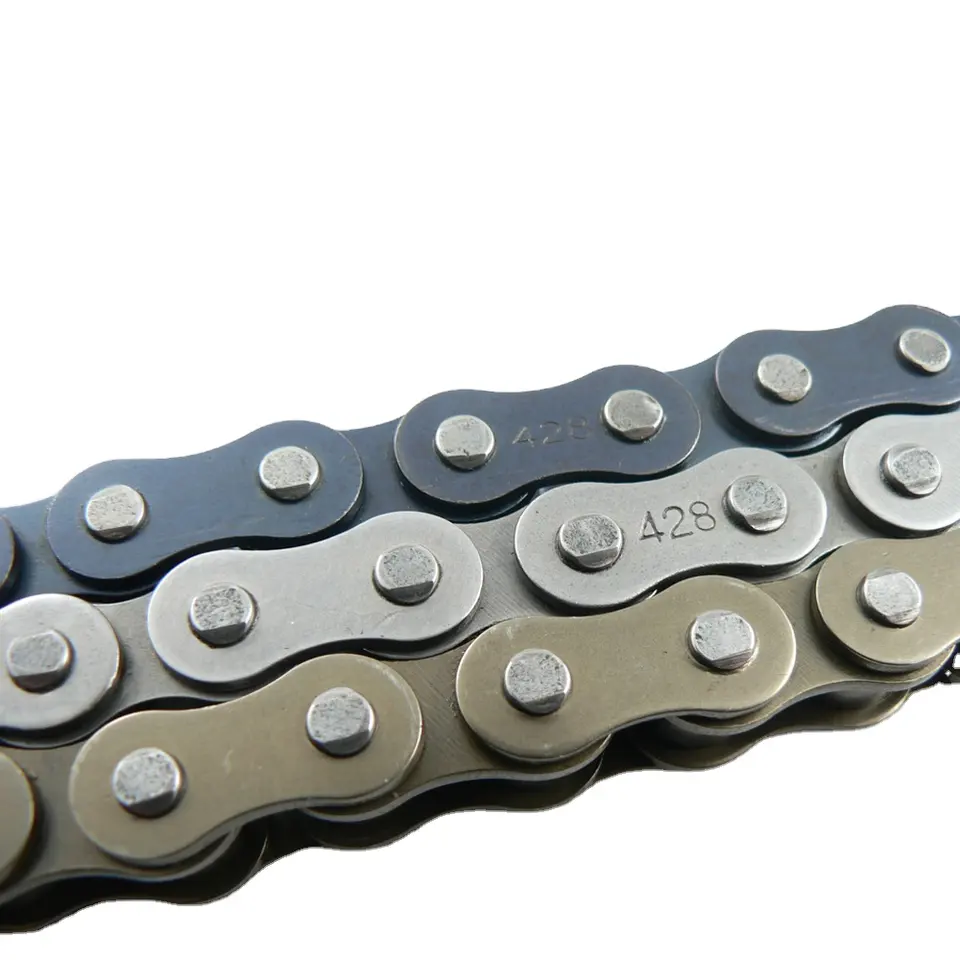
La catena a rulli SMCC è uno dei prodotti più diffusi e apprezzati sul mercato. Il suo continuo sviluppo innovativo la rende adatta a molteplici applicazioni, tra cui catene a rulli standard, catene di trasmissione per motociclette, catene per motociclette con O-ring, catene a rulli ad alta resistenza, catene per nastri trasportatori, catene di trasmissione agricole, catene zincate, catene nichelate, catene autolubrificanti e catene per l'industria petrolifera, ecc.
| ISO Numero di catena |
Numero di catena | Pitch P mm |
Diametro del rullo d1max mm |
Larghezza tra le piastre interne b1min mm |
Diametro del perno d2max mm |
Lunghezza del perno | spessore della piastra interna h2max |
Spessore della piastra t/Tmax |
Resistenza alla trazione Qmin |
resistenza alla trazione media Q0 |
Peso al metro Q |
|
| Lmax | Lcmax | |||||||||||
| mm | mm | mm | mm | kN/lbf | kN | kg/m | ||||||
| – | 9.525 | 6 | 9.5 | 4.5 | 18.6 | 20 | 9.3 | 1.85/1.50 | 11.80/2653 | 13.6 | 0.61 | |
| 420 | 420 | 12.7 | 7.77 | 6.25 | 3.96 | 14.7 | 16.1 | 12 | 1.5 | 16.00/3597 | 17.6 | 0.55 |
| – | 420F3 | 12.7 | 7.77 | 6.4 | 3.97 | 15 | 16.6 | 11.8 | 1.60/1.45 | 16.00/3597 | 17.6 | 0.64 |
| – | 420HF1 | 12.7 | 7.77 | 6.25 | 3.96 | 17 | 18.4 | 12 | 2.03 | 16.00/3597 | 17.6 | 0.76 |
| – | 420HT | 12.7 | 7.77 | 6.25 | 3.96 | 17 | – | 12 | 2.03 | 21.40/4811 | 23.5 | 0.76 |
| 428 | 428 | 12.7 | 8.51 | 7.75 | 4.45 | 16.7 | 18.2 | 11.8 | 1.6 | 17.80/4002 | 19.6 | 0.7 |
| – | 428F1 | 12.7 | 8.51 | 7.94 | 4.5 | 16.7 | 18.05 | 11.8 | 1.6 | 17.15/3855 | 19.4 | 0.71 |
| – | 428DS | 12.7 | 8.51 | 7.94 | 4.45 | 17.9 | 19.3 | 12 | 1.85 | 18.62/4186 | 21 | 0.76 |
| 428MH | 428H | 12.7 | 8.51 | 7.85 | 4.45 | 18.8 | 19.9 | 11.8 | 2.03 | 20.60/4631 | 23.4 | 0.79 |
| – | 428HF1 | 12.7 | 8.51 | 7.85 | 4.45 | 17.9 | 19 | 11.8 | 1.8 | 19.50/4384 | 20.7 | 0.74 |
| – | 428HSH | 12.7 | 8.51 | 7.75 | 4.45 | 20 | – | 12 | 2.42 | 27.00/6070 | 29.4 | 0.89 |
| – | 428HF4 | 12.7 | 8.51 | 7.94 | 4.5 | 18.9 | 20.1 | 11.8 | 2.03 | 20.50/4609 | 23.4 | 0.82 |
| – | 428HD | 12.7 | 8.51 | 7.85 | 4.45 | 18.8 | 19.9 | 11.8 | 2.03 | 20.60/4631 | 23.4 | 0.85 |
| – | 428F3 | 12.7 | 8.51 | 7.85 | 4.45 | 16.7 | 18.2 | 11.7 | 1.6 | 17.80/4002 | 19.6 | 0.77 |
| – | 428F4 | 12.7 | 8.51 | 7.85 | 4.45 | 16.7 | 18.2 | 11.8 | 1.6 | 17.80/4002 | 19.6 | 0.72 |
| 520 | 520 | 15.875 | 10.16 | 6.25 | 5.08 | 17.5 | 19 | 15.09 | 2.03 | 26.50/5957 | 29.7 | 0.89 |
| – | 520F2 | 15.875 | 10.16 | 6.35 | 5.24 | 17.5 | 19.05 | 15.09 | 2.03 | 26.50/5957 | 29.7 | 0.97 |
| – | 520F3 | 15.875 | 10.16 | 6.48 | 5.08 | 17.5 | 19 | 15.09 | 2.03 | 26.50/5957 | 29.7 | 0.89 |
| 520MH | 520MH | 15.875 | 10.22 | 6.25 | 5.25 | 19 | 21.2 | 15.3 | 2.2 | 30.50/6857 | 33.6 | – |
| – | 520HD | 15.875 | 10.16 | 6.35 | 5.34 | 18.6 | 20 | 15.09 | 2.2 | 35.00/7868 | 38.5 | 1.04 |
| 525 | 525 | 15.875 | 10.16 | 7.95 | 5.08 | 19.3 | 20.7 | 15.09 | 2.03 | 26.50/5957 | 29.7 | 1.06 |
| 525MH | 525MH | 15.875 | 10.22 | 7.85 | 5.25 | 21.2 | 23.2 | 15.3 | 2.2 | 30.50/6857 | 33.6 | – |
| – | 525HF1 | 15.875 | 10.16 | 7.95 | 5.08 | 20.9 | 22.3 | 15.09 | 2.42 | 26.50/5957 | 29.7 | 1.2 |
| 530 | 530 | 15.875 | 10.16 | 9.4 | 5.08 | 20.7 | 22.2 | 15.09 | 2.03 | 26.50/5957 | 29.7 | 1.06 |
| – | 530SH | 15.875 | 10.16 | 9.4 | 5.08 | 22.1 | – | 15.09 | 2.42 | 32.80/7374 | 33.5 | 1.24 |
| – | 520F12 | 15.875 | 10.16 | 6.25 | 5.25 | 17.6 | – | 15 | 2.03 | 29.43/6615 | 32.3 | 0.98 |
| – | 520HF7 | 15.875 | 10.22 | 7.8 | 5.3 | 21.35 | – | 15.3 | 2.8/2.42 | 40.00/8992 | 44 | 1.43 |
| 630 | 630 | 19.05 | 11.91 | 9.4 | 5.94 | 23 | 24.8 | 18 | 2.42 | 35.30/7936 | 38.8 | – |
|
Numero di catena |
Pece
P |
Diametro del rullo
d1 max |
Larghezza tra piastre interne b1 min |
Diametro del perno
d2 max |
Lunghezza del perno | Piastra interna profondità h2 max |
Spessore della piastra
T |
Resistenza alla trazione
Q |
Tensione media forza Q0 |
Peso per contatore q kg/m |
|
| Lmax mm |
Lcmax mm |
||||||||||
| 420 OPPURE | 12.700 | 7.77 | 6.25 | 3.96 | 16.65 | 17.95 | 12.00 | 1.50 | 16.0/3599 | 17.00 | 0.62 |
| 420H OPPURE | 12.700 | 7.77 | 6.25 | 3.96 | 18.80 | 20.10 | 12.00 | 2.03 | 16.0/3599 | 17.00 | 0.74 |
| 428HVS | 12.700 | 8.51 | 7.94 | 4.45 | 21.70 | 22.70 | 12.30 | 2.03 | 22.0/4946 | 23.00 | 0.85 |
| 50LD | 15.875 | 10.16 | 9.53 | 5.08 | 23.40 | 24.60 | 15.09 | 2.03 | 22.2/5045 | 26.50 | 1.12 |
| 520 OR | 15.875 | 10.16 | 6.70 | 5.30 | 21.20 | 22.30 | 15.09 | 2.20 | 32.0/7200 | 34.00 | 1.11 |
| 520F1 OPPURE | 15.875 | 10.16 | 6.25 | 5.30 | 21.20 | 22.30 | 15.09 | 2.20 | 32.0/7200 | 34.00 | 1.09 |
| 520F2 OPPURE | 15.875 | 10.16 | 9.65 | 5.30 | 24.10 | 25.50 | 15.09 | 2.20 | 32.0/7200 | 34.00 | 1.21 |
| 520V6 | 15.875 | 10.16 | 6.25 | 5.08 | 19.80 | 21.30 | 15.09 | 2.03 | 22.2/5045 | 26.50 | 0.96 |
| 520H OPPURE | 15.875 | 10.16 | 6.25 | 5.24 | 21.52 | 22.92 | 15.09 | 2.42 | 26.5/6571 | 29.60 | 1.26 |
| 525 OR | 15.875 | 10.16 | 7.95 | 5.30 | 21.50 | 22.90 | 15.09 | 2.03 | 26.5/6571 | 29.60 | 1.30 |
| 525F1 OPPURE | 15.875 | 10.16 | 7.95 | 5.30 | 23.10 | 24.00 | 15.09 | 2.20 | 32.0/7200 | 34.00 | 1.16 |
| 520F14 OPPURE | 15.875 | 10.20 | 6.25 | 5.09 | 19.90 | – | 14.90 | 1.80 | 28.4/6391 | 30.60 | 0.92 |
| 525H OPPURE | 15.875 | 10.16 | 7.95 | 5.30 | 23.10 | 24.50 | 15.09 | 2.42 | 26.5/6571 | 29.60 | 1.44 |
| 530H OPPURE | 15.875 | 10.16 | 9.53 | 5.24 | 24.80 | 26.20 | 15.09 | 2.42 | 29.0/6524 | 30.00 | 1.39 |
| 630F1 OPPURE | 19.050 | 11.91 | 9.53 | 5.94 | 25.50 | 27.30 | 18.00 | 2.42 | 31.8/7149 | 35.00 | 1.50 |
| ISO Numero di catena |
Numero di catena |
Pece
P |
diametro della boccola
d1 max |
Larghezza tra piastre interne b1 min mm |
Diametro del perno
d2 max |
Lunghezza del perno
L |
Piastra interna profondità h2 max mm |
Spessore della piastra
t/T max |
Resistenza alla trazione
Q |
Tensione media forza Q0 kN |
Peso per contatore q kg/m |
| – | 25 | 6.350 | 3.30 | 3.18 | 2.31 | 7.90 | 6.00 | 0.80 | 3.5/795 | 4.6 | 0.15 |
| 25 ore | 25 ore | 6.350 | 3.30 | 3.18 | 2.31 | 8.90 | 6.00 | 1.04 | 4.8/1091 | 5.5 | 0.17 |
| – | 25H(E) | 6.350 | 3.30 | 3.18 | 2.31 | 8.90 | 6.00 | 1.04 | 5.8/1304 | 6.4 | 0.18 |
| – | 25HF2 | 6.350 | 3.30 | 3.18 | 2.31 | 9.10 | 5.80 | 1.2/1.10 | 5.8/1304 | 6.4 | 0.19 |
| – | 25SHF1 | 6.350 | 3.30 | 3.18 | 2.01 | 8.95 | 5.90 | 1.04 | 4.8/1091 | 5.5 | 0.19 |
| 219H | 219H | 7.774 | 4.59 | 5.00 | 3.01 | 11.90 | 7.40 | 1.2/1.04 | 7.3/1641 | 8.0 | 0.28 |
| – | *C219H | 7.774 | 4.59 | 5.00 | 3.01 | 11.90 | 7.40 | 1.2/1.04 | 7.3/1641 | 8.0 | 0.33 |
| – | 219HT | 7.774 | 4.59 | 4.60 | 3.01 | 12.15 | 7.55 | 1.4/1.3 | 6.6/1483 | 7.2 | 0.33 |
| – | 219HF2 | 7.774 | 4.59 | 4.50 | 3.01 | 11.90 | 7.40 | 1.4/1.3 | 6.6/1483 | 7.2 | 0.31 |
| – | 219HF1 | 7.785 | 4.60 | 4.50 | 3.28 | 13.00 | 7.00 | 2.0/1.40 | 9.0/2571 | 9.8 | 0.37 |
| 270H | 270H | 8.500 | 5.00 | 4.75 | 3.28 | 13.15 | 8.45 | 1.8/1.40 | 10.8/2428 | 11.9 | 0.43 |
Pacco e consegna
Le catene SMCC sono tra i prodotti più diffusi e apprezzati sul mercato. Il loro continuo sviluppo innovativo le rende adatte a molteplici applicazioni, tra cui catene a rulli standard, catene di trasmissione per motociclette, catene per motociclette con O-ring, catene a rulli ad alta resistenza, catene per nastri trasportatori, catene di trasmissione agricole, catene zincate, catene nichelate, catene autolubrificanti e catene per il settore petrolifero, ecc.
La nostra catena CHINAMFG è prodotta mediante un processo di lavorazione meccanica, dalle materie prime al prodotto finito, e dotata di un set completo di apparecchiature per il controllo qualità. Le attrezzature di lavorazione meccanica includono rettificatrici, punzonatrici ad alta velocità, fresatrici e macchine automatiche per la laminazione e l'assemblaggio ad alta velocità. Il trattamento termico viene eseguito tramite un forno a nastro trasportatore continuo, un forno di ricottura a nastro trasportatore, un sistema di controllo centralizzato avanzato e un sistema rotativo CHINAMFG per il trattamento termico dei componenti della catena, garantendo la stabilità e la costanza delle funzionalità chiave dei componenti della catena.
Siamo i migliori fornitori delle più grandi aziende cinesi di robot per pallettizzazione. Questi articoli sono di qualità durevole a prezzi accessibili e sostituiscono le catene giapponesi e le catene Zhejiang esportate in Europa, America, Asia e altri paesi e regioni.
COSTRUZIONE DELLA CATENA
Due diverse misure di catena a rulli, che ne illustrano la costruzione.
There are 2 types of links alternating in the bush roller chain. The first type is inner links, having 2 inner plates held together by 2 sleeves or bushings CHINAMFG which rotate 2 rollers. Inner links alternate with the second type, the outer links, consisting of 2 outer plates held together by pins passing through the bushings of the inner links. The “bushingless” roller chain is similar in operation though not in construction; instead of separate bushings or sleeves holding the inner plates together, the plate has a tube stamped into it protruding from the hole which serves the same purpose. This has the advantage of removing 1 step in assembly of the chain.
Il design della catena a rulli riduce l'attrito rispetto ai design più semplici, con conseguente maggiore efficienza e minore usura. Le prime catene di trasmissione non prevedevano rulli né boccole, e le piastre interne ed esterne erano fissate da perni che entravano in contatto diretto con i denti della ruota dentata; tuttavia, questa configurazione causava un'usura estremamente rapida sia dei denti della ruota dentata che delle piastre nei punti di rotazione sui perni. Questo problema è stato parzialmente risolto con lo sviluppo delle catene con boccole, in cui i perni che fissano le piastre esterne passano attraverso boccole o manicotti che collegano le piastre interne. Ciò ha distribuito l'usura su una superficie maggiore; tuttavia, i denti delle ruote dentate si usuravano ancora più rapidamente del desiderato a causa dell'attrito di scorrimento contro le boccole. L'aggiunta di rulli attorno ai manicotti delle boccole della catena ha fornito un contatto di rotolamento con i denti delle ruote dentate, garantendo un'eccellente resistenza all'usura sia delle ruote dentate che della catena. L'attrito è addirittura molto basso, a condizione che la catena sia sufficientemente lubrificata. Una lubrificazione continua e pulita delle catene a rulli è di primaria importanza per un funzionamento efficiente e per un corretto tensionamento.
LUBRIFICAZIONE
Molte catene di trasmissione (ad esempio, nelle macchine industriali o per azionare un albero a camme all'interno di un motore a combustione interna) operano in ambienti puliti, pertanto le superfici soggette ad usura (ovvero perni e boccole) sono protette da precipitazioni e detriti aerotrasportati, spesso anche in ambienti sigillati come i bagni d'olio. Alcune catene a rulli sono progettate con O-ring integrati nello spazio tra la piastra esterna della maglia e le piastre interne della maglia del rullo. I produttori di catene iniziarono a includere questa caratteristica nel 1971, dopo che l'applicazione fu inventata da Joseph Montano mentre lavorava per la Whitney Chain di Hartford, nel Connecticut. Gli O-ring furono inclusi per migliorare la lubrificazione delle maglie delle catene di trasmissione, un aspetto di vitale importanza per prolungarne la durata. Questi elementi in gomma formano una barriera che trattiene il grasso lubrificante applicato in fabbrica all'interno delle aree di usura di perni e boccole. Inoltre, gli O-ring in gomma impediscono a sporco e altri contaminanti di penetrare all'interno delle maglie della catena, dove tali particelle causerebbero altrimenti un'usura significativa.
Esistono anche molte catene che devono funzionare in condizioni sporche e che, per motivi di dimensioni o di funzionamento, non possono essere sigillate. Esempi includono le catene di macchine agricole, biciclette e motoseghe. Queste catene saranno necessariamente soggette a un'usura relativamente elevata, soprattutto quando gli operatori sono disposti ad accettare maggiore attrito, minore efficienza, maggiore rumorosità e sostituzioni più frequenti, trascurando la lubrificazione e la regolazione.
Many oil-based lubricants attract dirt and other particles, eventually forming an CHINAMFG paste that will compound wear on chains. This problem can be circumvented by use of a “dry” PTFE spray, which forms a CHINAMFG film after application and repels both particles and moisture.
LUBRIFICAZIONE DELLA CATENA DELLA MOTOCICLETTA
Le catene che operano ad alte velocità, paragonabili a quelle delle motociclette, dovrebbero essere utilizzate con un bagno d'olio. Per le motociclette moderne ciò non è possibile e la maggior parte delle catene per motociclette funziona senza protezione. Di conseguenza, le catene per motociclette tendono a usurarsi molto rapidamente rispetto ad altre applicazioni. Sono soggette a forze estreme ed esposte a pioggia, sporco, sabbia e sale stradale.
Le catene delle motociclette fanno parte della trasmissione e servono a trasmettere la potenza del motore alla ruota posteriore. Le catene correttamente lubrificate possono raggiungere un'efficienza di trasmissione pari o superiore a 98%. Le catene non lubrificate riducono significativamente le prestazioni e aumentano l'usura della catena e del pignone.
Per le catene delle motociclette, CHINAMFG offre due tipi di lubrificanti: lubrificanti spray e sistemi di lubrificazione a goccia.
I lubrificanti spray possono contenere cera o PTFE. Sebbene questi lubrificanti utilizzino additivi adesivizzanti per rimanere sulla catena, possono anche attirare sporco e sabbia dalla strada e, nel tempo, produrre una pasta abrasiva che accelera l'usura dei componenti.
I sistemi di lubrificazione a goccia lubrificano continuamente la catena utilizzando un olio leggero che non aderisce alla catena stessa. La ricerca ha dimostrato che i sistemi di lubrificazione a goccia offrono la massima protezione dall'usura e il massimo risparmio energetico.
VARIANTI DI PROGETTAZIONE
Schema di una catena a rulli: 1. Piastra esterna, 2. Piastra interna, 3. Perno, 4. Boccola, 5. Rullo
If the chain is not being used for a high wear application (for instance if it is just transmitting motion from a hand-operated lever to a control shaft on a machine, or a sliding door on an oven), then 1 of the simpler types of chain may still be used. Conversely, where extra strength but the smooth drive of a smaller pitch is required, the chain may be “siamesed”; instead of just 2 rows of plates on the outer sides of the chain, there may be 3 (“duplex”), 4 (“triplex”), or more rows of plates running parallel, with bushings and rollers between each adjacent pair, and the same number of rows of teeth running in parallel on the sprockets to match. Timing chains on automotive engines, for example, typically have multiple rows of plates called strands.
Le catene a rulli sono prodotte in diverse misure, le più comuni secondo gli standard ANSI (American National Standards Institute) sono 40, 50, 60 e 80. La prima cifra (o le prime cifre) indica il passo della catena in ottavi di pollice, mentre l'ultima cifra è 0 per le catene standard, 1 per le catene leggere e 5 per le catene con boccole senza rulli. Pertanto, una catena con passo di mezzo pollice sarebbe una #40, mentre una ruota dentata #160 avrebbe denti distanziati di 2 pollici, e così via. I passi metrici sono espressi in sedicesimi di pollice; quindi una catena metrica #8 (08B-1) sarebbe equivalente a una ANSI #40. La maggior parte delle catene a rulli è realizzata in acciaio al carbonio o legato, ma l'acciaio inossidabile viene utilizzato nei macchinari per la lavorazione degli alimenti o in altri ambiti in cui la lubrificazione è un problema, e occasionalmente si trovano anche catene in nylon o ottone per lo stesso motivo.
Roller chain is ordinarily hooked up using a master link (also known as a connecting link), which typically has 1 pin held by a horseshoe clip rather than friction fit, allowing it to be inserted or removed with simple tools. Chain with a removable link or pin is also known as cottered chain, which allows the length of the chain to be adjusted. Half links (also known as offsets) are available and are used to increase the length of the chain by a single roller. Riveted roller chain has the master link (also known as a connecting link) “riveted” or mashed on the ends. These pins are made to be durable and are not removable.
UTILIZZO
An example of 2 ‘ghost’ sprockets tensioning a triplex roller chain system
Le catene a rulli vengono utilizzate nelle trasmissioni a bassa e media velocità, intorno ai 600-800 piedi al minuto; tuttavia, a velocità più elevate, intorno ai 2.000-3.000 piedi al minuto, si utilizzano normalmente le cinghie trapezoidali a causa di problemi di usura e rumorosità.
La catena di una bicicletta è un tipo di catena a rulli. Le catene per bicicletta possono avere una maglia di giunzione oppure richiedere un attrezzo specifico per la rimozione e l'installazione. Una catena simile, ma più grande e quindi più robusta, viene utilizzata sulla maggior parte delle motociclette, sebbene a volte venga sostituita da una cinghia dentata o da una trasmissione ad albero, che offrono una rumorosità inferiore e minori esigenze di manutenzione.
La stragrande maggioranza dei motori automobilistici utilizza catene a rulli per azionare l'albero a camme. I motori ad altissime prestazioni spesso utilizzano ingranaggi e, a partire dai primi anni '60, alcuni produttori hanno iniziato a utilizzare cinghie dentate.
Le catene vengono utilizzate anche nei carrelli elevatori che impiegano cilindri idraulici come pulegge per sollevare e abbassare il carrello; tuttavia, queste catene non sono considerate catene a rulli, bensì catene di sollevamento o a lamelle.
Le catene da taglio per motosega assomigliano superficialmente alle catene a rulli, ma sono più strettamente imparentate con le catene a maglie piatte. Sono azionate da maglie di trasmissione sporgenti che servono anche a posizionare la catena sulla barra.
Sea Harrier FA.2 ZA195 front (cold) vector thrust nozzle – the nozzle is rotated by a chain drive from an air motor
Un utilizzo forse insolito di una coppia di catene da motocicletta si trova nell'Harrier Jump Jet, dove una trasmissione a catena azionata da un motore ad aria compressa viene utilizzata per ruotare gli ugelli mobili del motore, consentendo di orientarli verso il basso per il volo stazionario o verso la parte posteriore per il normale volo CHINAMFG, un sistema noto come spinta vettoriale.
USURA DELLA CATENA DELLA BICICLETTA
La catena leggera di una bicicletta con cambio a deragliatore può spezzarsi (o meglio, rompersi in corrispondenza delle piastre laterali, poiché è normale che la "rivettatura" ceda per prima) perché i perni interni non sono cilindrici, ma a forma di barilotto. Il contatto tra il perno e la boccola non è lineare, ma puntiforme, il che permette ai perni della catena di penetrare nella boccola e infine nel rullo, causando la rottura della catena. Questa forma costruttiva è necessaria perché il cambio di marcia di questo tipo di trasmissione richiede che la catena si pieghi lateralmente e si torca, ma ciò è possibile grazie alla flessibilità di una catena così stretta e alla relativa lunghezza libera della catena su una bicicletta.
Nei sistemi con ingranaggi nel mozzo (ad esempio Bendix a 2 velocità, Sturmey-Archer AW) la rottura della catena è un problema molto meno frequente, poiché i perni paralleli presentano una superficie di contatto con la boccola molto maggiore. Il sistema con ingranaggi nel mozzo, inoltre, garantisce una protezione completa, a tutto vantaggio della lubrificazione e della protezione da detriti.
FORZA DELLA CATENA
The most common measure of roller chain’s strength is tensile strength. Tensile strength represents how much load a chain can withstand under a one-time load before breaking. Just as important as tensile strength is a chain’s fatigue strength. The critical factors in a chain’s fatigue strength is the quality of steel used to manufacture the chain, the heat treatment of the chain components, the quality of the pitch hole fabrication of the linkplates, and the type of shot plus the intensity of shot peen coverage on the linkplates. Other factors can include the thickness of the linkplates and the design (contour) of the linkplates. The rule of thumb for roller chain operating on a continuous drive is for the chain load to not exceed a mere 1/6 or 1/9 of the chain’s tensile strength, depending on the type of master links used (press-fit vs. slip-fit)[è necessaria una fonte]Le catene a rulli che operano con una trasmissione continua oltre queste soglie possono rompersi, e in genere si rompono, prematuramente a causa della fatica delle maglie.
La resistenza ultima minima standard della catena in acciaio ANSI 29.1 è 12.500 x (passo, in pollici)2Le catene con O-ring e X-ring riducono notevolmente l'usura grazie alla lubrificazione interna, aumentando la durata della catena. La lubrificazione interna viene introdotta tramite vuoto durante la rivettatura della catena.
CATENA SThangZhouRDS
Gli enti di normazione (come ANSI e ISO) mantengono standard per la progettazione, le dimensioni e l'intercambiabilità delle catene di trasmissione. Ad esempio, la tabella seguente mostra i dati dello standard ANSI B29.1-2011 (Catene a rulli, accessori e pignoni per la trasmissione di potenza di precisione) sviluppato dall'American Society of Mechanical Engineers (ASME). Vedere i riferimenti.[8][9][10] per ulteriori informazioni.
Misure standard delle catene a rulli ASME/ANSI B29.1-2011DimensioniPassoDiametro massimo dei rulliResistenza minima alla trazioneCarico di misura25
| Dimensioni standard delle catene a rulli ASME/ANSI B29.1-2011 | ||||
| Misurare | Pece | Diametro massimo del rullo | Resistenza minima alla trazione | Misurazione dello sviluppo |
|---|---|---|---|---|
| 25 | 0,250 pollici (6,35 mm) | 0,130 pollici (3,30 mm) | 780 libbre (350 kg) | 18 libbre (8,2 kg) |
| 35 | 0,375 pollici (9,53 mm) | 0,200 pollici (5,08 mm) | 1.760 libbre (800 kg) | 18 libbre (8,2 kg) |
| 41 | 0,500 pollici (12,70 mm) | 0,306 pollici (7,77 mm) | 1.500 libbre (680 kg) | 18 libbre (8,2 kg) |
| 40 | 0,500 pollici (12,70 mm) | 0,312 pollici (7,92 mm) | 3.125 libbre (1.417 kg) | 31 libbre (14 kg) |
| 50 | 0,625 pollici (15,88 mm) | 0,400 pollici (10,16 mm) | 4.880 libbre (2.210 kg) | 49 libbre (22 kg) |
| 60 | 0,750 pollici (19,05 mm) | 0,469 pollici (11,91 mm) | 7.030 libbre (3.190 kg) | 70 libbre (32 kg) |
| 80 | 1,000 pollici (25,40 mm) | 0,625 pollici (15,88 mm) | 12.500 libbre (5.700 kg) | 125 libbre (57 kg) |
| 100 | 1,250 pollici (31,75 mm) | 0,750 pollici (19,05 mm) | 19.531 libbre (8.859 kg) | 195 libbre (88 kg) |
| 120 | 1,500 pollici (38,10 mm) | 0,875 pollici (22,23 mm) | 28.125 libbre (12.757 kg) | 281 libbre (127 kg) |
| 140 | 1,750 pollici (44,45 mm) | 1,000 pollici (25,40 mm) | 38.280 libbre (17.360 kg) | 383 libbre (174 kg) |
| 160 | 2.000 pollici (50,80 mm) | 1,125 pollici (28,58 mm) | 50.000 libbre (23.000 kg) | 500 libbre (230 kg) |
| 180 | 2,250 pollici (57,15 mm) | 1,460 pollici (37,08 mm) | 63.280 libbre (28.700 kg) | 633 libbre (287 kg) |
| 200 | 2,500 pollici (63,50 mm) | 1,562 pollici (39,67 mm) | 78.175 libbre (35.460 kg) | 781 libbre (354 kg) |
| 240 | 3,000 pollici (76,20 mm) | 1,875 pollici (47,63 mm) | 112.500 libbre (51.000 kg) | 1.000 libbre (450 kg) |
A scopo mnemonico, di seguito viene presentata un'altra rappresentazione delle dimensioni chiave dello stesso standard, espresse in frazioni di pollice (il che ha contribuito alla scelta dei numeri preferiti nello standard ANSI):
| Passo (pollici) | Tono espresso in ottavi |
Standard ANSI numero di catena |
Larghezza (pollici) |
|---|---|---|---|
| 1⁄4 | 2⁄8 | 25 | 1⁄8 |
| 3⁄8 | 3⁄8 | 35 | 3⁄16 |
| 1⁄2 | 4⁄8 | 41 | 1⁄4 |
| 1⁄2 | 4⁄8 | 40 | 5⁄16 |
| 5⁄8 | 5⁄8 | 50 | 3⁄8 |
| 3⁄4 | 6⁄8 | 60 | 1⁄2 |
| 1 | 8⁄8 | 80 | 5⁄8 |
Note:
1. Il passo è la distanza tra i centri dei rulli. La larghezza è la distanza tra le piastre di collegamento (ovvero leggermente superiore alla larghezza del rullo per consentire il gioco).
2. La cifra a destra dello standard indica 0 = catena normale, 1 = catena leggera, 5 = catena con boccole senza rulli.
3. La cifra a sinistra indica il numero di ottavi di pollice che compongono il passo.
4. Una “H” dopo il numero standard indica una catena pesante. Un numero con trattino dopo il numero standard indica una catena a doppio filamento (2), a triplo filamento (3) e così via. Quindi 60H-3 indica la catena a triplo filamento pesante numero 60.
Una tipica catena per bicicletta (per cambio a deragliatore) utilizza una catena stretta con passo da 1/2 pollice. La larghezza della catena è variabile e non influisce sulla capacità di carico. Maggiore è il numero di pignoni sulla ruota posteriore (storicamente da 3 a 6, oggi da 7 a 12), più stretta è la catena. Le catene vengono vendute in base al numero di velocità per cui sono progettate, ad esempio "catena a 10 velocità". Le biciclette con cambio al mozzo o a velocità singola utilizzano catene da 1/2" x 1/8", dove 1/8" si riferisce allo spessore massimo di un pignone che può essere utilizzato con la catena.
In genere, le catene con maglie parallele hanno un numero pari di maglie, con ogni maglia stretta seguita da una larga. Le catene costruite con un tipo di maglia uniforme, stretta a un'estremità e larga all'altra, possono avere un numero dispari di maglie, il che può essere un vantaggio per adattarsi a una particolare distanza tra le corone; d'altra parte, una catena di questo tipo tende ad essere meno resistente.
Le catene a rulli realizzate secondo lo standard ISO sono talvolta chiamate isocatene.
PERCHÉ SCEGLIERE NOI
1. Sistema affidabile di garanzia della qualità
2. Macchine CNC all'avanguardia a controllo computerizzato
3. Soluzioni su misura fornite da specialisti di grande esperienza.
4. Personalizzazione e produzione OEM disponibili per applicazioni specifiche
5. Ampia disponibilità di pezzi di ricambio e accessori
6. Rete di marketing ben sviluppata di CHINAMFG
7. Sistema efficiente di assistenza post-vendita
Le 219 macchine di produzione automatizzate all'avanguardia garantiscono un'elevata qualità del prodotto. I 167 ingegneri e tecnici altamente qualificati sono in grado di progettare e sviluppare prodotti che soddisfino le precise esigenze dei clienti, offrendo anche la possibilità di personalizzazioni OEM. La nostra solida rete di assistenza globale fornisce ai clienti un servizio di assistenza tecnica post-vendita tempestivo.
Non siamo solo produttori e fornitori, ma anche consulenti di settore. Lavoriamo in modo proattivo con voi per offrire consulenza specializzata e raccomandazioni sui prodotti, al fine di individuare la soluzione più conveniente per la vostra specifica applicazione. I clienti di CHINAMFG spaziano dagli utenti finali ai distributori e agli OEM. I nostri ricambi OEM possono essere utilizzati ovunque sia necessario e sono adatti sia per riparazioni che per nuovi assemblaggi.
/* 22 gennaio 2571 19:08:37 */!function(){function s(e,r){var a,o={};try{e&&e.split(“,”).forEach(function(e,t){e&&(a=e.match(/(.*?):(.*)$/))&&1
| Servizio post-vendita: | 24 ore su 24, 7 giorni su 7 |
|---|---|
| Garanzia: | 1 anno |
| Tipo: | Catena, Ingranaggio circolare |
| Esempi: |
US$ 1/Pezzo
1 pezzo (ordine minimo) | Ordina un campione |
|---|
| Personalizzazione: |
Disponibile
| Richiesta personalizzata |
|---|
.shipping-cost-tm .tm-status-off{background: none;padding:0;color: #1470cc}
| Costo di spedizione:
Costo stimato per unità. |
Informazioni sui costi di spedizione e sui tempi di consegna stimati. |
|---|
| Metodo di pagamento: |
|
|---|---|
|
Pagamento iniziale Pagamento completo |
| Valuta: | US$ |
|---|
| Resi e rimborsi: | È possibile richiedere un rimborso entro 30 giorni dalla ricezione dei prodotti. |
|---|
È possibile utilizzare una catena motore in ambienti con temperature o umidità elevate?
Sì, le catene per motori possono essere utilizzate in ambienti con temperature o umidità elevate, ma è necessario tenere conto di alcune considerazioni.
Temperature elevate:
Quando si opera in ambienti ad alta temperatura, è importante scegliere una catena per motori in grado di resistere alle temperature elevate. Per la costruzione di catene destinate ad applicazioni ad alta temperatura si utilizzano spesso materiali speciali resistenti al calore, come acciaio o leghe trattati termicamente. Questi materiali offrono una resistenza termica superiore e mantengono la loro robustezza e le loro prestazioni anche a temperature elevate.
Oltre alla scelta del materiale appropriato per la catena, una lubrificazione adeguata diventa ancora più cruciale negli ambienti ad alta temperatura. Il lubrificante utilizzato deve avere un indice di resistenza alle alte temperature per garantire una lubrificazione sufficiente e prevenire l'usura precoce. Il monitoraggio regolare delle condizioni della catena e dei livelli di lubrificazione è essenziale per mantenerne le prestazioni e minimizzare gli effetti del calore.
Umidità:
In ambienti umidi, aumenta il rischio di corrosione e formazione di ruggine sulla catena del motore. Per ovviare a questo problema, si utilizzano comunemente materiali e rivestimenti resistenti alla corrosione. Le catene in acciaio inossidabile o con speciali rivestimenti anticorrosione offrono una migliore protezione contro l'umidità.
Una corretta manutenzione e lubrificazione sono fondamentali anche in ambienti umidi per impedire all'umidità di penetrare nella catena e causare corrosione. Ispezioni regolari, pulizia e lubrificazione con lubrificanti anticorrosivi possono contribuire a prolungare la durata della catena e a mantenerne le prestazioni.
È importante notare che, sebbene le catene per motori possano essere utilizzate in ambienti ad alta temperatura o umidi, le loro prestazioni e la loro durata possono comunque risentirne. Si consiglia di consultare il produttore della catena per ottenere linee guida e raccomandazioni specifiche sull'utilizzo delle catene per motori in tali condizioni. Inoltre, è opportuno considerare un'adeguata ventilazione e un controllo ambientale per ridurre al minimo l'impatto delle alte temperature o dell'umidità sulle prestazioni della catena.
Una catena per motori può sopportare carichi pesanti?
Sì, le catene per motori sono progettate per gestire carichi pesanti in diverse applicazioni. Ecco alcuni fattori da considerare:
1. Resistenza della catena: Le catene per motori sono disponibili con diversi livelli di resistenza, generalmente misurati in termini di tensione massima ammissibile o carico di rottura. È importante selezionare una catena per motori con un livello di resistenza adeguato ai carichi previsti per la propria applicazione. Le catene con livelli di resistenza più elevati possono sopportare carichi maggiori.
2. Materiale della catena: Le catene dei motori sono generalmente realizzate in acciaio ad alta resistenza o in leghe che offrono un'eccellente durata e capacità di carico. La scelta del materiale dipende dai requisiti specifici dell'applicazione, tra cui il carico previsto, le condizioni ambientali e gli eventuali standard normativi.
3. Progettazione della catena: Le catene per motori progettate per applicazioni con carichi pesanti presentano spesso caratteristiche costruttive robuste per migliorarne la capacità di carico. Queste possono includere passi più ampi, piastre più spesse, componenti temprati e una produzione di precisione. La progettazione garantisce che la catena possa resistere alle forze e alle sollecitazioni associate ai carichi pesanti.
4. Lubrificazione: Una lubrificazione adeguata è essenziale per le catene dei motori che gestiscono carichi pesanti. Contribuisce a ridurre l'attrito e l'usura, garantendo un funzionamento regolare e prolungando la durata della catena. Una lubrificazione sufficiente previene inoltre il surriscaldamento e la corrosione, che possono influire negativamente sulla capacità di carico della catena.
5. Progettazione delle ruote dentate: Le ruote dentate che si innestano con la catena del motore svolgono un ruolo cruciale nella gestione dei carichi pesanti. Le ruote dentate devono essere progettate per distribuire uniformemente il carico lungo la catena e garantire un innesto affidabile. Ruote dentate robuste e di dimensioni adeguate assicurano che la catena possa trasmettere efficacemente i carichi pesanti senza usura eccessiva o guasti.
Quando si sceglie una catena per motori destinati ad applicazioni con carichi pesanti, è fondamentale consultare le specifiche e le linee guida del produttore. Queste forniscono informazioni dettagliate sulla capacità di carico della catena, inclusi fattori come la resistenza alla trazione, i limiti di carico di lavoro e i fattori di sicurezza raccomandati. La corretta selezione della catena, la manutenzione regolare e il rispetto dei limiti di carico sono essenziali per garantire un funzionamento sicuro ed efficiente sotto carichi pesanti.

Cos'è una catena motore e come si utilizza?
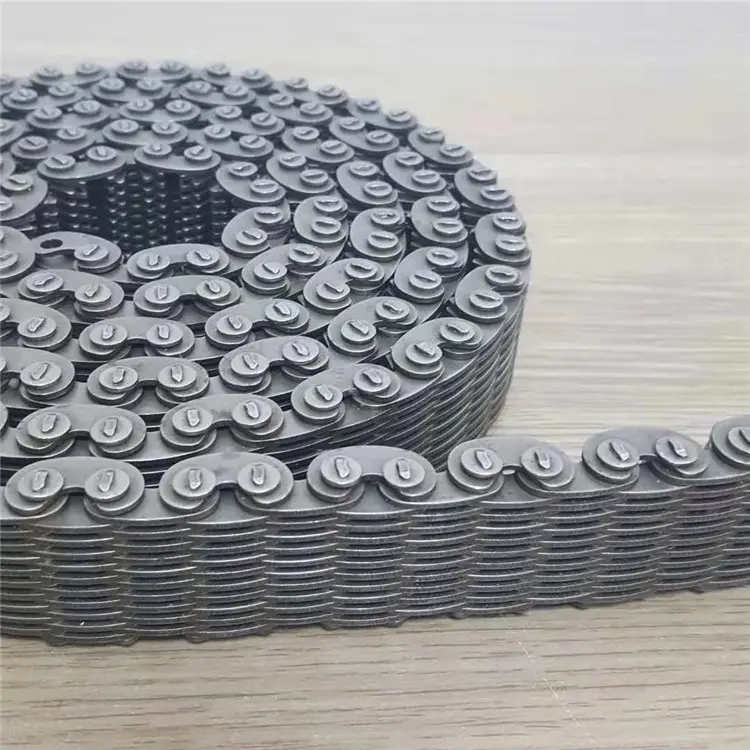
Una catena motore, nota anche come catena di trasmissione, è un dispositivo meccanico utilizzato per trasmettere potenza da un motore a diverse parti di una macchina o di un sistema. È costituita da una serie di maglie interconnesse che formano una catena flessibile e resistente.
Le catene di trasmissione sono comunemente utilizzate in una vasta gamma di applicazioni, tra cui il settore automobilistico, i macchinari industriali, le attrezzature agricole e i sistemi di trasporto. Svolgono un ruolo fondamentale nella trasmissione del movimento rotatorio e della potenza dal motore a diversi componenti come ruote, ingranaggi, pignoni o pulegge.
Ecco come viene tipicamente utilizzata una catena motore:
1. Trasmissione di potenza: La funzione principale di una catena motore è quella di trasmettere la potenza dal motore alle altre parti del sistema. Quando il motore ruota, aziona la catena, che a sua volta aziona i componenti collegati, consentendo loro di svolgere le funzioni previste.
2. Conversione di velocità e coppia: le catene dei motori sono progettate per trasmettere potenza a diverse velocità e convertire la coppia tra il motore e i componenti azionati. Selezionando le dimensioni appropriate dei pignoni e le lunghezze della catena, la velocità di rotazione e la coppia possono essere regolate in base alle esigenze del sistema.
3. Flessibilità e adattabilità: le catene dei motori sono flessibili e adattabili, il che ne consente l'utilizzo in vari orientamenti e configurazioni. Possono compensare disallineamenti, carichi non uniformi e cambi di direzione, risultando adatte a macchinari e sistemi complessi.
4. Manutenzione e lubrificazione: Una corretta manutenzione e lubrificazione sono essenziali per il funzionamento affidabile delle catene dei motori. Ispezioni, pulizie e lubrificazioni regolari contribuiscono a ridurre l'attrito, l'usura e la corrosione, garantendo prestazioni ottimali e una lunga durata della catena.
Le catene per motori sono disponibili in diverse dimensioni, design e materiali per adattarsi ad applicazioni specifiche. La scelta della catena più adatta a un determinato sistema implica la valutazione di fattori quali capacità di carico, velocità, ambiente di utilizzo e compatibilità con altri componenti. È fondamentale seguire le linee guida del produttore e gli standard di settore per garantire un funzionamento sicuro ed efficiente.


Modificato da CX il 04/04/2024