Deskripsyon sa Produkto
HangZhou STAR MACHINE TECHNOLOGY CO.,LTD. is an professional manufacturer with 20 years of production experience for motocycle chains. We have the most advanced technical team and the most advanced processing experimental equipment and service team all over the world. Our products are mainly sold to Russia, Uzbekistan, Malaysia, Germany, Egypt, Brazil, mainland China and ZheJiang . Reliable quality and attractive price, we sincerely look CHINAMFG to working with you! Do not hesitate to contact us in any time if you have any needs or questions. We would supply you with high quality and cheap products and technical advice and support.
BASIC INFO
SMCC roller chain is 1 of the most widely used and welcome products in the market. Its continuous innovative development is suitable to be the solutions for many conditions, standard roller chains, motorcycle driving chain, O-ring motorcycle chain, high strength roller chain, conveyor chains, agricultural driving chain, galvanized chain, nickel-plated chain, lubrication-free chain and oilfield chain etc.
| ISO Kadena Num. |
Kadena Num. | Pitch P milimetro |
Roller diameter d1max milimetro |
Width between inner plates b1min milimetro |
Pin diameter d2max milimetro |
Pin length | Inner plate depth h2max |
Plate thickness t/Tmax |
Tensile strength Qmin |
Average tensile strength Q0 |
Weight per meter q |
|
| Lmax | Lcmax | |||||||||||
| milimetro | milimetro | milimetro | milimetro | kN/lbf | kN | kg/m | ||||||
| – | 9.525 | 6 | 9.5 | 4.5 | 18.6 | 20 | 9.3 | 1.85/1.50 | 11.80/2653 | 13.6 | 0.61 | |
| 420 | 420 | 12.7 | 7.77 | 6.25 | 3.96 | 14.7 | 16.1 | 12 | 1.5 | 16.00/3597 | 17.6 | 0.55 |
| – | 420F3 | 12.7 | 7.77 | 6.4 | 3.97 | 15 | 16.6 | 11.8 | 1.60/1.45 | 16.00/3597 | 17.6 | 0.64 |
| – | 420HF1 | 12.7 | 7.77 | 6.25 | 3.96 | 17 | 18.4 | 12 | 2.03 | 16.00/3597 | 17.6 | 0.76 |
| – | 420HT | 12.7 | 7.77 | 6.25 | 3.96 | 17 | – | 12 | 2.03 | 21.40/4811 | 23.5 | 0.76 |
| 428 | 428 | 12.7 | 8.51 | 7.75 | 4.45 | 16.7 | 18.2 | 11.8 | 1.6 | 17.80/4002 | 19.6 | 0.7 |
| – | 428F1 | 12.7 | 8.51 | 7.94 | 4.5 | 16.7 | 18.05 | 11.8 | 1.6 | 17.15/3855 | 19.4 | 0.71 |
| – | 428DS | 12.7 | 8.51 | 7.94 | 4.45 | 17.9 | 19.3 | 12 | 1.85 | 18.62/4186 | 21 | 0.76 |
| 428MH | 428H | 12.7 | 8.51 | 7.85 | 4.45 | 18.8 | 19.9 | 11.8 | 2.03 | 20.60/4631 | 23.4 | 0.79 |
| – | 428HF1 | 12.7 | 8.51 | 7.85 | 4.45 | 17.9 | 19 | 11.8 | 1.8 | 19.50/4384 | 20.7 | 0.74 |
| – | 428HSH | 12.7 | 8.51 | 7.75 | 4.45 | 20 | – | 12 | 2.42 | 27.00/6070 | 29.4 | 0.89 |
| – | 428HF4 | 12.7 | 8.51 | 7.94 | 4.5 | 18.9 | 20.1 | 11.8 | 2.03 | 20.50/4609 | 23.4 | 0.82 |
| – | 428HD | 12.7 | 8.51 | 7.85 | 4.45 | 18.8 | 19.9 | 11.8 | 2.03 | 20.60/4631 | 23.4 | 0.85 |
| – | 428F3 | 12.7 | 8.51 | 7.85 | 4.45 | 16.7 | 18.2 | 11.7 | 1.6 | 17.80/4002 | 19.6 | 0.77 |
| – | 428F4 | 12.7 | 8.51 | 7.85 | 4.45 | 16.7 | 18.2 | 11.8 | 1.6 | 17.80/4002 | 19.6 | 0.72 |
| 520 | 520 | 15.875 | 10.16 | 6.25 | 5.08 | 17.5 | 19 | 15.09 | 2.03 | 26.50/5957 | 29.7 | 0.89 |
| – | 520F2 | 15.875 | 10.16 | 6.35 | 5.24 | 17.5 | 19.05 | 15.09 | 2.03 | 26.50/5957 | 29.7 | 0.97 |
| – | 520F3 | 15.875 | 10.16 | 6.48 | 5.08 | 17.5 | 19 | 15.09 | 2.03 | 26.50/5957 | 29.7 | 0.89 |
| 520MH | 520MH | 15.875 | 10.22 | 6.25 | 5.25 | 19 | 21.2 | 15.3 | 2.2 | 30.50/6857 | 33.6 | – |
| – | 520HD | 15.875 | 10.16 | 6.35 | 5.34 | 18.6 | 20 | 15.09 | 2.2 | 35.00/7868 | 38.5 | 1.04 |
| 525 | 525 | 15.875 | 10.16 | 7.95 | 5.08 | 19.3 | 20.7 | 15.09 | 2.03 | 26.50/5957 | 29.7 | 1.06 |
| 525MH | 525MH | 15.875 | 10.22 | 7.85 | 5.25 | 21.2 | 23.2 | 15.3 | 2.2 | 30.50/6857 | 33.6 | – |
| – | 525HF1 | 15.875 | 10.16 | 7.95 | 5.08 | 20.9 | 22.3 | 15.09 | 2.42 | 26.50/5957 | 29.7 | 1.2 |
| 530 | 530 | 15.875 | 10.16 | 9.4 | 5.08 | 20.7 | 22.2 | 15.09 | 2.03 | 26.50/5957 | 29.7 | 1.06 |
| – | 530SH | 15.875 | 10.16 | 9.4 | 5.08 | 22.1 | – | 15.09 | 2.42 | 32.80/7374 | 33.5 | 1.24 |
| – | 520F12 | 15.875 | 10.16 | 6.25 | 5.25 | 17.6 | – | 15 | 2.03 | 29.43/6615 | 32.3 | 0.98 |
| – | 520HF7 | 15.875 | 10.22 | 7.8 | 5.3 | 21.35 | – | 15.3 | 2.8/2.42 | 40.00/8992 | 44 | 1.43 |
| 630 | 630 | 19.05 | 11.91 | 9.4 | 5.94 | 23 | 24.8 | 18 | 2.42 | 35.30/7936 | 38.8 | – |
|
Kadena Num. |
Pitch
P |
Roller diameter
d1 max |
Width between inner plates b1 ka minuto |
Pin diameter
d2 max |
Pin length | Inner plate giladmon h2 max |
Plate thickness
T |
Tensile strength
Q |
Average tensile kusog Q0 |
Weight per metro q kg/m |
|
| Lmax milimetro |
Lcmax milimetro |
||||||||||
| 420 OR | 12.700 | 7.77 | 6.25 | 3.96 | 16.65 | 17.95 | 12.00 | 1.50 | 16.0/3599 | 17.00 | 0.62 |
| 420H OR | 12.700 | 7.77 | 6.25 | 3.96 | 18.80 | 20.10 | 12.00 | 2.03 | 16.0/3599 | 17.00 | 0.74 |
| 428HVS | 12.700 | 8.51 | 7.94 | 4.45 | 21.70 | 22.70 | 12.30 | 2.03 | 22.0/4946 | 23.00 | 0.85 |
| 50LD | 15.875 | 10.16 | 9.53 | 5.08 | 23.40 | 24.60 | 15.09 | 2.03 | 22.2/5045 | 26.50 | 1.12 |
| 520 OR | 15.875 | 10.16 | 6.70 | 5.30 | 21.20 | 22.30 | 15.09 | 2.20 | 32.0/7200 | 34.00 | 1.11 |
| 520F1 OR | 15.875 | 10.16 | 6.25 | 5.30 | 21.20 | 22.30 | 15.09 | 2.20 | 32.0/7200 | 34.00 | 1.09 |
| 520F2 OR | 15.875 | 10.16 | 9.65 | 5.30 | 24.10 | 25.50 | 15.09 | 2.20 | 32.0/7200 | 34.00 | 1.21 |
| 520V6 | 15.875 | 10.16 | 6.25 | 5.08 | 19.80 | 21.30 | 15.09 | 2.03 | 22.2/5045 | 26.50 | 0.96 |
| 520H OR | 15.875 | 10.16 | 6.25 | 5.24 | 21.52 | 22.92 | 15.09 | 2.42 | 26.5/6571 | 29.60 | 1.26 |
| 525 OR | 15.875 | 10.16 | 7.95 | 5.30 | 21.50 | 22.90 | 15.09 | 2.03 | 26.5/6571 | 29.60 | 1.30 |
| 525F1 OR | 15.875 | 10.16 | 7.95 | 5.30 | 23.10 | 24.00 | 15.09 | 2.20 | 32.0/7200 | 34.00 | 1.16 |
| 520F14 OR | 15.875 | 10.20 | 6.25 | 5.09 | 19.90 | – | 14.90 | 1.80 | 28.4/6391 | 30.60 | 0.92 |
| 525H OR | 15.875 | 10.16 | 7.95 | 5.30 | 23.10 | 24.50 | 15.09 | 2.42 | 26.5/6571 | 29.60 | 1.44 |
| 530H OR | 15.875 | 10.16 | 9.53 | 5.24 | 24.80 | 26.20 | 15.09 | 2.42 | 29.0/6524 | 30.00 | 1.39 |
| 630F1 OR | 19.050 | 11.91 | 9.53 | 5.94 | 25.50 | 27.30 | 18.00 | 2.42 | 31.8/7149 | 35.00 | 1.50 |
| ISO Kadena Num. |
Kadena Num. |
Pitch
P |
Bush diameter
d1 max |
Width between inner plates b1 ka minuto milimetro |
Pin diameter
d2 max |
Pin length
L |
Inner plate giladmon h2 max milimetro |
Plate thickness
t/T max |
Tensile strength
Q |
Average tensile kusog Q0 kN |
Weight per metro q kg/m |
| – | 25 | 6.350 | 3.30 | 3.18 | 2.31 | 7.90 | 6.00 | 0.80 | 3.5/795 | 4.6 | 0.15 |
| 25H | 25H | 6.350 | 3.30 | 3.18 | 2.31 | 8.90 | 6.00 | 1.04 | 4.8/1091 | 5.5 | 0.17 |
| – | 25H(E) | 6.350 | 3.30 | 3.18 | 2.31 | 8.90 | 6.00 | 1.04 | 5.8/1304 | 6.4 | 0.18 |
| – | 25HF2 | 6.350 | 3.30 | 3.18 | 2.31 | 9.10 | 5.80 | 1.2/1.10 | 5.8/1304 | 6.4 | 0.19 |
| – | 25SHF1 | 6.350 | 3.30 | 3.18 | 2.01 | 8.95 | 5.90 | 1.04 | 4.8/1091 | 5.5 | 0.19 |
| 219H | 219H | 7.774 | 4.59 | 5.00 | 3.01 | 11.90 | 7.40 | 1.2/1.04 | 7.3/1641 | 8.0 | 0.28 |
| – | *C219H | 7.774 | 4.59 | 5.00 | 3.01 | 11.90 | 7.40 | 1.2/1.04 | 7.3/1641 | 8.0 | 0.33 |
| – | 219HT | 7.774 | 4.59 | 4.60 | 3.01 | 12.15 | 7.55 | 1.4/1.3 | 6.6/1483 | 7.2 | 0.33 |
| – | 219HF2 | 7.774 | 4.59 | 4.50 | 3.01 | 11.90 | 7.40 | 1.4/1.3 | 6.6/1483 | 7.2 | 0.31 |
| – | 219HF1 | 7.785 | 4.60 | 4.50 | 3.28 | 13.00 | 7.00 | 2.0/1.40 | 9.0/2571 | 9.8 | 0.37 |
| 270H | 270H | 8.500 | 5.00 | 4.75 | 3.28 | 13.15 | 8.45 | 1.8/1.40 | 10.8/2428 | 11.9 | 0.43 |
Package & Delivery
SMCC Chains is 1 of the most widely used and welcome products in the market. Its continuous innovative development is suitable to be the solutions for many conditions, standard roller chains, motorcycle driving chain, O-ring motorcycle chain, high strength roller chain, conveyor chains, agricultural driving chain, galvanized chain, nickel-plated chain, lubrication-free chain and oilfield chain etc.
Our CHINAMFG chain was produced by machinery processing from raw materials to finished products and a full set of quality testing equipment. Mechanical processing equipment include grinding machines, high speed punching machines, milling machines, high speed automatic rolling and assembling machine. Heat treatment was processed by continuous mesh belt conveyor furnace, mesh belt conveyor annealing furnace, advanced central control system of heat treatment, rotary CHINAMFG for chain component heat treatment, which ensure the stability and consistency of the key function of chain components.
We are the best suppliers of Chinese largest palletizing robot enterprises. These items are durable quality with affordable prices, replace of Japan chains, ZheJiang chains exported to Europe, America, Asia and other countries and regions.
CONSTRUCTION OF THE CHAIN
Two different sizes of roller chain, showing construction.
There are 2 types of links alternating in the bush roller chain. The first type is inner links, having 2 inner plates held together by 2 sleeves or bushings CHINAMFG which rotate 2 rollers. Inner links alternate with the second type, the outer links, consisting of 2 outer plates held together by pins passing through the bushings of the inner links. The “bushingless” roller chain is similar in operation though not in construction; instead of separate bushings or sleeves holding the inner plates together, the plate has a tube stamped into it protruding from the hole which serves the same purpose. This has the advantage of removing 1 step in assembly of the chain.
The roller chain design reduces friction compared to simpler designs, resulting in higher efficiency and less wear. The original power transmission chain varieties lacked rollers and bushings, with both the inner and outer plates held by pins which directly contacted the sprocket teeth; however this configuration exhibited extremely rapid wear of both the sprocket teeth, and the plates where they pivoted on the pins. This problem was partially solved by the development of bushed chains, with the pins holding the outer plates passing through bushings or sleeves connecting the inner plates. This distributed the wear over a greater area; however the teeth of the sprockets still wore more rapidly than is desirable, from the sliding friction against the bushings. The addition of rollers surrounding the bushing sleeves of the chain and provided rolling contact with the teeth of the sprockets resulting in excellent resistance to wear of both sprockets and chain as well. There is even very low friction, as long as the chain is sufficiently lubricated. Continuous, clean, lubrication of roller chains is of primary importance for efficient operation as well as correct tensioning.
LUBRICATION
Many driving chains (for example, in factory equipment, or driving a camshaft inside an internal combustion engine) operate in clean environments, and thus the wearing surfaces (that is, the pins and bushings) are safe from precipitation and airborne grit, many even in a sealed environment such as an oil bath. Some roller chains are designed to have o-rings built into the space between the outside link plate and the inside roller link plates. Chain manufacturers began to include this feature in 1971 after the application was invented by Joseph Montano while working for Whitney Chain of Hartford, Connecticut. O-rings were included as a way to improve lubrication to the links of power transmission chains, a service that is vitally important to extending their working life. These rubber fixtures form a barrier that holds factory applied lubricating grease inside the pin and bushing wear areas. Further, the rubber o-rings prevent dirt and other contaminants from entering inside the chain linkages, where such particles would otherwise cause significant wear.[citation needed]
There are also many chains that have to operate in dirty conditions, and for size or operational reasons cannot be sealed. Examples include chains on farm equipment, bicycles, and chain saws. These chains will necessarily have relatively high rates of wear, particularly when the operators are prepared to accept more friction, less efficiency, more noise and more frequent replacement as they neglect lubrication and adjustment.
Many oil-based lubricants attract dirt and other particles, eventually forming an CHINAMFG paste that will compound wear on chains. This problem can be circumvented by use of a “dry” PTFE spray, which forms a CHINAMFG film after application and repels both particles and moisture.
MOTORCYCLE CHAIN LUBRICATION
Chains operating at high speeds comparable to those on motorcycles should be used in conjunction with an oil bath. For modern motorcycles this is not possible, and most motorcycle chains run unprotected. Thus, motorcycle chains tend to wear very quickly relative to other applications. They are subject to extreme forces and are exposed to rain, dirt, sand and road salt.
Motorcycle chains are part of the drive train to transmit the motor power to the back wheel. Properly lubricated chains can reach an efficiency of 98% or greater in the transmission. Unlubricated chains will significantly decrease performance and increase chain and sprocket wear.
Two types of CHINAMFG lubricants are available for motorcycle chains: spray on lubricants and oil drip feed systems.
Spray lubricants may contain wax or PTFE. While these lubricants use tack additives to stay on the chain they can also attract dirt and sand from the road and over time produce a grinding paste that accelerates component wear.
Oil drip feed systems continuously lubricate the chain and use light oil that does not stick to the chain. Research has shown that oil drip feed systems provide the greatest wear protection and greatest power saving.
VARIANTS DESIGN
Layout of a roller chain: 1. Outer plate, 2. Inner plate, 3. Pin, 4. Bushing, 5. Roller
If the chain is not being used for a high wear application (for instance if it is just transmitting motion from a hand-operated lever to a control shaft on a machine, or a sliding door on an oven), then 1 of the simpler types of chain may still be used. Conversely, where extra strength but the smooth drive of a smaller pitch is required, the chain may be “siamesed”; instead of just 2 rows of plates on the outer sides of the chain, there may be 3 (“duplex”), 4 (“triplex”), or more rows of plates running parallel, with bushings and rollers between each adjacent pair, and the same number of rows of teeth running in parallel on the sprockets to match. Timing chains on automotive engines, for example, typically have multiple rows of plates called strands.
Roller chain is made in several sizes, the most common American National Standards Institute (ANSI) standards being 40, 50, 60, and 80. The first digit(s) indicate the pitch of the chain in eighths of an inch, with the last digit being 0 for standard chain, 1 for lightweight chain, and 5 for bushed chain with no rollers. Thus, a chain with half-inch pitch would be a #40 while a #160 sprocket would have teeth spaced 2 inches apart, etc. Metric pitches are expressed in sixteenths of an inch; thus a metric #8 chain (08B-1) would be equivalent to an ANSI #40. Most roller chain is made from plain carbon or alloy steel, but stainless steel is used in food processing machinery or other places where lubrication is a problem, and nylon or brass are occasionally seen for the same reason.
Roller chain is ordinarily hooked up using a master link (also known as a connecting link), which typically has 1 pin held by a horseshoe clip rather than friction fit, allowing it to be inserted or removed with simple tools. Chain with a removable link or pin is also known as cottered chain, which allows the length of the chain to be adjusted. Half links (also known as offsets) are available and are used to increase the length of the chain by a single roller. Riveted roller chain has the master link (also known as a connecting link) “riveted” or mashed on the ends. These pins are made to be durable and are not removable.
USE
An example of 2 ‘ghost’ sprockets tensioning a triplex roller chain system
Roller chains are used in low- to mid-speed drives at around 600 to 800 feet per minute; however, at higher speeds, around 2,000 to 3,000 feet per minute, V-belts are normally used due to wear and noise issues.
A bicycle chain is a form of roller chain. Bicycle chains may have a master link, or may require a chain tool for removal and installation. A similar but larger and thus stronger chain is used on most motorcycles although it is sometimes replaced by either a toothed belt or a shaft drive, which offer lower noise level and fewer maintenance requirements.
The great majority of automobile engines use roller chains to drive the camshaft(s). Very high performance engines often use gear drive, and starting in the early 1960s toothed belts were used by some manufacturers.
Chains are also used in forklifts using hydraulic rams as a pulley to raise and lower the carriage; however, these chains are not considered roller chains, but are classified as lift or leaf chains.
Chainsaw cutting chains superficially resemble roller chains but are more closely related to leaf chains. They are driven by projecting drive links which also serve to locate the chain CHINAMFG the bar.
Sea Harrier FA.2 ZA195 front (cold) vector thrust nozzle – the nozzle is rotated by a chain drive from an air motor
A perhaps unusual use of a pair of motorcycle chains is in the Harrier Jump Jet, where a chain drive from an air motor is used to rotate the movable engine nozzles, allowing them to be pointed downwards for hovering flight, or to the rear for normal CHINAMFG flight, a system known as Thrust vectoring.
BICYCLE CHAIN WEAR
The lightweight chain of a bicycle with derailleur gears can snap (or rather, come apart at the side-plates, since it is normal for the “riveting” to fail first) because the pins inside are not cylindrical, they are barrel-shaped. Contact between the pin and the bushing is not the regular line, but a point which allows the chain’s pins to work its way through the bushing, and finally the roller, ultimately causing the chain to snap. This form of construction is necessary because the gear-changing action of this form of transmission requires the chain to both bend sideways and to twist, but this can occur with the flexibility of such a narrow chain and relatively large free lengths on a bicycle.
Chain failure is much less of a problem on hub-geared systems (e.g. Bendix 2-speed, Sturmey-Archer AW) since the parallel pins have a much bigger wearing surface in contact with the bush. The hub-gear system also allows complete enclosure, a great aid to lubrication and protection from grit.
CHAIN STRENGTH
The most common measure of roller chain’s strength is tensile strength. Tensile strength represents how much load a chain can withstand under a one-time load before breaking. Just as important as tensile strength is a chain’s fatigue strength. The critical factors in a chain’s fatigue strength is the quality of steel used to manufacture the chain, the heat treatment of the chain components, the quality of the pitch hole fabrication of the linkplates, and the type of shot plus the intensity of shot peen coverage on the linkplates. Other factors can include the thickness of the linkplates and the design (contour) of the linkplates. The rule of thumb for roller chain operating on a continuous drive is for the chain load to not exceed a mere 1/6 or 1/9 of the chain’s tensile strength, depending on the type of master links used (press-fit vs. slip-fit)[citation needed]. Roller chains operating on a continuous drive beyond these thresholds can and typically do fail prematurely via linkplate fatigue failure.
The standard minimum ultimate strength of the ANSI 29.1 steel chain is 12,500 x (pitch, in inches)2. X-ring and O-Ring chains greatly decrease wear by means of internal lubricants, increasing chain life. The internal lubrication is inserted by means of a vacuum when riveting the chain together.
CHAIN STHangZhouRDS
Standards organizations (such as ANSI and ISO) maintain standards for design, dimensions, and interchangeability of transmission chains. For example, the following Table shows data from ANSI standard B29.1-2011 (Precision Power Transmission Roller Chains, Attachments, and Sprockets) developed by the American Society of Mechanical Engineers (ASME). See the references[8][9][10] for additional information.
ASME/ANSI B29.1-2011 Roller Chain Standard SizesSizePitchMaximum Roller DiameterMinimum Ultimate Tensile StrengthMeasuring Load25
| ASME/ANSI B29.1-2011 Roller Chain Standard Sizes | ||||
| Gidak-on | Pitch | Maximum Roller Diameter | Minimum Ultimate Tensile Strength | Measuring Load |
|---|---|---|---|---|
| 25 | 0.250 in (6.35 mm) | 0.130 in (3.30 mm) | 780 lb (350 kg) | 18 lb (8.2 kg) |
| 35 | 0.375 in (9.53 mm) | 0.200 in (5.08 mm) | 1,760 lb (800 kg) | 18 lb (8.2 kg) |
| 41 | 0.500 in (12.70 mm) | 0.306 in (7.77 mm) | 1,500 lb (680 kg) | 18 lb (8.2 kg) |
| 40 | 0.500 in (12.70 mm) | 0.312 in (7.92 mm) | 3,125 lb (1,417 kg) | 31 lb (14 kg) |
| 50 | 0.625 in (15.88 mm) | 0.400 in (10.16 mm) | 4,880 lb (2,210 kg) | 49 lb (22 kg) |
| 60 | 0.750 in (19.05 mm) | 0.469 in (11.91 mm) | 7,030 lb (3,190 kg) | 70 lb (32 kg) |
| 80 | 1.000 in (25.40 mm) | 0.625 in (15.88 mm) | 12,500 lb (5,700 kg) | 125 lb (57 kg) |
| 100 | 1.250 in (31.75 mm) | 0.750 in (19.05 mm) | 19,531 lb (8,859 kg) | 195 lb (88 kg) |
| 120 | 1.500 in (38.10 mm) | 0.875 in (22.23 mm) | 28,125 lb (12,757 kg) | 281 lb (127 kg) |
| 140 | 1.750 in (44.45 mm) | 1.000 in (25.40 mm) | 38,280 lb (17,360 kg) | 383 lb (174 kg) |
| 160 | 2.000 in (50.80 mm) | 1.125 in (28.58 mm) | 50,000 lb (23,000 kg) | 500 lb (230 kg) |
| 180 | 2.250 in (57.15 mm) | 1.460 in (37.08 mm) | 63,280 lb (28,700 kg) | 633 lb (287 kg) |
| 200 | 2.500 in (63.50 mm) | 1.562 in (39.67 mm) | 78,175 lb (35,460 kg) | 781 lb (354 kg) |
| 240 | 3.000 in (76.20 mm) | 1.875 in (47.63 mm) | 112,500 lb (51,000 kg) | 1,000 lb (450 kg |
For mnemonic purposes, below is another presentation of key dimensions from the same standard, expressed in fractions of an inch (which was part of the thinking behind the choice of preferred numbers in the ANSI standard):
| Pitch (inches) | Pitch expressed in eighths |
ANSI standard chain number |
Width (inches) |
|---|---|---|---|
| 1⁄4 | 2⁄8 | 25 | 1⁄8 |
| 3⁄8 | 3⁄8 | 35 | 3⁄16 |
| 1⁄2 | 4⁄8 | 41 | 1⁄4 |
| 1⁄2 | 4⁄8 | 40 | 5⁄16 |
| 5⁄8 | 5⁄8 | 50 | 3⁄8 |
| 3⁄4 | 6⁄8 | 60 | 1⁄2 |
| 1 | 8⁄8 | 80 | 5⁄8 |
Notes:
1. The pitch is the distance between roller centers. The width is the distance between the link plates (i.e. slightly more than the roller width to allow for clearance).
2. The right-hand digit of the standard denotes 0 = normal chain, 1 = lightweight chain, 5 = rollerless bushing chain.
3. The left-hand digit denotes the number of eighths of an inch that make up the pitch.
4. An “H” following the standard number denotes heavyweight chain. A hyphenated number following the standard number denotes double-strand (2), triple-strand (3), and so on. Thus 60H-3 denotes number 60 heavyweight triple-strand chain.
A typical bicycle chain (for derailleur gears) uses narrow 1⁄2-inch-pitch chain. The width of the chain is variable, and does not affect the load capacity. The more sprockets at the rear wheel (historically 3-6, nowadays 7-12 sprockets), the narrower the chain. Chains are sold according to the number of speeds they are designed to work with, for example, “10 speed chain”. Hub gear or single speed bicycles use 1/2″ x 1/8″ chains, where 1/8″ refers to the maximum thickness of a sprocket that can be used with the chain.
Typically chains with parallel shaped links have an even number of links, with each narrow link followed by a broad one. Chains built up with a uniform type of link, narrow at 1 and broad at the other end, can be made with an odd number of links, which can be an advantage to adapt to a special chainwheel-distance; on the other side such a chain tends to be not so strong.
Roller chains made using ISO standard are sometimes called as isochains.
WHY CHOOSE US
1. Reliable Quality Assurance System
2. Cutting-Edge Computer-Controlled CNC Machines
3. Bespoke Solutions from Highly Experienced Specialists
4. Customization and OEM Available for Specific Application
5. Extensive Inventory of Spare Parts and Accessories
6. Well-Developed CHINAMFG Marketing Network
7. Efficient After-Sale Service System
The 219 sets of advanced automatic production equipment provide guarantees for high product quality. The 167 engineers and technicians with senior professional titles can design and develop products to meet the exact demands of customers, and OEM customizations are also available with us. Our sound global service network can provide customers with timely after-sales technical services.
We are not just a manufacturer and supplier, but also an industry consultant. We work pro-actively with you to offer expert advice and product recommendations in order to end up with a most cost effective product available for your specific application. The clients we serve CHINAMFG range from end users to distributors and OEMs. Our OEM replacements can be substituted wherever necessary and suitable for both repair and new assemblies.
/* Enero 22, 2571 19:08:37 */!function(){function s(e,r){var a,o={};try{e&&e.split(“,”).forEach(function(e,t){e&&(a=e.match(/(.*?):(.*)$/)
| Serbisyo human sa pagbaligya: | 7*24hours |
|---|---|
| Garantiya: | 1 ka Tuig |
| Matang: | Chain, Circular Gear |
| Mga Sample: |
US$ 1/Piraso
1 ka Piraso (Minimum nga Order) | Sampol sa Order |
|---|
| Pag-customize: |
Anaa
| Gipahiangay nga Hangyo |
|---|
.shipping-cost-tm .tm-status-off{background: none;padding:0;color: #1470cc}
| Gasto sa Pagpadala:
Gibanabana nga kargamento kada yunit. |
bahin sa gasto sa pagpadala ug gibanabana nga oras sa pagpadala. |
|---|
| Pamaagi sa Pagbayad: |
|
|---|---|
|
Inisyal nga Bayad Bug-os nga Bayad |
| Kuwarta: | US$ |
|---|
| Pag-uli ug mga refund: | Mahimo kang mag-aplay alang sa refund hangtod sa 30 ka adlaw human madawat ang mga produkto. |
|---|
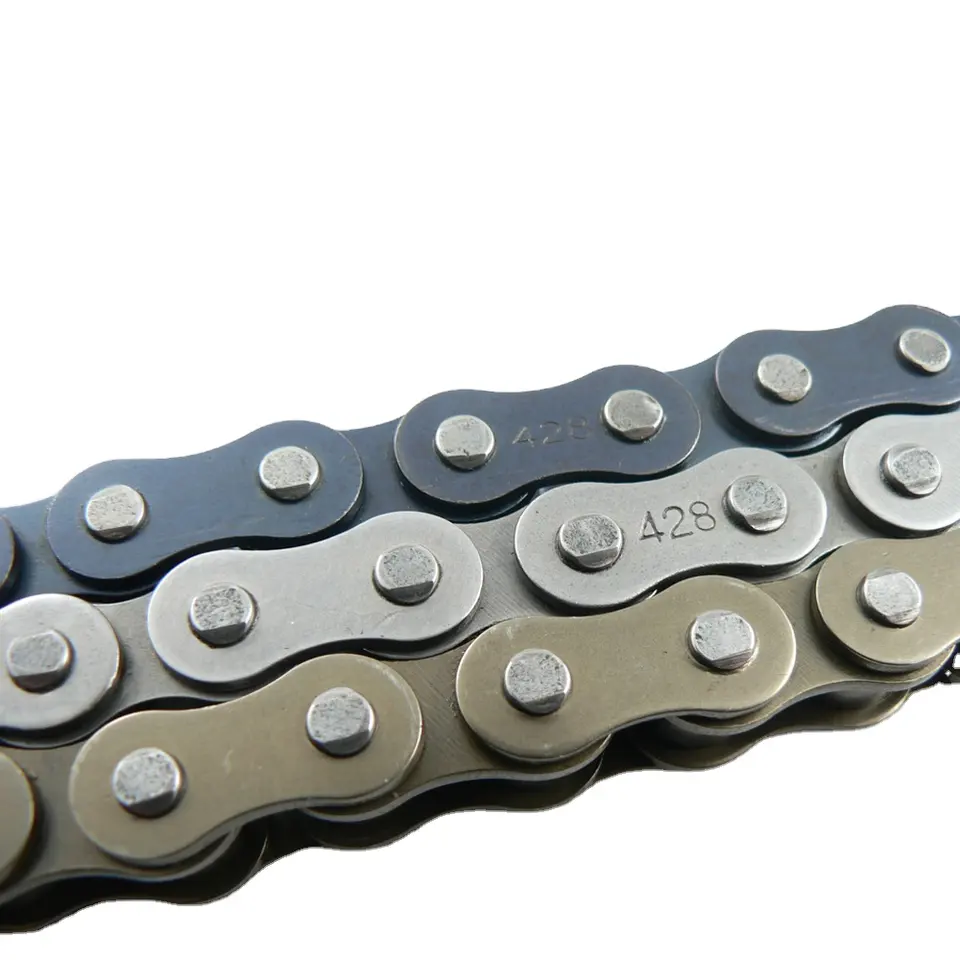
Mahimo ba gamiton ang kadena sa motor sa mga palibot nga adunay taas nga temperatura o humidity?
Oo, ang mga kadena sa motor mahimong gamiton sa mga palibot nga adunay taas nga temperatura o humidity, apan adunay pipila ka mga konsiderasyon nga kinahanglan nga tagdon.
Taas nga Temperatura:
Kon mag-operate sa mga palibot nga taas og temperatura, importante ang pagpili og kadena sa motor nga makasugakod sa taas nga temperatura. Ang mga espesyal nga materyales nga dili masunog, sama sa heat-treated steel o alloys, kasagarang gigamit para sa paghimo og mga kadena nga gituyo para sa mga aplikasyon nga taas og temperatura. Kini nga mga materyales adunay labaw nga resistensya sa kainit ug makapadayon sa ilang kusog ug performance bisan sa taas nga temperatura.
Gawas sa pagpili sa angay nga materyal sa kadena, ang hustong paglubrikar nahimong mas importante sa mga palibot nga taas ang temperatura. Ang lubricant nga gamiton kinahanglan nga adunay taas nga rating sa temperatura aron masiguro ang igong paglubrikar ug malikayan ang sayo nga pagkaguba. Ang regular nga pagmonitor sa kondisyon ug lebel sa paglubrikar sa kadena hinungdanon aron mapadayon ang performance niini ug maminusan ang mga epekto sa kainit.
Humidity:
Sa mga palibot nga humid, ang risgo sa taya ug kaagnasan sa kadena sa motor motaas. Aron masulbad kini, ang mga materyales ug coating nga dili maagnasan kasagarang gigamit para sa mga kadena sa motor. Ang mga kadena nga stainless steel o mga kadena nga adunay espesyal nga mga coating nga dili maagnasan naghatag ug mas maayong proteksyon batok sa kaumog ug kabaga.
Ang hustong pagmentinar ug pag-lubricate importante usab sa mga palibot nga humid aron malikayan ang kaumog nga makasulod sa kadena ug hinungdan sa taya. Ang regular nga inspeksyon, pagpanglimpyo, ug pag-lubricate gamit ang mga lubricant nga makapugong sa taya makatabang sa pagpalugway sa kinabuhi sa kadena ug pagmentinar sa performance niini.
Importante nga matikdan nga samtang ang mga kadena sa motor magamit sa mga palibot nga taas og temperatura o humidity, ang ilang performance ug lifespan mahimo gihapon nga maapektuhan. Girekomenda nga mokonsulta sa tiggama sa kadena alang sa piho nga mga giya ug rekomendasyon bahin sa paggamit sa mga kadena sa motor sa ingon nga mga kondisyon. Dugang pa, ang husto nga bentilasyon ug mga kontrol sa palibot kinahanglan nga ikonsiderar aron maminusan ang epekto sa taas nga temperatura o humidity sa performance sa kadena.
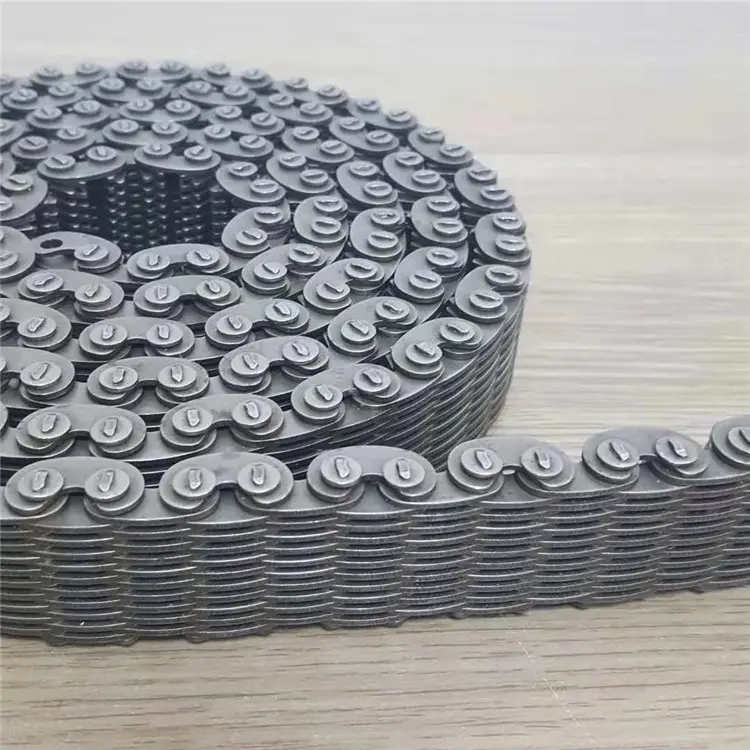
Makasugakod ba ang kadena sa motor sa bug-at nga karga?
Oo, ang mga kadena sa motor gidisenyo aron makadala sa bug-at nga mga karga sa lainlaing mga aplikasyon. Ania ang pipila ka mga butang nga angay hunahunaon:
1. Kusog sa Kadena: Ang mga kadena sa motor anaa sa lain-laing mga rating sa kusog, kasagaran gisukod base sa ilang pinakataas nga gitugot nga tensyon o kusog sa pagkabungkag. Importante ang pagpili og kadena sa motor nga adunay rating sa kusog nga angay sa gilauman nga mga karga sa imong aplikasyon. Ang mga kadena nga adunay mas taas nga rating sa kusog makasugakod sa mas bug-at nga mga karga.
2. Materyal sa Kadena: Ang mga kadena sa motor kasagarang ginama gikan sa taas nga kusog nga asero o haluang metal nga mga materyales nga naghatag og maayo kaayong kalig-on ug kapasidad sa pagdala sa karga. Ang pagpili sa materyal nagdepende sa piho nga mga kinahanglanon sa aplikasyon, lakip ang gilauman nga karga, mga kondisyon sa palibot, ug bisan unsang mga sumbanan sa regulasyon.
3. Disenyo sa Kadena: Ang mga kadena sa motor nga gidisenyo alang sa mga aplikasyon sa bug-at nga karga kasagaran adunay lig-on nga mga bahin sa konstruksyon aron mapauswag ang ilang mga kapabilidad sa pagdala sa karga. Mahimo kini maglakip sa mas dagkong mga gidak-on sa pitch, mas baga nga mga plato, gipagahi nga mga sangkap, ug tukma nga paggama. Ang disenyo nagsiguro nga ang kadena makasugakod sa mga pwersa ug mga stress nga nalangkit sa bug-at nga mga karga.
4. Lubrication: Ang hustong lubrication importante para sa mga kadena sa motor nga nagkupot og bug-at nga mga karga. Makatabang kini sa pagpakunhod sa friction ug pagkaguba, pagsiguro sa hapsay nga operasyon ug pagpalugway sa kinabuhi sa kadena. Ang igong lubrication makapugong usab sa sobrang kainit ug kaagnasan, nga mahimong negatibong makaapekto sa kapasidad sa kadena sa pagdala sa karga.
5. Disenyo sa Sprocket: Ang mga sprocket nga mokonektar sa kadena sa motor adunay usab hinungdanon nga papel sa pagdumala sa bug-at nga mga karga. Ang mga sprocket kinahanglan nga gidisenyo aron parehas nga maapod-apod ang karga sa tibuuk nga kadena ug makahatag kasaligan nga pagkonektar. Ang lig-on ug husto nga gidak-on sa mga sprocket nagsiguro nga ang kadena epektibo nga makadala sa bug-at nga mga karga nga wala’y sobra nga pagkaguba o pagkapakyas.
Kon gikonsiderar ang paggamit og kadena sa motor para sa mga aplikasyon nga bug-at ang karga, importante nga konsultahon ang mga espesipikasyon ug giya sa tiggama. Makahatag kini og detalyadong impormasyon bahin sa kapasidad sa pagdala sa karga sa kadena, lakip ang mga hinungdan sama sa tensile strength, mga limitasyon sa working load, ug girekomendar nga mga hinungdan sa kaluwasan. Ang hustong pagpili sa kadena, regular nga pagmentinar, ug pagsunod sa mga limitasyon sa karga mao ang yawe sa pagsiguro sa luwas ug episyente nga operasyon ubos sa bug-at nga mga karga.

Unsa ang kadena sa motor ug unsaon kini paggamit?
Ang kadena sa motor, nailhan usab nga kadena sa transmisyon sa kuryente, usa ka mekanikal nga aparato nga gigamit sa pagpadala sa kuryente gikan sa motor o makina ngadto sa lainlaing mga bahin sa usa ka makina o sistema. Kini gilangkoban sa usa ka serye sa mga konektado nga sumpay nga nagporma usa ka flexible ug lig-on nga kadena.
Ang mga kadena sa motor kasagarang gigamit sa lain-laing mga aplikasyon, lakip na ang mga makinarya sa awto, industriyal, kagamitan sa agrikultura, ug mga sistema sa conveyor. Kini adunay hinungdanon nga papel sa pagpadala sa rotational motion ug gahum gikan sa motor ngadto sa lain-laing mga sangkap sama sa mga ligid, gear, sprocket, o pulley.
Ania kon giunsa kasagaran gigamit ang kadena sa motor:
1. Pagpadala sa Gahom: Ang pangunang gimbuhaton sa kadena sa motor mao ang pagpadala sa gahum gikan sa motor ngadto sa ubang mga bahin sa sistema. Kung ang motor motuyok, kini ang mopadagan sa kadena, nga sa baylo mopadagan sa konektado nga mga sangkap, nga makapahimo kanila sa pagbuhat sa ilang gituyo nga mga gimbuhaton.
2. Pag-convert sa Speed ug Torque: Ang mga kadena sa motor gidisenyo aron magpadala og gahum sa lain-laing mga speed ug mag-convert sa torque tali sa motor ug sa mga driven component. Pinaagi sa pagpili sa angay nga gidak-on sa sprocket ug gitas-on sa kadena, ang rotational speed ug torque mahimong i-adjust aron mohaum sa mga kinahanglanon sa sistema.
3. Pagka-flexible ug Pagka-adapt: Ang mga kadena sa motor kay flexible ug daling ma-adjust, nga nagtugot niini nga magamit sa lain-laing mga oryentasyon ug mga configuration. Mahimo kini nga mo-accommodate sa dili pag-align, dili patas nga mga karga, ug mga pagbag-o sa direksyon, nga naghimo niini nga angay alang sa komplikado nga mga makinarya ug sistema.
4. Pagmentinar ug Lubrication: Ang hustong pagmentinar ug lubrication importante para sa kasaligang operasyon sa mga kadena sa motor. Ang regular nga inspeksyon, pagpanglimpyo, ug lubrication makatabang sa pagpakunhod sa friction, pagkaguba, ug kaagnasan, nga makasiguro sa labing maayong performance ug taas nga kinabuhi sa kadena.
Ang mga kadena sa motor adunay lain-laing gidak-on, disenyo, ug materyales aron mohaom sa piho nga mga aplikasyon. Ang pagpili sa husto nga kadena para sa usa ka partikular nga sistema naglakip sa pagkonsiderar sa mga butang sama sa kapasidad sa pagkarga, katulin, palibot, ug pagkaangay sa ubang mga sangkap. Importante nga sundon ang mga giya sa tiggama ug mga sumbanan sa industriya aron masiguro ang luwas ug episyente nga operasyon.


editor by CX 2024-04-04