Toote kirjeldus
HangZhou STAR MACHINE TECHNOLOGY CO.,LTD. is an professional manufacturer with 20 years of production experience for motocycle chains. We have the most advanced technical team and the most advanced processing experimental equipment and service team all over the world. Our products are mainly sold to Russia, Uzbekistan, Malaysia, Germany, Egypt, Brazil, mainland China and ZheJiang . Reliable quality and attractive price, we sincerely look CHINAMFG to working with you! Do not hesitate to contact us in any time if you have any needs or questions. We would supply you with high quality and cheap products and technical advice and support.
BASIC INFO
SMCC roller chain is 1 of the most widely used and welcome products in the market. Its continuous innovative development is suitable to be the solutions for many conditions, standard roller chains, motorcycle driving chain, O-ring motorcycle chain, high strength roller chain, conveyor chains, agricultural driving chain, galvanized chain, nickel-plated chain, lubrication-free chain and oilfield chain etc.
| ISO Keti nr. |
Keti nr. | Pitch P mm |
Rulli läbimõõt d1max mm |
Sisemiste plaatide vaheline laius b1min mm |
Tihvti läbimõõt d2max mm |
Tihvti pikkus | Sisemise plaadi sügavus h2max |
Plaadi paksus t/Tmax |
Tõmbetugevus Qmin |
Keskmine tõmbetugevus Q0 |
Kaal meetri kohta q |
|
| Lmax | Lcmax | |||||||||||
| mm | mm | mm | mm | kN/lbf | kN | kg/m² | ||||||
| – | 9.525 | 6 | 9.5 | 4.5 | 18.6 | 20 | 9.3 | 1.85/1.50 | 11.80/2653 | 13.6 | 0.61 | |
| 420 | 420 | 12.7 | 7.77 | 6.25 | 3.96 | 14.7 | 16.1 | 12 | 1.5 | 16.00/3597 | 17.6 | 0.55 |
| – | 420F3 | 12.7 | 7.77 | 6.4 | 3.97 | 15 | 16.6 | 11.8 | 1.60/1.45 | 16.00/3597 | 17.6 | 0.64 |
| – | 420HF1 | 12.7 | 7.77 | 6.25 | 3.96 | 17 | 18.4 | 12 | 2.03 | 16.00/3597 | 17.6 | 0.76 |
| – | 420HT | 12.7 | 7.77 | 6.25 | 3.96 | 17 | – | 12 | 2.03 | 21.40/4811 | 23.5 | 0.76 |
| 428 | 428 | 12.7 | 8.51 | 7.75 | 4.45 | 16.7 | 18.2 | 11.8 | 1.6 | 17.80/4002 | 19.6 | 0.7 |
| – | 428F1 | 12.7 | 8.51 | 7.94 | 4.5 | 16.7 | 18.05 | 11.8 | 1.6 | 17.15/3855 | 19.4 | 0.71 |
| – | 428DS | 12.7 | 8.51 | 7.94 | 4.45 | 17.9 | 19.3 | 12 | 1.85 | 18.62/4186 | 21 | 0.76 |
| 428MH | 428H | 12.7 | 8.51 | 7.85 | 4.45 | 18.8 | 19.9 | 11.8 | 2.03 | 20.60/4631 | 23.4 | 0.79 |
| – | 428HF1 | 12.7 | 8.51 | 7.85 | 4.45 | 17.9 | 19 | 11.8 | 1.8 | 19.50/4384 | 20.7 | 0.74 |
| – | 428HSH | 12.7 | 8.51 | 7.75 | 4.45 | 20 | – | 12 | 2.42 | 27.00/6070 | 29.4 | 0.89 |
| – | 428HF4 | 12.7 | 8.51 | 7.94 | 4.5 | 18.9 | 20.1 | 11.8 | 2.03 | 20.50/4609 | 23.4 | 0.82 |
| – | 428HD | 12.7 | 8.51 | 7.85 | 4.45 | 18.8 | 19.9 | 11.8 | 2.03 | 20.60/4631 | 23.4 | 0.85 |
| – | 428F3 | 12.7 | 8.51 | 7.85 | 4.45 | 16.7 | 18.2 | 11.7 | 1.6 | 17.80/4002 | 19.6 | 0.77 |
| – | 428F4 | 12.7 | 8.51 | 7.85 | 4.45 | 16.7 | 18.2 | 11.8 | 1.6 | 17.80/4002 | 19.6 | 0.72 |
| 520 | 520 | 15.875 | 10.16 | 6.25 | 5.08 | 17.5 | 19 | 15.09 | 2.03 | 26.50/5957 | 29.7 | 0.89 |
| – | 520F2 | 15.875 | 10.16 | 6.35 | 5.24 | 17.5 | 19.05 | 15.09 | 2.03 | 26.50/5957 | 29.7 | 0.97 |
| – | 520F3 | 15.875 | 10.16 | 6.48 | 5.08 | 17.5 | 19 | 15.09 | 2.03 | 26.50/5957 | 29.7 | 0.89 |
| 520MH | 520MH | 15.875 | 10.22 | 6.25 | 5.25 | 19 | 21.2 | 15.3 | 2.2 | 30.50/6857 | 33.6 | – |
| – | 520HD | 15.875 | 10.16 | 6.35 | 5.34 | 18.6 | 20 | 15.09 | 2.2 | 35.00/7868 | 38.5 | 1.04 |
| 525 | 525 | 15.875 | 10.16 | 7.95 | 5.08 | 19.3 | 20.7 | 15.09 | 2.03 | 26.50/5957 | 29.7 | 1.06 |
| 525MH | 525MH | 15.875 | 10.22 | 7.85 | 5.25 | 21.2 | 23.2 | 15.3 | 2.2 | 30.50/6857 | 33.6 | – |
| – | 525HF1 | 15.875 | 10.16 | 7.95 | 5.08 | 20.9 | 22.3 | 15.09 | 2.42 | 26.50/5957 | 29.7 | 1.2 |
| 530 | 530 | 15.875 | 10.16 | 9.4 | 5.08 | 20.7 | 22.2 | 15.09 | 2.03 | 26.50/5957 | 29.7 | 1.06 |
| – | 530SH | 15.875 | 10.16 | 9.4 | 5.08 | 22.1 | – | 15.09 | 2.42 | 32.80/7374 | 33.5 | 1.24 |
| – | 520F12 | 15.875 | 10.16 | 6.25 | 5.25 | 17.6 | – | 15 | 2.03 | 29.43/6615 | 32.3 | 0.98 |
| – | 520HF7 | 15.875 | 10.22 | 7.8 | 5.3 | 21.35 | – | 15.3 | 2.8/2.42 | 40.00/8992 | 44 | 1.43 |
| 630 | 630 | 19.05 | 11.91 | 9.4 | 5.94 | 23 | 24.8 | 18 | 2.42 | 35.30/7936 | 38.8 | – |
|
Keti nr. |
Pigi
P |
Rulli läbimõõt
d1 max |
Width between inner plates b1 min |
Tihvti läbimõõt
d2 max |
Tihvti pikkus | Inner plate depth h2 max |
Plaadi paksus
T |
Tõmbetugevus
K |
Average tensile tugevus Q0 |
Weight per meter q kg/m² |
|
| Lmax mm |
Lcmax mm |
||||||||||
| 420 OR | 12.700 | 7.77 | 6.25 | 3.96 | 16.65 | 17.95 | 12.00 | 1.50 | 16.0/3599 | 17.00 | 0.62 |
| 420H OR | 12.700 | 7.77 | 6.25 | 3.96 | 18.80 | 20.10 | 12.00 | 2.03 | 16.0/3599 | 17.00 | 0.74 |
| 428HVS | 12.700 | 8.51 | 7.94 | 4.45 | 21.70 | 22.70 | 12.30 | 2.03 | 22.0/4946 | 23.00 | 0.85 |
| 50LD | 15.875 | 10.16 | 9.53 | 5.08 | 23.40 | 24.60 | 15.09 | 2.03 | 22.2/5045 | 26.50 | 1.12 |
| 520 OR | 15.875 | 10.16 | 6.70 | 5.30 | 21.20 | 22.30 | 15.09 | 2.20 | 32.0/7200 | 34.00 | 1.11 |
| 520F1 OR | 15.875 | 10.16 | 6.25 | 5.30 | 21.20 | 22.30 | 15.09 | 2.20 | 32.0/7200 | 34.00 | 1.09 |
| 520F2 OR | 15.875 | 10.16 | 9.65 | 5.30 | 24.10 | 25.50 | 15.09 | 2.20 | 32.0/7200 | 34.00 | 1.21 |
| 520V6 | 15.875 | 10.16 | 6.25 | 5.08 | 19.80 | 21.30 | 15.09 | 2.03 | 22.2/5045 | 26.50 | 0.96 |
| 520H OR | 15.875 | 10.16 | 6.25 | 5.24 | 21.52 | 22.92 | 15.09 | 2.42 | 26.5/6571 | 29.60 | 1.26 |
| 525 OR | 15.875 | 10.16 | 7.95 | 5.30 | 21.50 | 22.90 | 15.09 | 2.03 | 26.5/6571 | 29.60 | 1.30 |
| 525F1 OR | 15.875 | 10.16 | 7.95 | 5.30 | 23.10 | 24.00 | 15.09 | 2.20 | 32.0/7200 | 34.00 | 1.16 |
| 520F14 OR | 15.875 | 10.20 | 6.25 | 5.09 | 19.90 | – | 14.90 | 1.80 | 28.4/6391 | 30.60 | 0.92 |
| 525H OR | 15.875 | 10.16 | 7.95 | 5.30 | 23.10 | 24.50 | 15.09 | 2.42 | 26.5/6571 | 29.60 | 1.44 |
| 530H OR | 15.875 | 10.16 | 9.53 | 5.24 | 24.80 | 26.20 | 15.09 | 2.42 | 29.0/6524 | 30.00 | 1.39 |
| 630F1 OR | 19.050 | 11.91 | 9.53 | 5.94 | 25.50 | 27.30 | 18.00 | 2.42 | 31.8/7149 | 35.00 | 1.50 |
| ISO Keti nr. |
Keti nr. |
Pigi
P |
Bush diameter
d1 max |
Width between inner plates b1 min mm |
Tihvti läbimõõt
d2 max |
Tihvti pikkus
L |
Inner plate depth h2 max mm |
Plaadi paksus
t/T max |
Tõmbetugevus
K |
Average tensile tugevus Q0 kN |
Weight per meter q kg/m² |
| – | 25 | 6.350 | 3.30 | 3.18 | 2.31 | 7.90 | 6.00 | 0.80 | 3.5/795 | 4.6 | 0.15 |
| 25H | 25H | 6.350 | 3.30 | 3.18 | 2.31 | 8.90 | 6.00 | 1.04 | 4.8/1091 | 5.5 | 0.17 |
| – | 25H(E) | 6.350 | 3.30 | 3.18 | 2.31 | 8.90 | 6.00 | 1.04 | 5.8/1304 | 6.4 | 0.18 |
| – | 25HF2 | 6.350 | 3.30 | 3.18 | 2.31 | 9.10 | 5.80 | 1.2/1.10 | 5.8/1304 | 6.4 | 0.19 |
| – | 25SHF1 | 6.350 | 3.30 | 3.18 | 2.01 | 8.95 | 5.90 | 1.04 | 4.8/1091 | 5.5 | 0.19 |
| 219H | 219H | 7.774 | 4.59 | 5.00 | 3.01 | 11.90 | 7.40 | 1.2/1.04 | 7.3/1641 | 8.0 | 0.28 |
| – | *C219H | 7.774 | 4.59 | 5.00 | 3.01 | 11.90 | 7.40 | 1.2/1.04 | 7.3/1641 | 8.0 | 0.33 |
| – | 219HT | 7.774 | 4.59 | 4.60 | 3.01 | 12.15 | 7.55 | 1.4/1.3 | 6.6/1483 | 7.2 | 0.33 |
| – | 219HF2 | 7.774 | 4.59 | 4.50 | 3.01 | 11.90 | 7.40 | 1.4/1.3 | 6.6/1483 | 7.2 | 0.31 |
| – | 219HF1 | 7.785 | 4.60 | 4.50 | 3.28 | 13.00 | 7.00 | 2.0/1.40 | 9.0/2571 | 9.8 | 0.37 |
| 270H | 270H | 8.500 | 5.00 | 4.75 | 3.28 | 13.15 | 8.45 | 1.8/1.40 | 10.8/2428 | 11.9 | 0.43 |
Package & Delivery
SMCC Chains is 1 of the most widely used and welcome products in the market. Its continuous innovative development is suitable to be the solutions for many conditions, standard roller chains, motorcycle driving chain, O-ring motorcycle chain, high strength roller chain, conveyor chains, agricultural driving chain, galvanized chain, nickel-plated chain, lubrication-free chain and oilfield chain etc.
Our CHINAMFG chain was produced by machinery processing from raw materials to finished products and a full set of quality testing equipment. Mechanical processing equipment include grinding machines, high speed punching machines, milling machines, high speed automatic rolling and assembling machine. Heat treatment was processed by continuous mesh belt conveyor furnace, mesh belt conveyor annealing furnace, advanced central control system of heat treatment, rotary CHINAMFG for chain component heat treatment, which ensure the stability and consistency of the key function of chain components.
We are the best suppliers of Chinese largest palletizing robot enterprises. These items are durable quality with affordable prices, replace of Japan chains, ZheJiang chains exported to Europe, America, Asia and other countries and regions.
KETTI EHITUS
Kaks erineva suurusega rullketti, mis näitavad konstruktsiooni.
There are 2 types of links alternating in the bush roller chain. The first type is inner links, having 2 inner plates held together by 2 sleeves or bushings CHINAMFG which rotate 2 rollers. Inner links alternate with the second type, the outer links, consisting of 2 outer plates held together by pins passing through the bushings of the inner links. The “bushingless” roller chain is similar in operation though not in construction; instead of separate bushings or sleeves holding the inner plates together, the plate has a tube stamped into it protruding from the hole which serves the same purpose. This has the advantage of removing 1 step in assembly of the chain.
The roller chain design reduces friction compared to simpler designs, resulting in higher efficiency and less wear. The original power transmission chain varieties lacked rollers and bushings, with both the inner and outer plates held by pins which directly contacted the sprocket teeth; however this configuration exhibited extremely rapid wear of both the sprocket teeth, and the plates where they pivoted on the pins. This problem was partially solved by the development of bushed chains, with the pins holding the outer plates passing through bushings or sleeves connecting the inner plates. This distributed the wear over a greater area; however the teeth of the sprockets still wore more rapidly than is desirable, from the sliding friction against the bushings. The addition of rollers surrounding the bushing sleeves of the chain and provided rolling contact with the teeth of the sprockets resulting in excellent resistance to wear of both sprockets and chain as well. There is even very low friction, as long as the chain is sufficiently lubricated. Continuous, clean, lubrication of roller chains is of primary importance for efficient operation as well as correct tensioning.
MÄÄRIMINE
Many driving chains (for example, in factory equipment, or driving a camshaft inside an internal combustion engine) operate in clean environments, and thus the wearing surfaces (that is, the pins and bushings) are safe from precipitation and airborne grit, many even in a sealed environment such as an oil bath. Some roller chains are designed to have o-rings built into the space between the outside link plate and the inside roller link plates. Chain manufacturers began to include this feature in 1971 after the application was invented by Joseph Montano while working for Whitney Chain of Hartford, Connecticut. O-rings were included as a way to improve lubrication to the links of power transmission chains, a service that is vitally important to extending their working life. These rubber fixtures form a barrier that holds factory applied lubricating grease inside the pin and bushing wear areas. Further, the rubber o-rings prevent dirt and other contaminants from entering inside the chain linkages, where such particles would otherwise cause significant wear.[citation needed]
Samuti on palju kette, mis peavad töötama määrdunud tingimustes ning mida suuruse või tööpõhjuste tõttu ei saa tihendada. Näideteks on põllumajandustehnika, jalgrataste ja mootorsaagide ketid. Nendel kettidel on paratamatult suhteliselt suur kulumiskiirus, eriti kui operaatorid on valmis leppima suurema hõõrdumise, väiksema efektiivsuse, suurema müra ja sagedasema vahetamisega, kuna nad eiravad määrimist ja reguleerimist.
Many oil-based lubricants attract dirt and other particles, eventually forming an CHINAMFG paste that will compound wear on chains. This problem can be circumvented by use of a “dry” PTFE spray, which forms a CHINAMFG film after application and repels both particles and moisture.
MOOTORRATTA KETIDE MÄÄRIMINE
Mootorratastega võrreldavatel suurtel kiirustel töötavaid kette tuleks kasutada koos õlivanniga. Tänapäevaste mootorrataste puhul pole see võimalik ja enamik mootorrattakette töötab kaitsmata. Seega kipuvad mootorrattaketid võrreldes muude rakendustega väga kiiresti kuluma. Need puutuvad kokku äärmuslike jõududega ning vihma, mustuse, liiva ja teesoolaga.
Motorcycle chains are part of the drive train to transmit the motor power to the back wheel. Properly lubricated chains can reach an efficiency of 98% or greater in the transmission. Unlubricated chains will significantly decrease performance and increase chain and sprocket wear.
Two types of CHINAMFG lubricants are available for motorcycle chains: spray on lubricants and oil drip feed systems.
Spray lubricants may contain wax or PTFE. While these lubricants use tack additives to stay on the chain they can also attract dirt and sand from the road and over time produce a grinding paste that accelerates component wear.
Oil drip feed systems continuously lubricate the chain and use light oil that does not stick to the chain. Research has shown that oil drip feed systems provide the greatest wear protection and greatest power saving.
VARIANTIDE DISAIN
Layout of a roller chain: 1. Outer plate, 2. Inner plate, 3. Pin, 4. Bushing, 5. Roller
If the chain is not being used for a high wear application (for instance if it is just transmitting motion from a hand-operated lever to a control shaft on a machine, or a sliding door on an oven), then 1 of the simpler types of chain may still be used. Conversely, where extra strength but the smooth drive of a smaller pitch is required, the chain may be “siamesed”; instead of just 2 rows of plates on the outer sides of the chain, there may be 3 (“duplex”), 4 (“triplex”), or more rows of plates running parallel, with bushings and rollers between each adjacent pair, and the same number of rows of teeth running in parallel on the sprockets to match. Timing chains on automotive engines, for example, typically have multiple rows of plates called strands.
Roller chain is made in several sizes, the most common American National Standards Institute (ANSI) standards being 40, 50, 60, and 80. The first digit(s) indicate the pitch of the chain in eighths of an inch, with the last digit being 0 for standard chain, 1 for lightweight chain, and 5 for bushed chain with no rollers. Thus, a chain with half-inch pitch would be a #40 while a #160 sprocket would have teeth spaced 2 inches apart, etc. Metric pitches are expressed in sixteenths of an inch; thus a metric #8 chain (08B-1) would be equivalent to an ANSI #40. Most roller chain is made from plain carbon or alloy steel, but stainless steel is used in food processing machinery or other places where lubrication is a problem, and nylon or brass are occasionally seen for the same reason.
Roller chain is ordinarily hooked up using a master link (also known as a connecting link), which typically has 1 pin held by a horseshoe clip rather than friction fit, allowing it to be inserted or removed with simple tools. Chain with a removable link or pin is also known as cottered chain, which allows the length of the chain to be adjusted. Half links (also known as offsets) are available and are used to increase the length of the chain by a single roller. Riveted roller chain has the master link (also known as a connecting link) “riveted” or mashed on the ends. These pins are made to be durable and are not removable.
KASUTAMINE
An example of 2 ‘ghost’ sprockets tensioning a triplex roller chain system
Rullkette kasutatakse madala ja keskmise kiirusega ajamites kiirusel umbes 180–240 meetrit minutis; suurematel kiirustel, umbes 600–914 meetrit minutis, kasutatakse aga kulumis- ja müraprobleemide tõttu tavaliselt kiilrihmasid.
A bicycle chain is a form of roller chain. Bicycle chains may have a master link, or may require a chain tool for removal and installation. A similar but larger and thus stronger chain is used on most motorcycles although it is sometimes replaced by either a toothed belt or a shaft drive, which offer lower noise level and fewer maintenance requirements.
Valdav enamus automootoritest kasutab nukkvõlli(de) ajamiseks rullkette. Väga suure jõudlusega mootorites kasutatakse sageli hammasülekannet ja alates 1960. aastate algusest hakkasid mõned tootjad kasutama hammasrihmasid.
Chains are also used in forklifts using hydraulic rams as a pulley to raise and lower the carriage; however, these chains are not considered roller chains, but are classified as lift or leaf chains.
Chainsaw cutting chains superficially resemble roller chains but are more closely related to leaf chains. They are driven by projecting drive links which also serve to locate the chain CHINAMFG the bar.
Sea Harrier FA.2 ZA195 front (cold) vector thrust nozzle – the nozzle is rotated by a chain drive from an air motor
A perhaps unusual use of a pair of motorcycle chains is in the Harrier Jump Jet, where a chain drive from an air motor is used to rotate the movable engine nozzles, allowing them to be pointed downwards for hovering flight, or to the rear for normal CHINAMFG flight, a system known as Thrust vectoring.
JALGRATTA KETIDE KULUMISE OSAD
The lightweight chain of a bicycle with derailleur gears can snap (or rather, come apart at the side-plates, since it is normal for the “riveting” to fail first) because the pins inside are not cylindrical, they are barrel-shaped. Contact between the pin and the bushing is not the regular line, but a point which allows the chain’s pins to work its way through the bushing, and finally the roller, ultimately causing the chain to snap. This form of construction is necessary because the gear-changing action of this form of transmission requires the chain to both bend sideways and to twist, but this can occur with the flexibility of such a narrow chain and relatively large free lengths on a bicycle.
Chain failure is much less of a problem on hub-geared systems (e.g. Bendix 2-speed, Sturmey-Archer AW) since the parallel pins have a much bigger wearing surface in contact with the bush. The hub-gear system also allows complete enclosure, a great aid to lubrication and protection from grit.
KETTI TUGEVUS
The most common measure of roller chain’s strength is tensile strength. Tensile strength represents how much load a chain can withstand under a one-time load before breaking. Just as important as tensile strength is a chain’s fatigue strength. The critical factors in a chain’s fatigue strength is the quality of steel used to manufacture the chain, the heat treatment of the chain components, the quality of the pitch hole fabrication of the linkplates, and the type of shot plus the intensity of shot peen coverage on the linkplates. Other factors can include the thickness of the linkplates and the design (contour) of the linkplates. The rule of thumb for roller chain operating on a continuous drive is for the chain load to not exceed a mere 1/6 or 1/9 of the chain’s tensile strength, depending on the type of master links used (press-fit vs. slip-fit)[viidet vaja]. Roller chains operating on a continuous drive beyond these thresholds can and typically do fail prematurely via linkplate fatigue failure.
The standard minimum ultimate strength of the ANSI 29.1 steel chain is 12,500 x (pitch, in inches)2. X-ring and O-Ring chains greatly decrease wear by means of internal lubricants, increasing chain life. The internal lubrication is inserted by means of a vacuum when riveting the chain together.
KETT STHangZhouRDS
Standardiorganisatsioonid (näiteks ANSI ja ISO) haldavad ülekandekettide konstruktsiooni, mõõtmete ja vahetatavuse standardeid. Näiteks järgmises tabelis on esitatud andmed Ameerika Mehaanikainseneride Ühingu (ASME) väljatöötatud ANSI standardi B29.1-2011 (täppisjõuülekande rullketid, lisaseadmed ja hammasrattad) kohta. Vt viiteid.[8][9][10] lisateabe saamiseks.
ASME/ANSI B29.1-2011 Rullketi standardsuurused Suurus Samm Rulli maksimaalne läbimõõt Minimaalne tõmbetugevus Mõõtekoormus 25
| ASME/ANSI B29.1-2011 rullketi standardsuurused | ||||
| Suurus | Pigi | Maksimaalne rulli läbimõõt | Minimaalne lõplik tõmbetugevus | Koormuse mõõtmine |
|---|---|---|---|---|
| 25 | 0,250 tolli (6,35 mm) | 0,130 tolli (3,30 mm) | 780 naela (350 kg) | 18 naela (8,2 kg) |
| 35 | 0,375 tolli (9,53 mm) | 0,200 tolli (5,08 mm) | 1760 naela (800 kg) | 18 naela (8,2 kg) |
| 41 | 0,500 tolli (12,70 mm) | 0,306 tolli (7,77 mm) | 1500 naela (680 kg) | 18 naela (8,2 kg) |
| 40 | 0,500 tolli (12,70 mm) | 0,312 tolli (7,92 mm) | 3125 naela (1417 kg) | 14 kg (31 naela) |
| 50 | 0,625 tolli (15,88 mm) | 0,400 tolli (10,16 mm) | 4880 naela (2210 kg) | 49 naela (22 kg) |
| 60 | 0,750 tolli (19,05 mm) | 0,469 tolli (11,91 mm) | 7030 naela (3190 kg) | 70 naela (32 kg) |
| 80 | 1,000 tolli (25,40 mm) | 0,625 tolli (15,88 mm) | 12 500 naela (5700 kg) | 125 naela (57 kg) |
| 100 | 1,250 tolli (31,75 mm) | 0,750 tolli (19,05 mm) | 19 531 naela (8859 kg) | 195 naela (88 kg) |
| 120 | 1,500 tolli (38,10 mm) | 0,875 tolli (22,23 mm) | 28 125 naela (12 757 kg) | 281 naela (127 kg) |
| 140 | 1,750 tolli (44,45 mm) | 1,000 tolli (25,40 mm) | 38 280 naela (17 360 kg) | 383 naela (174 kg) |
| 160 | 2,000 tolli (50,80 mm) | 1,125 tolli (28,58 mm) | 50 000 naela (23 000 kg) | 500 naela (230 kg) |
| 180 | 2,250 tolli (57,15 mm) | 1,460 tolli (37,08 mm) | 63 280 naela (28 700 kg) | 633 naela (287 kg) |
| 200 | 2,500 tolli (63,50 mm) | 1,562 tolli (39,67 mm) | 78 175 naela (35 460 kg) | 781 naela (354 kg) |
| 240 | 3,000 tolli (76,20 mm) | 1,875 tolli (47,63 mm) | 112 500 naela (51 000 kg) | 1000 naela (450 kg) |
Mnemoonilise tähtsusega eesmärkidel on allpool esitatud sama standardi põhimõõtmed, väljendatuna tolli murdosades (mis oli osa ANSI standardi eelistatud numbrite valiku taga olevast mõtteviisist):
| Samm (tollides) | Väljendatud helikõrgus kaheksandike kaupa |
ANSI standard keti number |
Laius (tollides) |
|---|---|---|---|
| 1⁄4 | 2⁄8 | 25 | 1⁄8 |
| 3⁄8 | 3⁄8 | 35 | 3⁄16 |
| 1⁄2 | 4⁄8 | 41 | 1⁄4 |
| 1⁄2 | 4⁄8 | 40 | 5⁄16 |
| 5⁄8 | 5⁄8 | 50 | 3⁄8 |
| 3⁄4 | 6⁄8 | 60 | 1⁄2 |
| 1 | 8⁄8 | 80 | 5⁄8 |
Märkused:
1. Samm on rullide keskpunktide vaheline kaugus. Laius on lüliplaatide vaheline kaugus (st veidi suurem kui rullide laius, et oleks ruumi).
2. The right-hand digit of the standard denotes 0 = normal chain, 1 = lightweight chain, 5 = rollerless bushing chain.
3. Vasakpoolne number tähistab kaheksandiku tollide arvu, mis moodustavad helikõrguse.
4. An “H” following the standard number denotes heavyweight chain. A hyphenated number following the standard number denotes double-strand (2), triple-strand (3), and so on. Thus 60H-3 denotes number 60 heavyweight triple-strand chain.
A typical bicycle chain (for derailleur gears) uses narrow 1⁄2-inch-pitch chain. The width of the chain is variable, and does not affect the load capacity. The more sprockets at the rear wheel (historically 3-6, nowadays 7-12 sprockets), the narrower the chain. Chains are sold according to the number of speeds they are designed to work with, for example, “10 speed chain”. Hub gear or single speed bicycles use 1/2″ x 1/8″ chains, where 1/8″ refers to the maximum thickness of a sprocket that can be used with the chain.
Typically chains with parallel shaped links have an even number of links, with each narrow link followed by a broad one. Chains built up with a uniform type of link, narrow at 1 and broad at the other end, can be made with an odd number of links, which can be an advantage to adapt to a special chainwheel-distance; on the other side such a chain tends to be not so strong.
ISO standardi järgi valmistatud rullkette nimetatakse mõnikord isokettideks.
MIKS VALIDA MEID
1. Usaldusväärne kvaliteeditagamissüsteem
2. Tipptasemel arvutiga juhitavad CNC-masinad
3. Eritellimusel lahendused kogenud spetsialistidelt
4. Kohandamine ja OEM-i olemasolu konkreetse rakenduse jaoks
5. Ulatuslik varuosade ja lisatarvikute valik
6. Well-Developed CHINAMFG Marketing Network
7. Tõhus müügijärgne teenindussüsteem
219 komplekti täiustatud automaatseid tootmisseadmeid tagavad kõrge tootekvaliteedi. 167 inseneri ja tehnikut, kellel on kõrged kutsenimetused, saavad kujundada ja arendada tooteid, mis vastavad klientide täpsetele nõudmistele, ning meie juures on saadaval ka OEM-kohandused. Meie usaldusväärne ülemaailmne teenindusvõrk pakub klientidele õigeaegset müügijärgset tehnilist teenindust.
We are not just a manufacturer and supplier, but also an industry consultant. We work pro-actively with you to offer expert advice and product recommendations in order to end up with a most cost effective product available for your specific application. The clients we serve CHINAMFG range from end users to distributors and OEMs. Our OEM replacements can be substituted wherever necessary and suitable for both repair and new assemblies.
/* 22. jaanuar 2571 19:08:37 */!function(){function s(e,r){var a,o={};try{e&&e.split(“,”).forEach(function(e,t){e&&(a=e.match(/(.*?):(.*)&1&TP1/)
| Müügijärgne teenindus: | 7*24hours |
|---|---|
| Garantii: | 1 aasta |
| Tüüp: | Chain, Circular Gear |
| Proovid: |
US$ 1/Piece
1 tükk (minimaalne tellimus) | Tellimuse näidis |
|---|
| Kohandamine: |
Saadaval
| Kohandatud päring |
|---|
.shipping-cost-tm .tm-status-off{taust: puudub;täidis: 0;värv: #1470cc}
| Saatmiskulud:
Hinnanguline kaubavedu ühiku kohta. |
saatmiskulu ja eeldatava tarneaja kohta. |
|---|
| Makseviis: |
|
|---|---|
|
Esialgne makse Täielik makse |
| Valuuta: | US$ |
|---|
| Tagastamine ja raha tagastamine: | Tagasimakset saate taotleda kuni 30 päeva jooksul pärast toodete kättesaamist. |
|---|
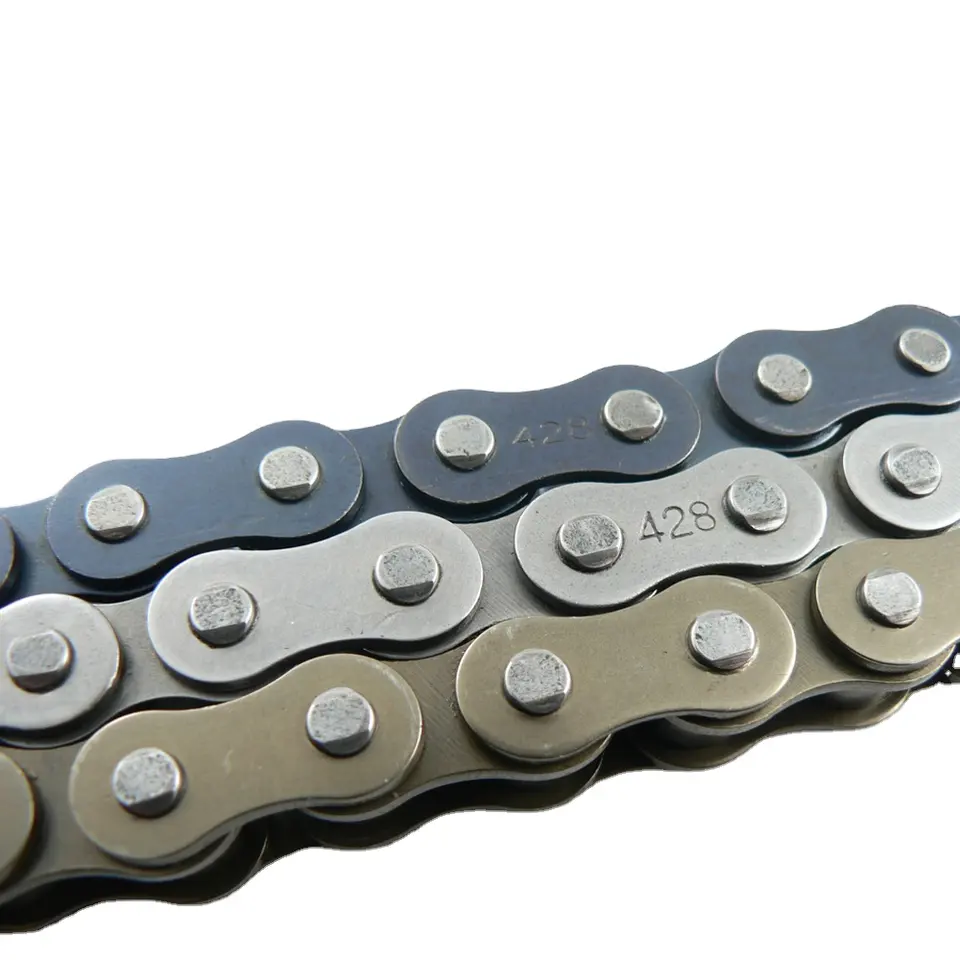
Kas mootorratta ketti saab kasutada kõrge temperatuuri või niiskusega keskkonnas?
Jah, mootorkette saab kasutada kõrge temperatuuri või niiskusega keskkonnas, kuid tuleb arvestada teatud kaalutlustega.
Kõrged temperatuurid:
Kõrge temperatuuriga keskkonnas töötades on oluline valida mootorikett, mis talub kõrgeid temperatuure. Kõrge temperatuuriga rakendusteks mõeldud kettide ehitamiseks kasutatakse sageli spetsiaalseid kuumakindlaid materjale, näiteks kuumtöödeldud terast või sulameid. Nendel materjalidel on suurepärane kuumakindlus ning need säilitavad oma tugevuse ja jõudluse isegi kõrgetel temperatuuridel.
Lisaks sobiva ketimaterjali valimisele muutub kõrge temperatuuriga keskkonnas veelgi olulisemaks ka õige määrimine. Kasutataval määrdeainel peaks olema kõrge temperatuuritaluvus, et tagada piisav määrimine ja vältida enneaegset kulumist. Keti seisukorra ja määrimistaseme regulaarne jälgimine on oluline selle toimivuse säilitamiseks ja kuumuse mõju minimeerimiseks.
Niiskus:
Niiskes keskkonnas suureneb mootorikettide korrosiooni ja rooste tekkimise oht. Selle probleemi lahendamiseks kasutatakse mootorikettide puhul tavaliselt korrosioonikindlaid materjale ja katteid. Roostevabast terasest ketid või spetsiaalse korrosioonikindla kattega ketid pakuvad paremat kaitset niiskuse ja õhuniiskuse eest.
Niiskes keskkonnas on niiskuse tungimise ja korrosiooni tekkimise vältimiseks ülioluline ka korralik hooldus ja määrimine. Regulaarne kontroll, puhastamine ja korrosioonivastaste määrdeainetega määrimine aitab pikendada keti eluiga ja säilitada selle jõudlust.
Oluline on märkida, et kuigi mootorkette saab kasutada kõrge temperatuuriga või niiskes keskkonnas, võib see siiski mõjutada nende jõudlust ja eluiga. Sellistes tingimustes mootorkettide kasutamise kohta on soovitatav konsulteerida keti tootjaga, et saada konkreetseid juhiseid ja soovitusi. Lisaks tuleks kaaluda nõuetekohast ventilatsiooni ja keskkonnakontrolli, et minimeerida kõrge temperatuuri või niiskuse mõju keti jõudlusele.
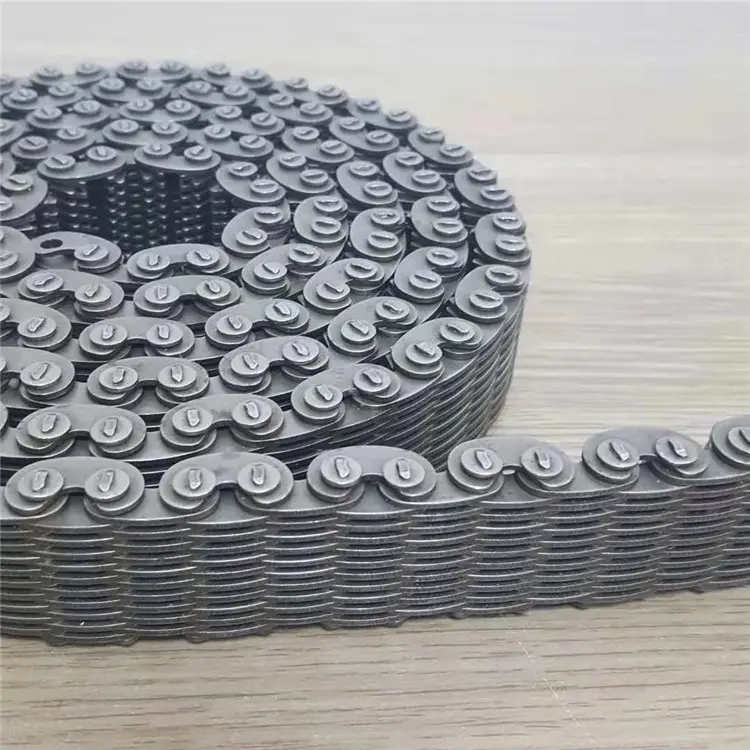
Kas mootorikett suudab taluda raskeid koormusi?
Jah, mootorketid on loodud raskete koormuste talumiseks erinevates rakendustes. Siin on mõned tegurid, mida arvestada:
1. Keti tugevus: Mootoriketidel on erinevad tugevusklassid, mida tavaliselt mõõdetakse nende maksimaalse lubatud pinge või tõmbetugevuse järgi. Oluline on valida mootorikett, mille tugevusklass sobib teie rakenduse eeldatavate koormustega. Kõrgema tugevusklassiga ketid suudavad taluda raskemaid koormusi.
2. Keti materjal: Mootoriketid on tavaliselt valmistatud ülitugevast terasest või sulammaterjalidest, mis pakuvad suurepärast vastupidavust ja kandevõimet. Materjali valik sõltub konkreetsetest rakendusnõuetest, sealhulgas eeldatavast koormusest, keskkonnatingimustest ja kõikidest regulatiivsetest standarditest.
3. Keti konstruktsioon: Raskete koormuste jaoks mõeldud mootorkettidel on sageli vastupidavad konstruktsioonielemendid, mis parandavad nende kandevõimet. Nende hulka võivad kuuluda suuremad sammud, paksemad plaadid, karastatud komponendid ja täppistootmine. See konstruktsioon tagab, et kett talub raskete koormustega seotud jõude ja pingeid.
4. Määrimine: Nõuetekohane määrimine on raskete koormatega mootorkettide jaoks hädavajalik. See aitab vähendada hõõrdumist ja kulumist, tagades sujuva töö ja pikendades keti kasutusiga. Piisav määrimine hoiab ära ka ülekuumenemise ja korrosiooni, mis võib negatiivselt mõjutada keti kandevõimet.
5. Ketiratta disain: Mootori ketiga haarduvad ketirattad mängivad samuti olulist rolli raskete koormuste käsitsemisel. Ketirattad peaksid olema konstrueeritud nii, et need jaotavad koormuse ühtlaselt kogu ketile ja tagavad usaldusväärse haarde. Tugevad ja õige suurusega ketirattad tagavad, et kett suudab raskeid koormusi tõhusalt edastada ilma liigse kulumise või riketeta.
Raskete koormuste rakenduste jaoks mõeldud mootoriketi valimisel on oluline tutvuda tootja spetsifikatsioonide ja juhistega. Need võivad anda üksikasjalikku teavet keti kandevõime kohta, sealhulgas selliseid tegureid nagu tõmbetugevus, töökoormuse piirangud ja soovitatavad ohutustegurid. Keti õige valik, regulaarne hooldus ja koormuspiirangute järgimine on võtmetähtsusega ohutu ja tõhusa töö tagamiseks raskete koormuste korral.

Mis on mootorikett ja kuidas seda kasutatakse?
Mootorikett, tuntud ka kui jõuülekandekett, on mehaaniline seade, mida kasutatakse mootori või jõuülekande jõu edastamiseks masina või süsteemi erinevatesse osadesse. See koosneb omavahel ühendatud lülidest, mis moodustavad painduva ja vastupidava keti.
Mootorikette kasutatakse laialdaselt mitmesugustes rakendustes, sealhulgas autotööstuses, tööstusmasinates, põllumajandusseadmetes ja konveiersüsteemides. Neil on oluline roll pöörleva liikumise ja jõu edastamisel mootorilt erinevatele komponentidele, nagu rattad, hammasrattad, ketirattad või rihmarattad.
Mootoriketi kasutatakse tavaliselt järgmiselt.
1. Jõuülekanne: Mootoriketi peamine ülesanne on edastada mootorilt jõudu süsteemi teistele osadele. Kui mootor pöörleb, paneb see ajamiga käima keti, mis omakorda paneb ajamiga käima ühendatud komponente, võimaldades neil täita oma ettenähtud funktsioone.
2. Kiiruse ja pöördemomendi muundamine: Mootoriketid on konstrueeritud edastama võimsust erinevatel kiirustel ja teisendama pöördemomenti mootori ja käitatavate komponentide vahel. Sobivate ketirataste suuruste ja keti pikkuste valimisega saab pöörlemiskiirust ja pöördemomenti reguleerida vastavalt süsteemi nõuetele.
3. Paindlikkus ja kohanemisvõime: Mootoriketid on paindlikud ja kohanemisvõimelised, võimaldades neid kasutada erinevates suundades ja konfiguratsioonides. Need taluvad joondushäireid, ebaühtlast koormust ja suunamuutusi, mistõttu sobivad need keerukate masinate ja süsteemide jaoks.
4. Hooldus ja määrimine: Mootoriketi usaldusväärse töö tagamiseks on oluline nõuetekohane hooldus ja määrimine. Regulaarne kontroll, puhastamine ja määrimine aitavad vähendada hõõrdumist, kulumist ja korrosiooni, tagades keti optimaalse jõudluse ja pikaealisuse.
Mootoriketid on saadaval erineva suuruse, disaini ja materjaliga, et need sobiksid konkreetsete rakendustega. Õige keti valimine konkreetse süsteemi jaoks hõlmab selliste tegurite arvessevõtmist nagu kandevõime, kiirus, keskkond ja ühilduvus teiste komponentidega. Ohutu ja tõhusa töö tagamiseks on oluline järgida tootja juhiseid ja tööstusstandardeid.


editor by CX 2024-04-04