Αλυσίδα μοτοσικλέτας 420 Standard | Βήμα 12,700 mm, 15,6 kN

Αλυσίδα μοτοσικλέτας 420 — βήμα 12,700 mm, εσωτερικό πλάτος 6,35 mm, κυματιστός δακτύλιος, αντοχή σε εφελκυσμό 15,6 kN, 0,57 kg/m. Σχεδιασμένη για σκούτερ 50–125cc, μοτοσικλέτες dirt, ATV και ελαφριά μηχανήματα εκτός δρόμου. Περιλαμβάνει οδηγό επιλογής βήματος 420 vs 428 vs 520 και πρόγραμμα λίπανσης.
Επισκόπηση προϊόντος
Ο 420 αλυσίδα μοτοσικλετών είναι μια αλυσίδα κίνησης με ρολό με βήμα 12.700 mm και εσωτερικό πλάτος 6,35 mm — η στενότερη και ελαφρύτερη από την συνήθως χρησιμοποιούμενη οικογένεια αλυσίδων βήματος 1/2 ίντσας. Καταλαμβάνει το ελαφρύτερο άκρο του τυπικού φάσματος αλυσίδων μοτοσικλέτας, σχεδιασμένη για κινητήρες όπου η ισχύς είναι μέτρια και όπου η ελαχιστοποίηση της περιστρεφόμενης μάζας και του βάρους της αλυσίδας συμβάλλει πραγματικά στη συνολική απόδοση της μηχανής. Με 0,57 kg/m και αντοχή σε εφελκυσμό 15,6 kN, η 420 διαχειρίζεται το εύρος ροπής από τετράχρονους κινητήρες 50cc έως περίπου 125cc με άνετο ύψος κεφαλής.
Το 420 pitch είναι στάνταρ στα περισσότερα μοτοποδήλατα 50cc, στις μοτοσικλέτες εισαγωγικού επιπέδου 125cc, σε πολλές μοτοσικλέτες εκτός δρόμου στην κατηγορία 50–110cc, και σε μια μεγάλη ποικιλία ATV και μικρότερων οχημάτων αναψυχής εκτός δρόμου. Το ελαφρύ του βάρος είναι πραγματικά ωφέλιμο σε αυτές τις μηχανές - μια αλυσίδα 420 είναι μετρήσιμα ελαφρύτερη από μια μονάδα 428 ή 520, και σε μια μηχανή 70 κιλών με κινητήρα 4kW, αυτό έχει μεγαλύτερη σημασία από ό,τι σε μια μοτοσικλέτα touring 200 κιλών με κινητήρα 60kW.
Προδιαγραφές
| Αριθμός αλυσίδας | Βήμα (mm) | Τύπος Μπους | Πλάτος (mm) | Διάμετρος καρφίτσας (mm) | Μήκος καρφίτσας (mm) | Διάμετρος κυλίνδρου (mm) | Πλάκα T Εσωτερική (mm) | Πλάκα T Εξωτερική (mm) | Αντοχή σε εφελκυσμό (kN) | Βάρος (kg/m) |
|---|---|---|---|---|---|---|---|---|---|---|
| 420 | 12.700 | Κατσαρωμένο | 6.35 | 3.96 | 14.70 | 7.77 | 1.50 | 1.50 | 15.6 | 0.57 |
420 vs 428 vs 520 — Επιλογή του σωστού βήματος
Και τα τρία βήματα ανήκουν στην οικογένεια βημάτων 12,70 mm (1/2 ίντσας) αλλά έχουν διαφορετικά εσωτερικά πλάτη και κατά συνέπεια διαφορετικές περιοχές επαφής με τους κυλίνδρους. Ο αριθμός βήματος κωδικοποιεί τόσο το βήμα (τα δύο πρώτα ψηφία: "42" = 4/8 ίντσας × 10 = 12,7 mm· "52" = 5/8 ίντσας × 10 = 15,875 mm) όσο και την κατηγορία πλάτους (τα δύο τελευταία ψηφία). Για ποδήλατα που χρησιμοποιούν αυτήν τη στιγμή 420, η προσπάθεια τοποθέτησης μιας 428 ή 520 απαιτεί αντικατάσταση γραναζιού — τα γρανάζια δεν είναι εναλλάξιμα μεταξύ των οικογενειών εσωτερικού πλάτους. Επιβεβαιώστε τον αριθμό σφραγίδας της υπάρχουσας αλυσίδας σας πριν παραγγείλετε οποιαδήποτε αντικατάσταση.
| Προσδιορισμός | 420 (Αυτή η αλυσίδα) | 428 | 520 |
|---|---|---|---|
| Βήμα (mm) | 12.700 | 12.700 | 15.875 |
| Εσωτερικό πλάτος (mm) | 6.35 | 7.85 | 6.35 |
| Διάμετρος κυλίνδρου (mm) | 7.77 | 8.51 | 10.16 |
| Αντοχή σε εφελκυσμό (kN) | 15.6 | 17.8 | 26.5 |
| Βάρος (kg/m) | 0.57 | 0.71 | 0.91 |
| Τυπική μετατόπιση κινητήρα | 50–125cc | 125–250cc | 250–600cc |
| Κοινές εφαρμογές | Μοτοποδήλατα, μίνι ποδήλατα εδάφους, μικρά ATV | 125–250cc για δρόμο, εκτός δρόμου | Μοτοσικλέτες μεσαίας κατηγορίας για σπορ και γυμνές μοτοσικλέτες |
| Εναλλαξιμότητα γραναζιών | Μόνο γρανάζια 420 | Μόνο γρανάζια 428 | Μόνο γρανάζια 520 |
Το στενότερο πλάτος του 420 σε σχέση με το 428 (εσωτερικό 6,35 έναντι 7,85 mm) είναι η πιο σημαντική φυσική διαφορά μεταξύ των δύο επιλογών ίδιου βήματος. Και οι δύο χρησιμοποιούν βήμα 12,70 mm — και αυτή είναι η μόνη διάσταση που έχει σημασία για το πλέγμα του γραναζιού — αλλά ο στενότερος κύλινδρος του 420 σημαίνει ότι δεν θα εφαρμόσει σωστά στην απόσταση των δοντιών ενός γραναζιού 428. Πάντα να ελέγχετε αν τα γρανάζια σας έχουν σφραγίδα 420 ή 428 πριν παραγγείλετε, ειδικά σε μοτοσικλέτες όπου οι προηγούμενοι ιδιοκτήτες μπορεί να έχουν αναβαθμίσει το αλυσίδα μοτοσικλέτας χωρίς να αντικατασταθούν τα γρανάζια.
Πλεονεκτήματα και αντισταθμίσεις του 420
Το βήμα 420 καταλαμβάνει μια σαφή θέση. Η κατανόηση τόσο των χαρακτηριστικών του όσο και των ορίων του βοηθά να διασφαλίσετε ότι επιλέγετε τις σωστές προδιαγραφές για τις πραγματικές σας ανάγκες οδήγησης, όχι απλώς να καταφεύγετε σε μια αναβάθμιση τύπου "όσο μεγαλύτερο τόσο καλύτερο" που προσθέτει βάρος χωρίς όφελος.
Όπου το 420 λειτουργεί καλά
- ✔Σκούτερ και μοτοποδήλατα 50–125cc σε ασφαλτοστρωμένους δρόμους — η ισχύς είναι εντός της ικανότητας φορτίου των 15,6 kN με σημαντικό περιθώριο ασφαλείας
- ✔Μίνι μοτοσικλέτες dirt και pit bikes όπου η μείωση βάρους είναι ένας πραγματικός παράγοντας απόδοσης στην αναλογία ισχύος προς βάρος
- ✔Αντικατάσταση με γνώμονα τον προϋπολογισμό σε μοτοσικλέτες με προδιαγραφές OEM 420 — η αναβάθμιση σε βαρύτερο βήμα σημαίνει και νέα γρανάζια, κάτι που σπάνια δικαιολογείται από άποψη κόστους
- ✔ATV αναψυχής και ελαφρά οχήματα εκτός δρόμου όπου το σύστημα μετάδοσης κίνησης σπάνια πλησιάζει τα όρια φορτίου του
Πού να εξετάσετε το ενδεχόμενο αναβάθμισης
- ✗Κινητήρες υψηλής απόδοσης 125–150cc που παράγουν ισχύ άνω των 12–15 kW περίπου — ο συντελεστής ασφαλείας στα 15,6 kN μπορεί να είναι ανεπαρκής υπό συνεχή έντονη επιτάχυνση
- ✗Χρήση εκτός δρόμου με συχνές διαβάσεις νερού ή παρατεταμένη έκθεση σε λάσπη — σκεφτείτε το 420H (ενισχυμένο) ή μια σφραγισμένη έκδοση για καλύτερη διάρκεια ζωής
- ✗Οι αναβάτες που δεν μπορούν να δεσμευτούν στο διάστημα λίπανσης των 400–500 χλμ. που απαιτεί η μη σφραγισμένη στάνταρ αλυσίδα — η σφραγισμένη αλυσίδα 4205-O ή 415H-O (με σφραγισμένο δακτύλιο Ο) διαχειρίζεται καλύτερα τα μεγαλύτερα διαστήματα λίπανσης.
Πρόγραμμα και μέθοδος λίπανσης
Μια αλυσίδα 420 τυπικής ποιότητας πρέπει να λιπαίνεται κάθε 400-600 χλμ. υπό κανονικές συνθήκες ασφαλτοστρωμένου δρόμου ή πιο συχνά εάν οδηγείτε σε υγρό ή σκονισμένο περιβάλλον. Η κατασκευή με κυρτό δακτύλιο σημαίνει ότι η εσωτερική άρθρωση βασίζεται εξ ολοκλήρου σε εξωτερικά εφαρμοζόμενο λιπαντικό — μόλις αυτή η μεμβράνη στεγνώσει ή εκτοπιστεί από τη βρωμιά του δρόμου, η φθορά του δακτυλίου επιταχύνεται γρήγορα. Σε σκούτερ που καλύπτουν μικρές καθημερινές αποστάσεις, ο χρόνος μπορεί επίσης να αποτελέσει πρακτικό παράγοντα: εάν έχουν περάσει τρεις εβδομάδες από την τελευταία λίπανση, ανεξάρτητα από τα χιλιόμετρα, λιπάνετε την αλυσίδα πριν από την επόμενη βόλτα.
- 1
Καθαρίστε πρώτα την αλυσίδα με ένα απολιπαντικό ή ένα ειδικό καθαριστικό αλυσίδας. Ξεπλύνετε με νερό και αφήστε την να στεγνώσει — εφαρμόζοντας λιπαντικό πάνω από παλιά άμμο, παγιδεύει λειαντικό υλικό στις επιφάνειες του κυλίνδρου. - 2
Εφαρμόστε λιπαντικό αλυσίδας στο εσωτερικό των κρίκων της αλυσίδας — τις εσωτερικές επιφάνειες μεταξύ των κυλίνδρων και των πλακών — ενώ περιστρέφετε τον πίσω τροχό με το χέρι. Αυτό στοχεύει στις επιφάνειες όπου συμβαίνει η επαφή κυλίνδρου-γρανάζι και πείρου-δακτυλίου. - 3
Εφαρμόστε μια λεπτή στρώση στις εξωτερικές επιφάνειες της πλάκας για να μειώσετε τη διάβρωση στις επιφάνειες της πλάκας, κάτι που είναι ιδιαίτερα σημαντικό κατά τη διάρκεια των υγρών περιόδων ή σε παράκτια περιβάλλοντα με αλμυρό αέρα. - 4
Σκουπίστε την περίσσεια λιπαντικού από τις εξωτερικές επιφάνειες της πλάκας μετά από 2 λεπτά. Η περίσσεια λαδιού εκτοξεύεται με ταχύτητα στο πίσω ελαστικό και συσσωρεύει επίσης σκόνη από το δρόμο, η οποία ακυρώνει το όφελος λίπανσης. - 5
Αφήστε το λιπαντικό να στεγνώσει πριν από την οδήγηση. Ελέγξτε ταυτόχρονα τον τζόγο της αλυσίδας — ο σωστός τζόγος για τα περισσότερα μηχανήματα μικρού κυβισμού είναι 25–30 mm κάθετης κίνησης στο μέσο της κάτω διαδρομής της αλυσίδας. Ελέγξτε το εγχειρίδιο κατόχου σας για την ειδική για το μοντέλο εικόνα.

Γρανάζια για αλυσίδες μοτοσικλετών — Σχέση μετάδοσης και επιλογή
Το μπροστινό και το πίσω μέρος γρανάζια ορίστε την τελική σχέση μετάδοσης — την αναλογία του αριθμού των δοντιών του πίσω γραναζιού προς τον αριθμό των δοντιών του μπροστινού γραναζιού. Σε ένα μηχάνημα εξοπλισμένο με 420 με 14 μπροστινά δόντια και 42 πίσω δόντια, η σχέση είναι 3,0:1, που σημαίνει ότι ο πίσω τροχός περιστρέφεται μία φορά για κάθε τρεις περιστροφές του στροφαλοφόρου άξονα στον άξονα εξόδου του κινητήρα (μετά το κιβώτιο ταχυτήτων). Η αύξηση του αριθμού των δοντιών του πίσω γραναζιού (ή η μείωση του μπροστινού) αυξάνει τη σχέση μετάδοσης, δίνοντας μεγαλύτερη επιτάχυνση με κόστος την τελική ταχύτητα. Η μείωση των πίσω δοντιών (ή η προσθήκη μπροστινού) μειώνει τη σχέση μετάδοσης, αυξάνοντας την τελική ταχύτητα ενώ παράλληλα μειώνει την έλξη στις χαμηλές στροφές.
Για την τυπική προδιαγραφή 420, το υλικό του γραναζιού είναι συνήθως χάλυβας — παρέχοντας την καλύτερη δυνατή αντοχή για μια αλυσίδα που αναμένεται να καλύψει 8.000–15.000 χλμ. πριν από την αντικατάστασή της. Τα γρανάζια αλουμινίου σε μια μηχανή 420 είναι ασυνήθιστα επειδή η εξοικονόμηση βάρους σε σχέση με τη συνολική μάζα της μηχανής είναι αμελητέα και ο χάλυβας ξεπερνά σε αντοχή το αλουμίνιο κατά σημαντικό παράγοντα σε αυτό το βήμα και το επίπεδο ισχύος της αλυσίδας.

Κατά την αντικατάσταση της αλυσίδας, ελέγξτε και τα δύο γρανάζια. Οι άκρες των δοντιών που φαίνονται μυτερές ή λεπτές ή οι μπροστινές επιφάνειες των δοντιών με προφίλ σε σχήμα αγκίστρου σημαίνουν ότι τα γρανάζια πρέπει να αντικατασταθούν ταυτόχρονα. Η τοποθέτηση μιας νέας αλυσίδας 420 σε φθαρμένα γρανάζια θα επιταχύνει σημαντικά τον ρυθμό επιμήκυνσης της νέας αλυσίδας — το φθαρμένο γρανάζι μετατοπίζει το φορτίο στις πλευρικές πλάκες της αλυσίδας αντί για τους κυλίνδρους, κάτι που δεν είναι ο τρόπος με τον οποίο έχουν σχεδιαστεί οι αλυσίδες 420 για να μεταφέρουν φορτίο.
Συχνές ερωτήσεις
Μπορώ να χρησιμοποιήσω αλυσίδα 428 σε ποδήλατο που αυτή τη στιγμή λειτουργεί με 420;
Όχι χωρίς να αντικατασταθούν και τα δύο γρανάζια. Τα 420 και 428 έχουν το ίδιο βήμα 12,70 mm, επομένως οι κρίκοι της αλυσίδας εμπλέκονται στην ίδια απόσταση — αλλά η εσωτερική διαφορά πλάτους (6,35 mm έναντι 7,85 mm) σημαίνει ότι ο κύλινδρος δεν θα εφαρμόσει σωστά στα κενά των δοντιών του γραναζιού 420 εάν τοποθετηθεί αλυσίδα 428. Η αλυσίδα είτε θα μπλοκάρει είτε θα κινείται λανθασμένα στα δόντια, προκαλώντας γρήγορη φθορά και κίνδυνο για την ασφάλεια. Τοποθετήστε αλυσίδα 428 μόνο εάν αντικαταστήσετε και τα δύο γρανάζια με εξαρτήματα προδιαγραφών 428.
Ποια είναι η διαφορά μεταξύ μιας αλυσίδας 420 και 415;
Το 415 έχει το ίδιο βήμα 12,70 mm αλλά ακόμη στενότερο εσωτερικό πλάτος περίπου 4,76 mm (έναντι 6,35 mm για το 420). Το 415 χρησιμοποιείται σε μηχανές πολύ μικρού κυβισμού — αγωνιστικά 50cc και ορισμένα μίνι ποδήλατα — όπου το ελάχιστο βάρος της αλυσίδας αποτελεί προτεραιότητα. Το 420 είναι η πιο συνηθισμένη επιλογή επειδή ο φαρδύτερος κύλινδρος παρέχει μεγαλύτερη επιφάνεια επαφής στο δόντι του γραναζιού, μειώνοντας τον ρυθμό φθοράς των δοντιών σε ισοδύναμα φορτία.
Πώς μπορώ να μετρήσω την έκταση της αλυσίδας 420 για να αποφασίσω πότε θα την αντικαταστήσω;
Μετρήστε 20 διαδοχικούς κρίκους (από κέντρο πείρου σε κέντρο πείρου κατά μήκος 20 κρίκων) υπό ελαφρά τάση που εφαρμόζεται στην αλυσίδα. Η ονομαστική απόσταση 20 κρίκων είναι 20 × 12,70 = 254,0 mm. Αντικαταστήστε την αλυσίδα όταν το μετρούμενο μήκος υπερβεί τα 261,6 mm (επιμήκυνση 3%). Επίσης, τραβήξτε την αλυσίδα μακριά από το πίσω γρανάζι στο κέντρο της διαδρομής της αλυσίδας — εάν μπορείτε να εκθέσετε περισσότερο από τη μισή ρίζα του δοντιού, η αλυσίδα έχει φθαρεί πέρα από το εύρος ρύθμισης.
Είναι το 420 διαθέσιμο σε έκδοση με σφραγισμένο δακτύλιο Ο;
Το 4205-O (στεγανοποιημένος δακτύλιος Ο, βήμα 12,70 mm, εσωτερικό πλάτος 6,35 mm) είναι το αντίστοιχο στεγανοποιημένο. Χρησιμοποιεί το ίδιο βήμα και συμβατότητα γραναζιού με το 420, αλλά με συμπαγή κατασκευή δακτυλίου και στεγανοποιήσεις δακτυλίου Ο σε κάθε άρθρωση, επεκτείνοντας τα διαστήματα λίπανσης στα 600–1.000 km και προσφέροντας σημαντικά μεγαλύτερη διάρκεια ζωής σε βρεγμένες ή εκτός δρόμου συνθήκες. Επικοινωνήστε μαζί μας για να επιβεβαιώσετε τη διαθεσιμότητα και τις λεπτομέρειες των προδιαγραφών.
Πόσους κρίκους έχει συνήθως μια αλυσίδα 420;
Ο αριθμός των συνδέσμων ποικίλλει ανάλογα με το μηχάνημα — εξαρτάται από την απόσταση διαδρομής του πίσω τροχού (απόσταση από το μπροστινό στο πίσω γρανάζι) και τον αριθμό των δοντιών του γραναζιού. Ο συνήθης αριθμός συνδέσμων 420 για μηχανήματα 50–125cc κυμαίνεται από 96 έως 120 συνδέσμους, αλλά επιβεβαιώστε τον ακριβή αριθμό από το εγχειρίδιο κατόχου σας ή μετρώντας τους συνδέσμους στην αλυσίδα που έχει αφαιρεθεί. Η παραγγελία λανθασμένου αριθμού συνδέσμων απαιτεί την προσθήκη ή την αφαίρεση συνδέσμων στον κύριο σύνδεσμο, κάτι που είναι δυνατό, αλλά προσθέτει ένα βήμα στην εγκατάσταση.
Κριτικές πελατών
Παρκ Τζάε-γου, Διευθυντής Στόλου Σκούτερ, Σεούλ (Φεβρουάριος 2025)
«Διαθέτουμε 15 σκούτερ παράδοσης σε 420 αλυσίδες με μηνιαία εναλλαγή αντικατάστασης. Η ποιότητα από την Korea Ever-Power είναι σταθερή από παρτίδα σε παρτίδα — ίδια χαρακτηριστικά ελαστικότητας, ίδια εφαρμογή εγκατάστασης. Το κόστος συντήρησης ανά ποδήλατο είναι σταθερό από την αλλαγή. Δεν υπάρχουν βλάβες στην αλυσίδα που σχετίζονται με την ποιότητα εδώ και οκτώ μήνες.»
Κιμ Χιουν-κι, Pit Bike Racer, Gyeonggi-do (Ιανουάριος 2025)
«Να οδηγείς ένα 420 σε μια μοτοσικλέτα pit 110cc σε εκδηλώσεις συλλόγων. Η αλυσίδα είναι αισθητά ελαφρύτερη από την 428 που χρησιμοποιούσα παλιά — σε μια μηχανή 65 κιλών η διαφορά βάρους στα περιστρεφόμενα εξαρτήματα είναι στην πραγματικότητα σημαντική. Το 420 της Korea Ever-Power διατηρεί την τάση σταθερά καθ' όλη τη διάρκεια ενός Σαββατοκύριακου χρήσης στην πίστα. Η λίπανση μεταξύ των προπονήσεων το διατηρεί σε καλή κατάσταση.»
Λι Γιανγκ-χουν, Φοιτητής που μετακινείται καθημερινά, Νταετζόν (Δεκέμβριος 2024)
«Τοποθέτησα μόνος μου ένα 420 στο μοτοποδήλατο 50cc μου — χωρίς προηγούμενη εμπειρία, αλλά η εγκατάσταση είναι απλή. Η αλυσίδα συνοδευόταν από κλιπ και εγκαταστάθηκε χωρίς προβλήματα. Την λειτουργούσα καθημερινά για τέσσερις μήνες, λιπαίνοντας κάθε 400 χλμ. Δεν υπήρχαν προβλήματα τάσης και δεν υπήρχε σκουριά, ακόμα και κατά τη διάρκεια των βροχών του Δεκεμβρίου.»
Choi Tae-jin, Λιανοπωλητής Ανταλλακτικών Μοτοσικλετών, Μπουσάν (Νοέμβριος 2024)
«Το 420 είναι ένα από τα κορυφαία SKU μας για την αγορά μικρών σκούτερ και μοτοποδηλάτων. Η προμήθεια της Korea Ever-Power είναι αξιόπιστη και η ποιότητα είναι σταθερά αποδεκτή από τους πελάτες μας. Είχαμε πολύ λίγες επιστροφές σε αυτήν την αλυσίδα — το περιστασιακό ερώτημα σχετικά με τις διαστάσεις επιλύεται πάντα γρήγορα από την ομάδα τους.»
Συσκευασία και Αποστολή
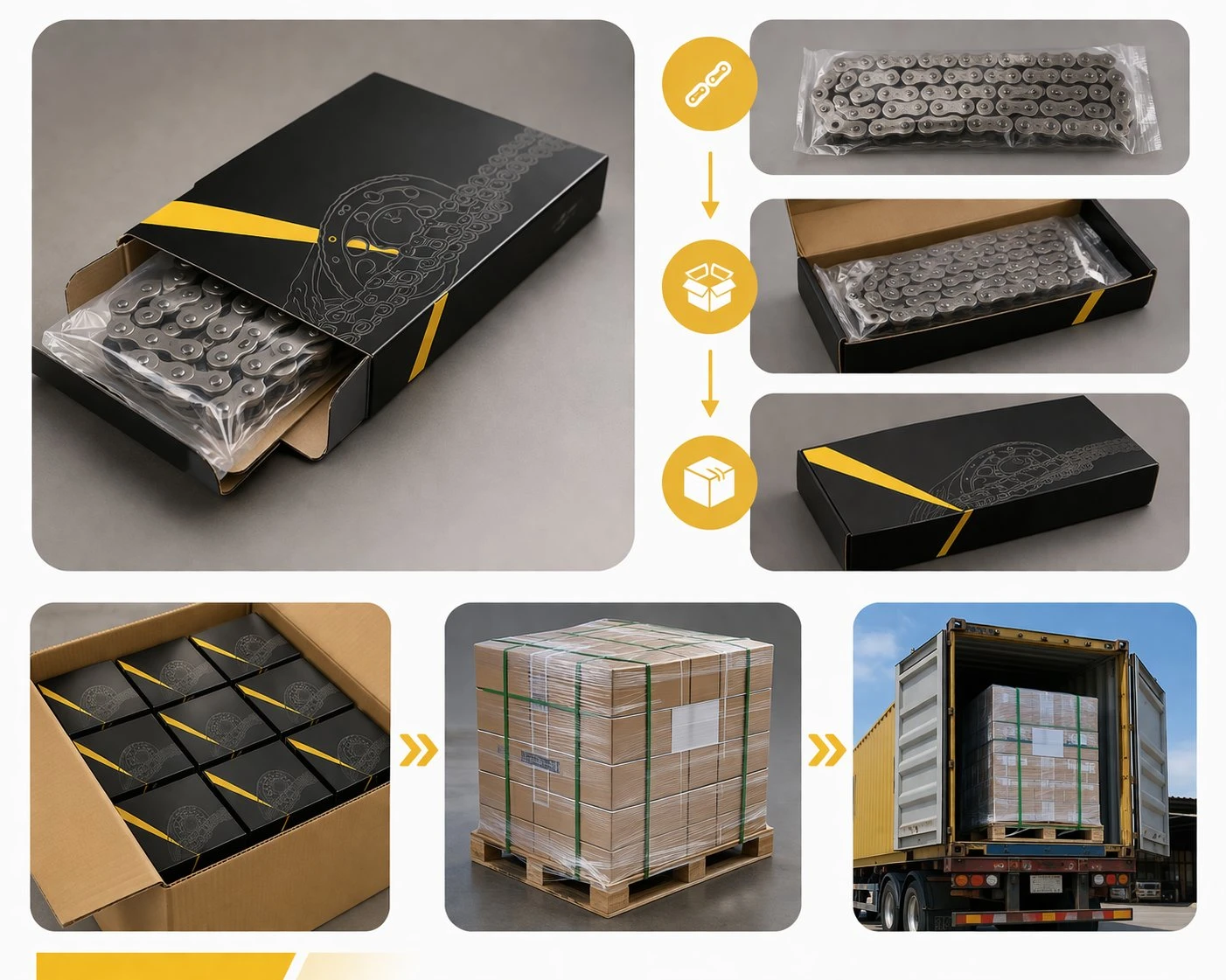
Επιπλέον πληροφορίες
| Συντάκτης | Cxm |
|---|
Σχετικά προϊόντα
-

Καδένα χρονισμού μοτοσικλέτας *25 *25H *25SH σειρά 06B
-

Αλυσίδα μοτοσικλέτας Super X-Ring 428SX 520-SX 525-SX 530-SX
-
Αλυσίδα μοτοσικλέτας X-Ring 428H-X 520H-X 525H-X 530H-X | Korea Ever-Power
-

Επαγγελματική αλυσίδα μοτοσικλέτας — 415P / 420P / 428P / 520P / 530P Σειρά Solid-Bush
-
Ενισχυμένη αλυσίδα μοτοσικλέτας 415H 420H 428H 520H 525H 530H | Korea Ever-Power
-

Αλυσίδα Μοτοσικλετών Motocross — Σειρά 428 / 520
-

Τυπική αλυσίδα μοτοσικλέτας — Σειρά 420 / 428 / 520 / 525 / 530 χωρίς σφράγιση
-
Αλυσίδα Μοτοσικλέτας — Πλήρης γκάμα αλυσίδων μετάδοσης κίνησης από τη σειρά 25 έως την 530H