What “Chain Stretching” Actually Means
The phrase “chain stretching” is mechanically inaccurate — the steel chain plates and pins do not physically stretch under normal riding loads. What actually happens is pin-bushing wear elongation: the carburized steel pin surface and the inner bore of the bushing gradually wear against each other with each chain articulation, removing microscopic material from both surfaces and increasing the pin-to-pin distance at each joint by a fraction of a millimetre.
A typical roller chain has 100–120 links. If each joint’s pin-bushing wear adds 0.07 mm of clearance, the 20-link measurement increases by 7 × 0.07 = 0.49 mm. At the 20-link replacement threshold (327 mm for a 15.875 mm pitch chain, vs nominal 317.5 mm), 9.5 mm of total 20-link growth has accumulated — meaning the average joint has worn 9.5 ÷ 20 ÷ 2 = 0.24 mm of material from each of the pin and bushing surfaces.
This wear rate is manageable — a sealed chain with consistent lubrication can last 20,000+ km before reaching this threshold. When a chain reaches replacement threshold in 4,000–6,000 km, something is accelerating the wear rate beyond what normal use produces. Identifying and fixing that cause prevents the next chain from failing early too.

The Six Causes of Accelerated Chain Elongation
Insufficient or Missed Lubrication
When the lubricant film at the pin-bushing interface degrades, dries, or washes away, the two steel surfaces run in direct contact. Wear rate without lubrication can be 5–10× the rate with a maintained film. A standard non-sealed chain that is lubricated every 1,500–2,000 km rather than the recommended 400–600 km may reach replacement threshold in under 5,000 km despite appearing clean and rust-free from outside.
New Chain Fitted on Worn Sprockets
Worn sprocket teeth with a hook profile engage the new chain’s rollers at a different angle than a correctly-profiled tooth — instead of seating the roller in the tooth valley, the hook tips apply a lateral force that progressively pushes the roller out of the valley as tension increases. This produces a combined wear and impact load at each sprocket engagement that is absent on new sprockets, and the new chain reaches its elongation threshold at half or less of its normal service distance.
Always replace the front sprocket when fitting a new chain. Inspect the rear sprocket for hook-tooth wear and replace if tooth profiles are asymmetric. This is the single most common reason riders report their new chain stretching quickly — the previous chain’s wear is left in the sprockets and transferred into the new chain from the first kilometre.
Wrong Chain Grade for the Engine Output
Fitting a standard non-sealed chain on a machine whose engine output creates working loads that approach the chain’s fatigue limit produces accelerated elongation even with perfect maintenance. A 250cc machine producing 25 hp is well within the standard 428 chain’s comfort zone. A 400cc machine tuned to 50+ hp and ridden aggressively is pushing the standard 428 into fatigue conditions that the H-grade 428H handles more comfortably — the heavier plate gauge provides a higher fatigue threshold at the same load.
Upgrade to the H-grade variant in the same pitch. A 428H at 20.6 kN versus the standard 428 at 17.8 kN — same sprockets, higher fatigue resistance. For sealed performance in the same pitch, the 428H-O (23.8 kN) or 428H-X (23.8 kN) delivers both the structural upgrade and sealed internal lubrication.
Contamination — Mud, Sand, or Abrasive Dust
Abrasive particles that penetrate the pin-bushing area act as a grinding compound. Sand particles — particularly fine silica — are harder than the carburized steel pin surface and produce micro-abrasion with every articulation cycle. A single ride through beach sand, farm track dust, or post-construction road debris can introduce contamination that accelerates pin-bushing wear dramatically. This is the reason off-road chains use solid-bore bushings — the tighter bore geometry resists contamination ingress compared to a curled bushing with a seam.
For mixed-surface riding, switch to a sealed chain. The O-ring or X-ring seal prevents contamination from reaching the pin-bushing interface regardless of what the external chain surfaces are exposed to. Clean the chain after any contamination exposure and re-lubricate before the next ride.
Wrong Lubricant — Penetrating Oil or General Degreaser
WD-40, penetrating oils, and general-purpose light lubricants are not chain lubricants. They do not have the adhesion, viscosity, or film strength to maintain a lubrication layer at the pin-bushing interface under load. Applied to a chain, they temporarily displace water and existing lubricant residue, leaving the pin-bushing contact area in a lower-lubrication state than it was before application. A rider who uses penetrating oil in place of chain lubricant and applies it regularly is technically lubricating the chain — but providing inadequate lubrication, which produces faster wear than correctly-interval lubricant application would.
Use only purpose-formulated chain lubricant — wax-based, wet, or dry type depending on conditions. These formulations are designed to penetrate between link plates and deliver a lasting film to the roller-bushing contact area, and to resist fling-off at normal riding speeds. On sealed chains, use only O-ring-safe formulations — petroleum solvents degrade NBR rubber seals.
Over-Tightened Chain — Accelerated Bearing Wear Loop
A chain tensioned tighter than the OEM specification continuously loads the countershaft bearing and rear wheel bearing with off-axis forces. As these bearings develop play from the continuous overloading, the sprockets run with increasing runout — the effective pitch circle no longer runs perfectly concentric, producing an uneven force distribution on the chain links that appears in the 20-link measurement as rapid elongation. The chain seems to stretch quickly, but the root cause is bearing damage from previous over-tightening, and fitting a new chain without addressing the bearing play will produce the same result again.
Always set chain tension to the OEM specification — not “as tight as possible.” If there is play in the countershaft or rear wheel bearing (detected by rocking the sprocket laterally with the chain removed), the bearing must be replaced before fitting a new chain. Fitting a new chain on a machine with damaged bearings will produce rapid re-elongation regardless of chain quality.
Cause and Solution — Quick Reference
| Cause | Symptom clue | Solution |
|---|---|---|
| Insufficient lubrication | Squeal before elongation threshold. Chain appears dry between services. | Increase lube frequency or switch to sealed chain type. |
| Worn sprockets | New chain elongates quickly from first km. Hook-tooth visible on sprockets. | Replace chain AND both sprockets together. |
| Wrong chain grade | Multiple chains fail quickly. High engine output. Aggressive riding. | Upgrade to H-grade or sealed H-grade variant (e.g. 428H, 428H-X). |
| Contamination | Rapid elongation after off-road/muddy/sandy rides. Gritty texture on chain. | Switch to sealed chain. Clean after every contamination exposure. |
| Wrong lubricant | Chain lubricated but still elongates fast. WD-40 or general oil used. | Switch to purpose-formulated chain lubricant only. |
| Over-tightened chain | New chain elongates fast. Bearing play detectable. Tight spot on wheel rotation. | Replace bearings. Set tension to OEM spec, not maximum tight. |
If You Have Fixed All Six Causes and the Chain Still Elongates Quickly
If lubrication is on schedule, sprockets are new, the correct chain grade is fitted, contamination is ruled out, purpose lubricant is being used, and chain tension is correct — but elongation is still faster than expected — the remaining possibility is chain quality. A chain with inadequately carburized pins will wear faster than specification regardless of maintenance conditions. Carburizing depth and hardness at the pin surface is the single most important material property in chain wear resistance and is not detectable visually at purchase.
Korea Ever-Power’s chain production records the carburizing cycle temperature and duration for every production batch. Incoming steel certification confirms alloy composition before production. Every batch is tensile-tested against JIS B 1801 thresholds. These controls collectively ensure that a chain’s wear resistance matches its rated specification — a chain that shortens these controls will produce lower wear resistance regardless of its outward appearance.

The sealed chain as a systematic solution: If Causes 1, 4, and 5 (lubrication, contamination, wrong lubricant) are all contributing to rapid elongation and changing behaviour consistently is difficult, a sealed O-ring or X-ring chain eliminates all three simultaneously. The factory-sealed internal grease cannot be depleted by inadequate external lubrication, is impenetrable to sand and mud, and is unaffected by whether the external lubricant is the correct type. For riders who have difficulty maintaining a consistent non-sealed chain service schedule, the sealed chain is not a luxury — it is a practical engineering solution.

Korea Ever-Power — Production Controls That Prevent Premature Elongation
Carburizing temperature recording, incoming steel certification, batch tensile testing, and articulation inspection are standard production checkpoints on every chain variant from 420 standard to 530-SX Super X-ring.

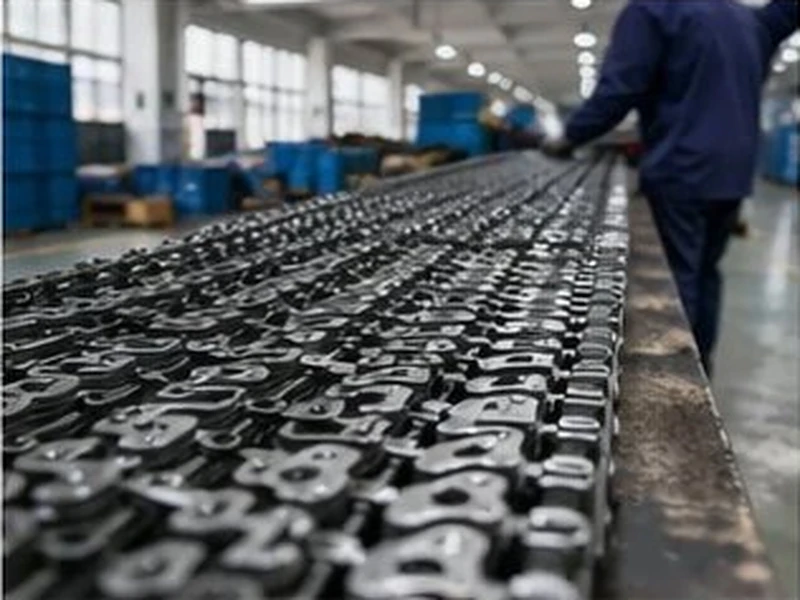


Korea Ever-Power Motorcycle Chain Co., Ltd. — ISO 9001 certified · 5 production facilities
Ready to Replace with a Chain That Lasts Longer?
After addressing the cause, fit the correct replacement. All sizes in stock — 420 through 530, standard through Super X-ring.
Frequently Asked Questions
Stop Replacing Chains Too Often
Korea Ever-Power supplies sealed and reinforced chains that maintain longer service life across all pitches — 420 through 530. Send us your chain number and riding conditions and we recommend the correct specification before you order.
Editor: Cxm