Reinforced Motorcycle Chain 415H 420H 428H 520H 525H 530H | Korea Ever-Power
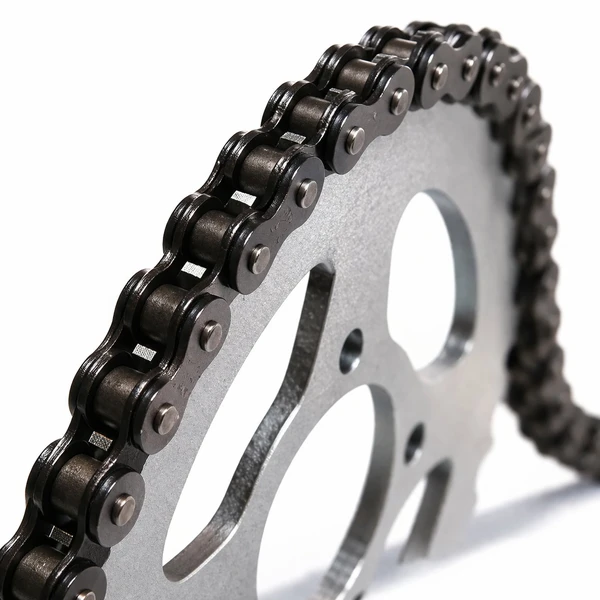
Reinforced motorcycle chains in 415H, 420H, 428H, 520H, 525H, and 530H — curled-bush construction with thicker plates and higher tensile strength than standard series, from 15.6 kN (415H) to 30.5 kN (520H/525H). Designed for high-power and demanding riding applications. Full spec table with pitch, roller diameter, pin data, plate thickness, and weight.
Product Overview
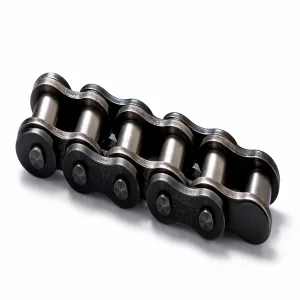
A reinforced motorcycle chain is a type of motorcycle drive chain engineered to be stronger and more durable than an equivalent standard-series chain. Reinforcement is achieved through a combination of approaches: thicker side plates that resist deformation under load, larger-diameter pins that increase joint shear strength, and in many variants, O-ring or X-ring seals that keep lubricant inside the pin-bushing joint and contaminants out. The result is a chain that handles more power and torque, withstands shock loading from aggressive acceleration and off-road impacts, and maintains accurate pitch dimensions for longer before reaching the stretch-replacement threshold.

Korea Ever-Power Motorcycle Chain Co., Ltd. supplies the H-grade reinforced series in six sizes: 415H, 420H, 428H, 520H, 525H, and 530H. All use curled-type bushing construction matched with heavier plates compared to the corresponding standard chain in the same pitch family. These chains are a practical upgrade for riders running standard chains on motorcycles that demand more from their drivetrain — whether from higher engine output, sustained high-load touring use, or riding in conditions that accelerate wear on lighter-spec chains. Tensile strengths range from 15.6 kN on the 415H through to 30.5 kN on the 520H and 525H.
Reinforced Motorcycle Chain Size Chart
All six reinforced motorcycle chain H-grade specifications listed below use curled-type bushing construction — the same bushing type as standard series chains in the same pitch, but with meaningfully heavier plate thickness and in most cases larger pin diameter. Tensile strength values represent tested break loads; actual working-load safety factors should be calculated based on your engine output and application.
| Chain No. | Pitch (mm) | Bush Type | Width (mm) | Pin Dia (mm) | Pin Length (mm) | Roller Dia (mm) | Plate T Inner (mm) | Plate T Outer (mm) | Tensile Strength (kN) | Weight (kg/m) |
|---|---|---|---|---|---|---|---|---|---|---|
| 415H | 12.700 | Curled | 4.76 | 3.96 | 13.00 | 7.76 | 1.50 | 1.50 | 15.6 | 0.53 |
| 420H | 12.700 | Curled | 6.35 | 3.96 | 16.00 | 7.77 | 1.80 | 1.80 | 18.0 | 0.69 |
| 428H | 12.700 | Curled | 7.85 | 4.45 | 18.75 | 8.51 | 2.03 | 2.03 | 20.6 | 0.82 |
| 520H | 15.875 | Curled | 6.35 | 5.08 | 19.00 | 10.16 | 2.40 | 2.35 | 30.5 | 1.04 |
| 525H | 15.875 | Curled | 7.94 | 5.08 | 20.90 | 10.16 | 2.40 | 2.35 | 30.5 | 1.09 |
| 530H | 15.875 | Curled | 9.53 | 5.08 | 22.10 | 10.16 | 2.40 | 2.35 | 30.4 | 1.15 |
Key Features of the Reinforced Motorcycle Chain
Reinforced motorcycle chains are built for higher loads and more demanding conditions than standard chains. They incorporate construction features that extend service life and reduce failure risk in situations where a lighter-spec chain would deteriorate rapidly. The following features distinguish H-grade reinforced chains from their standard equivalents in the same pitch series.
Stronger Materials
H-grade chains are produced from high-carbon or alloy steel grades that provide greater tensile and shear resistance than the steel used in standard series chains. The 420H reaches 18.0 kN versus 15.6 kN for the standard 420 — a meaningful difference when the drivetrain is under sustained load or subject to shock inputs.
More Robust Construction
Thicker side plates and larger pin diameters distinguish H-grade from standard within the same pitch. The 428H, for example, has 2.03 mm plates versus the standard 428's 1.60 mm — a 27% increase in plate section that directly improves resistance to bending and impact loads experienced in high-torque applications.
O-Ring / X-Ring Seal Compatibility
Many reinforced motorcycle chains are available with O-ring or X-ring seals. These seals hold factory-applied grease inside the pin-bushing joint and prevent dirt and moisture from entering, extending lubrication life and reducing the pin-bushing wear rate that is the primary cause of chain elongation.
Extended Service Life
The combination of heavier construction and higher-grade material translates directly to a longer time between replacements. Riders who previously replaced standard chains at 8,000–12,000 km intervals often report 15,000–20,000 km or more from an H-grade chain under equivalent riding conditions and maintenance habits.
Increased Durability Under Demanding Use
For applications such as loaded touring, high-performance street use, or off-road riding, the reinforced chain's resistance to plastic deformation and joint wear makes it the more appropriate selection. A standard chain under these conditions may fail to maintain correct tension within a few thousand kilometres.
Reduced Long-Term Maintenance Demands
Sealed variants of the reinforced chain require less frequent lubrication than their non-sealed equivalents, as the O-ring or X-ring handles internal grease retention. For riders who cannot always maintain short lubrication intervals, the sealed H-grade chain provides a practical margin of safety against premature internal wear.
If you need a motorcycle chain that can handle high loads and demanding conditions consistently, a reinforced H-grade chain is the practical upgrade from a standard series. The higher purchase price is offset by longer service life, reduced sprocket wear from accurate pitch maintenance, and lower aggregate replacement frequency.
How to Lubricate a Reinforced Motorcycle Chain
Even with the heavier construction of a reinforced chain, regular lubrication is essential for achieving the full service life the H-grade specification is designed to deliver. The pin-bushing joint depends on a film of lubricant to prevent direct metal-on-metal contact — once that film breaks down, wear accelerates regardless of plate or pin thickness. On non-sealed reinforced chains, lubrication frequency is the single most significant factor determining actual service life.
- 1
Place the motorcycle on a rear stand so the rear wheel is clear of the ground and can rotate freely with the engine off and transmission in neutral. - 2
Apply a thin, even coat of motorcycle-specific chain lubricant to the inside of the chain — the surface facing the sprocket, between the rollers and plates. This is the face that contacts the sprocket teeth and where the roller-to-sprocket wear occurs. - 3
Rotate the rear wheel slowly by hand to move the chain through the lubrication point. This ensures the lubricant reaches all links rather than just the section accessible from one position. - 4
Apply a thin coat of lubricant to the outside of the chain plates to reduce surface corrosion on the plate faces, which is especially important in wet or salty conditions common during Korean winters. - 5
Place a piece of cardboard behind the lower chain run between the sprockets and apply lubricant directly onto the chain while slowly rotating the rear wheel. The cardboard prevents overspray from reaching the rear tyre. - 6
Rotate the rear wheel a further two full turns after applying lubricant to distribute it evenly through all the joints. - 7
Wipe away any excess lubricant with a clean rag. Excess lubricant on the outer plate faces attracts grit and road debris, which acts as an abrasive on the roller and sprocket surfaces.

Motorcycle Sprockets for Reinforced Motorcycle Chains
Motorcycle sprockets and chains work together as an interconnected system. The front sprocket, attached to the engine's output shaft, drives the chain; the rear sprocket, attached to the wheel axle, receives that drive and transmits it to the tyre contact patch. Both sprockets are toothed to mesh with the chain rollers, and both wear in proportion to how many kilometres the chain has covered and how well the system has been lubricated and tensioned.
When fitting a new reinforced motorcycle chain, the sprocket condition is critical. Worn sprockets that have developed hook-shaped tooth profiles — where the leading edge of each tooth curls over due to accumulated wear — will transfer that wear to a new chain within a few hundred kilometres. The correct procedure is always to replace front sprocket, rear sprocket, and chain together at the same service interval. Replacing all three at once also allows the chain to bed into evenly-worn new sprocket profiles rather than the uneven patterns left by mismatched wear cycles.
Motorcycle sprockets and chains need to be replaced regularly. The general guideline is every 20,000–30,000 kilometres, though this can vary significantly based on riding conditions, maintenance frequency, and the power output of the engine. Inspect both sprockets closely every time you clean and lubricate the chain.
We supply compatible sprockets across all H-grade chain pitches — 415, 420, 428, 520, 525, and 530. Browse our chains and sprockets range, or contact us with your motorcycle make and model to confirm the correct tooth counts and hub dimensions before ordering.

Korea Ever-Power Motorcycle Chain Co., Ltd. — Manufacturer
Korea Ever-Power Motorcycle Chain Co., Ltd. is a professional transmission chain supplier specialising in chains produced to customer drawings and specifications. Our advantage is reliable quality, competitive pricing, and prompt delivery across the full range from standard to reinforced and sealed motorcycle chain types. The manufacturing network behind our supply includes five production facilities with over 110,000 square metres of combined plant area, ISO 9001 certified quality management, more than 180 registered patents in chain engineering, and export coverage to over 80 countries.
For the reinforced H-grade series specifically, quality controls include:
- ✅
Batch tensile testing to verify break-load figures match published specifications before dispatch - ✅
Dimensional verification of pitch accuracy, plate thickness, and roller diameter against reference gauges for each production lot - ✅
Articulation inspection — each finished chain is flexed before packing to confirm no stiff links are present - ✅
Matching sprockets available for all six H-grade pitch sizes — contact us for OEM cross-reference confirmation before ordering 
Frequently Asked Questions — Reinforced Motorcycle Chain
What makes a reinforced motorcycle chain different from a standard chain?
The H designation within the same pitch series indicates heavier side plates and higher tensile strength. The 428H, for example, carries 2.03 mm plates and 20.6 kN tensile strength versus the standard 428's 1.60 mm plates and 17.8 kN. Larger-diameter pins on some H-grade variants further increase joint shear resistance. The bushing type (curled) is the same as the standard series in this range — the reinforcement comes from gauge and material, not a fundamental change in bushing construction.
Which H-grade chain size is correct for my motorcycle?
Start with the number stamped on your existing chain — this encodes pitch and width. The pitch must match your sprockets exactly. The H suffix indicates reinforcement within that pitch family; if your bike currently runs a 520 and you want to upgrade to H-grade, the 520H fits all the same sprockets and guides. Check your owner's manual or the OEM chain number for the exact pitch before selecting.
Are reinforced H-grade chains available in sealed O-ring versions?
Yes. Sealed O-ring and X-ring versions of H-grade chains are available in the most popular sizes. Sealed H-grade chains combine the structural advantage of reinforced construction with the internal lubrication retention benefit of sealed design — the practical choice for riders who want maximum service life with reduced maintenance frequency. Contact us to confirm availability in your required pitch and link count.
How much longer does a reinforced chain last compared to a standard chain?
Service life depends heavily on maintenance habits, engine power, and riding conditions. Under comparable conditions, an H-grade chain typically lasts 30–60% longer than a standard-series chain in the same pitch before reaching the 3% elongation replacement threshold. Sealed H-grade chains can extend this further by eliminating the internal grease loss that is the primary wear driver in standard non-sealed chains.
Can I fit a reinforced 520H chain to a bike currently running a standard 520?
Yes. The pitch (15.875 mm) and roller diameter (10.16 mm) are identical between 520 and 520H. The H-grade chain seats correctly on all sprockets designed for the 520 pitch. The only practical differences are slightly greater weight (1.04 kg/m vs 0.90–0.91 kg/m for standard 520) and the improved tensile strength and plate thickness. No modifications to the sprockets, chain guide, or tensioner are required.
How do I tell when a reinforced chain needs replacing?
Measure 20 complete links under slight tension. Nominal 20-link length for 12.70 mm pitch chains is 254.0 mm; for 15.875 mm pitch, 317.5 mm. Replace when the measured length exceeds nominal by 3% or more (261.6 mm for 428-pitch, 327.0 mm for 520-pitch). Also replace if you can pull the chain away from the rear sprocket to expose more than half a tooth root, or if any link shows visible kinking or corrosion-induced stiffness.
Customer Reviews
Kim Byung-chul, Touring Rider, Seoul (March 2025)
"Switched from a standard 520 to the 520H before a long Jeolla-Gyeongsang loop — around 3,200 km over eight days. The chain held tension across the full trip and only needed one adjustment at the halfway point. Previously I'd been adjusting my standard chain every 1,000–1,200 km. The heavier plates make a real difference on a loaded touring bike."
Lee Jae-ho, Workshop Owner, Daejeon (January 2025)
"We recommend upgrading to 428H for any 125–250cc customer who uses their bike for courier work. The standard 428 doesn't hold up to the daily mileage and stop-start loading. We've seen 428H chains run 15,000–18,000 km before needing replacement where a standard 428 might give 8,000–10,000 under the same conditions. The cost difference is recovered easily."
Park Sung-il, Sport Rider, Ulsan (November 2024)
"Fitted the 525H on my Ninja 650 after snapping a standard 525 under hard acceleration on a wet road. The H-grade at 30.5 kN gives me a proper margin of safety for spirited riding. It's slightly heavier than the standard chain but nowhere near noticeably so. No issues in six months."
Choi Mi-ran, Adventure Tourer, Gangwon Province (December 2024)
"Running a 530H on my Africa Twin for mixed paved and gravel route use. The reinforced construction handles the occasional rough road section without any problems. I lube it every 600 km and check tension monthly. At 10,000 km it's still within specification — ahead of schedule compared to standard chains I've used on this bike."
Jung Seong-wook, Motorcycle Parts Distributor, Busan (February 2025)
"We carry the 428H and 520H in stock as our two main reinforced chain SKUs. Both move well. Customer feedback has been consistently positive — the quality from Korea Ever-Power is stable batch to batch, which matters more to a distributor than anything else. No returns on quality grounds in the last six months."
Oh Tae-kyun, Enduro Rider, North Gyeongsang Province (October 2024)
"The 420H is perfect for my 150cc trail bike. Lighter than the 428H but still meaningfully stronger than the standard 420. Handles the off-road use without the rapid wear I was getting before. Lubricate after every muddy ride and the chain is lasting well into my second season."
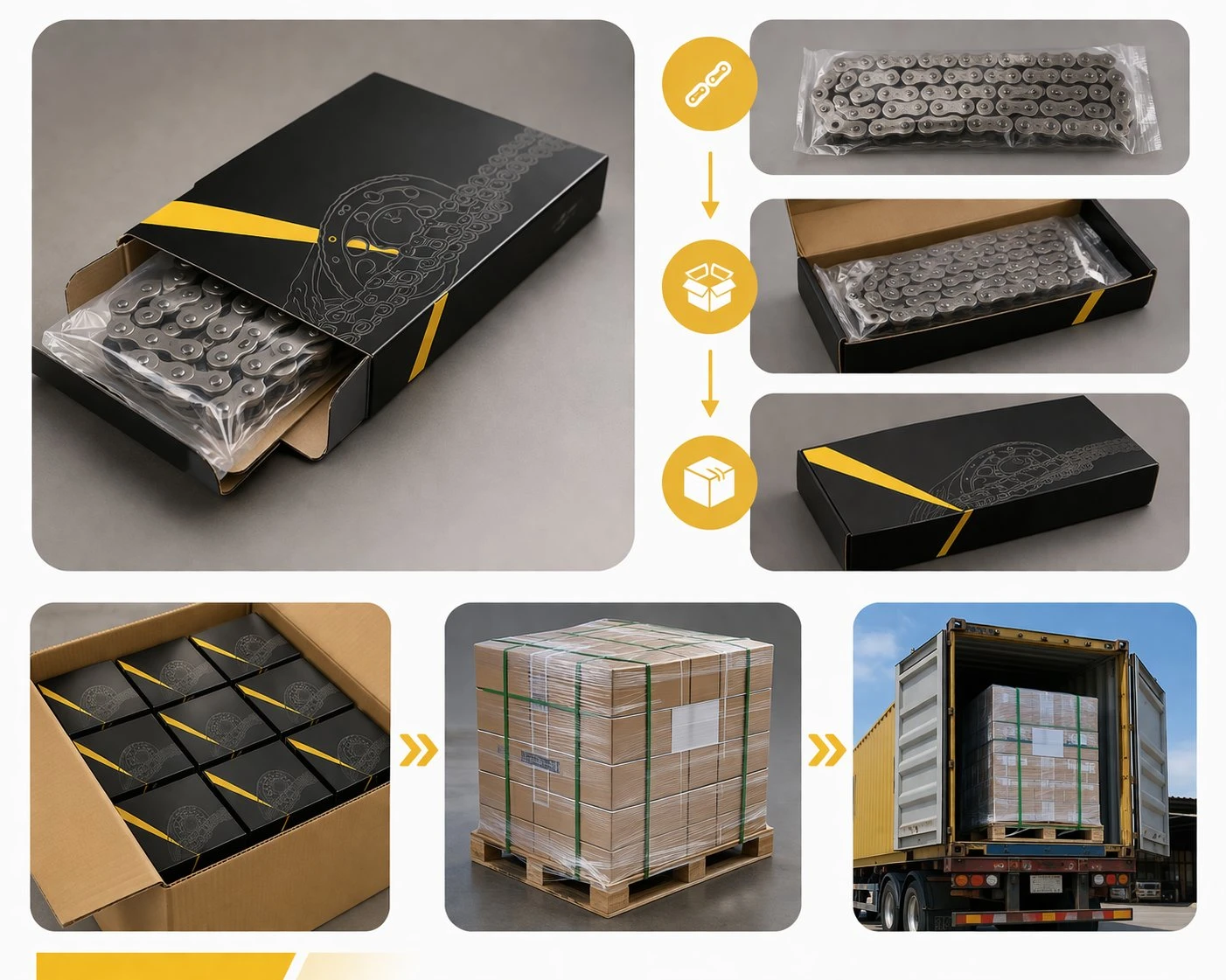
Packing and Shipping
Additional information
| Editor | Cxm |
|---|
Related products
-
420 Standard Motorcycle Chain | 12.700mm Pitch, 15.6 kN
-

Motorcycle Timing Chain *25 *25H *25SH 06B Series
-

Super X-Ring Motorcycle Chain 428SX 520-SX 525-SX 530-SX
-
X-Ring Motorcycle Chain 428H-X 520H-X 525H-X 530H-X | Korea Ever-Power
-

O-Ring Motorcycle Chain — 415 – 530 H-O Sealed Series
-

Motocross Motorcycle Chain — 428 / 520 Series
-

Standard Motorcycle Chain — 420 / 428 / 520 / 525 / 530 Non-Sealed Series
-
Motorcycle Chain — Full Drive Chain Range from 25-Series to 530H