Why Off-Road Conditions Destroy Standard Chains
En motorcycle chain for off-road use faces three failure modes simultaneously that rarely occur together on paved roads. Understanding all three explains why the chain specification that works for years on a street bike fails within a riding season in the dirt.
Shock Loading
Jump landings, hard acceleration on loose ground, and log crossings generate instantaneous chain loads many times higher than steady-state paved-road tension. Standard curled bushings can gradually open at the seam under repeated shock loading — enlarging the bore and accelerating pin wear from the first hard session.
Förorening
Mud, sand, and grit are abrasive. In a non-sealed chain, these particles penetrate the pin-bushing interface and act as a grinding compound at every articulation. A single muddy ride can remove more material from the pin and bushing than a hundred kilometres of clean paved road.
Lubricant Loss
Water crossings, pressure washing, and sustained mud exposure displace external chain lubricant from the pin-bushing contact area. After a water crossing, a non-sealed chain may be effectively dry at the pin-bushing interface — the condition that produces maximum wear rates.
The solution addresses all three failure modes differently depending on the discipline. Motocross — where the priority is shock resistance and low weight — calls for a different chain specification than enduro, where contamination resistance and extended lube intervals matter more.
The Solid-Bore Bushing — The Core Requirement for Off-Road Use
A curled bushing is manufactured by rolling flat steel strip into a cylinder, leaving a longitudinal seam along its length. Under the cyclic tensile and bending loads of normal street use, this seam maintains its position without issue — the bushing remains cylindrical. Under the sustained shock loading of motocross and off-road riding, the seam can gradually open over multiple sessions. Each opening increment enlarges the bushing bore by a small amount, increasing the clearance between pin and bushing at that joint. Increased clearance means more rotational freedom for the pin, which translates directly to faster wear and faster chain elongation.
A solid-bore bushing is machined from tube stock — no seam, no weak axis under shock loading, consistent cylindrical bore geometry under any load direction. Under the same shock loading that opens a curled bushing’s seam, a solid-bore bushing simply deflects elastically and recovers. The pin clearance remains consistent for the bushing’s service life, and wear rates stay predictable.
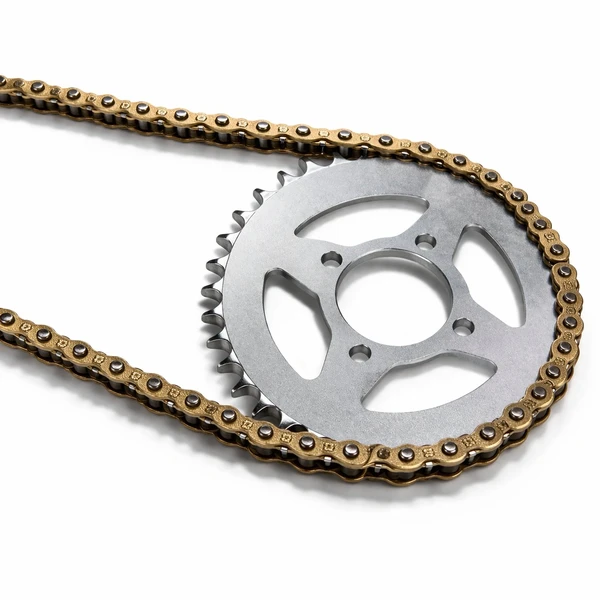
The Korea Ever-Power motocross chain series (520MX and 428MX variants) use solid-bore bushings as standard. This single construction choice is what separates a genuine off-road chain specification from a standard chain that happens to be fitted to a dirt bike.

Weight consideration: The 520MX reaches 36.0 kN at just 0.91 kg/m — the same weight as a standard non-solid-bush 520 chain, but meaningfully stronger and structurally designed for shock loading. The additional material cost of a solid-bore bushing does not add weight because it replaces, rather than supplementing, the curled bushing.
Off-Road Disciplines — Different Requirements, Different Chain Specifications
Motocross — Closed Circuit, Maximum Shock Loading
Motocross racing on prepared circuits represents the highest shock loading of any off-road discipline — short, intense sessions with repeated jump landings and hard acceleration out of berms. Conditions are controlled: the circuit has no sustained water exposure, and the chain is typically cleaned and inspected after every session.
For pure motocross, the correct chain is the non-sealed solid-bore variant. Sealed chains add marginal weight from the solid bushing plus seal assembly — unnecessary for a machine that is serviced after every session. The non-sealed 520MX at 36.0 kN and 0.91 kg/m, or the 428MX for 125/250cc two-stroke machines, is the appropriate specification.
Enduro — Long Distance, Mixed Terrain, Wet Conditions
Enduro combines shock loading from technical sections with extended riding time between service opportunities, stream and river crossings, mud packs, and sustained dust exposure. The chain must survive not just the mechanical loading but the contamination and lubrication loss that accumulates over a full day’s riding.
For enduro, the sealed solid-bore chain is the correct specification. The O-ring or X-ring seal retains factory grease at the pin-bushing interface regardless of water crossings or mud packs — meaning the critical wear interface stays lubricated throughout a full enduro stage. The 428H-O or 520H-O provides the solid-bore shock resistance of the MX chain plus internal grease retention. The 428H-X or 520H-X provides the same with 20% lower seal friction and extended service intervals.
Trail and Dual-Sport — Mixed Paved and Unpaved
Dual-sport and trail machines ridden across mixed terrain — including significant paved road sections — benefit from the sealed X-ring specification, which tolerates the infrequent lubrication schedule typical of recreational trail riding while providing the solid-bore bushing resilience needed for the off-road sections.
A dual-sport rider who covers 40% gravel tracks and river crossings and 60% paved roads typically cannot maintain the per-session chain service discipline of a dedicated MX rider. The X-ring chain at 800–1,200 km lubrication intervals means the chain stays protected through multiple outings without requiring post-ride cleaning every time. For machines in the 250–650cc adventure class, the 520H-X covers both the paved-road and off-road load conditions with a single specification.
Off-Road Chain Specifications — Complete Reference
| Kedja | Tonhöjd | Bushing | Täta | Draghållfasthet | Vikt | Best for |
|---|---|---|---|---|---|---|
| 428MX | 12 700 mm | Fast | Ingen | 17.5 kN | 0.71 kg/m | 125/250cc 2T MX, closed circuit |
| 520MX | 15,875 mm | Fast | Ingen | 36.0 kN | 0,91 kg/m² | 250–450cc 4T MX, short sessions |
| 428H-O | 12 700 mm | Fast | O-ring | 23,8 kN | 1.00 kg/m | 125–250cc enduro, trail, water crossings |
| 428H-X | 12 700 mm | Fast | X-ring | 23,8 kN | 1.04 kg/m | 125–250cc dual-sport, mixed terrain |
| 520H-O | 15,875 mm | Fast | O-ring | 28,0 kN | 1,14 kg/m² | 250–450cc enduro, hardpack, multi-day |
| 520H-X | 15,875 mm | Fast | X-ring | 34,0 kN | 1,21 kg/m² | 250–650cc adventure, dual-sport, extended rides |
Off-Road Chain Maintenance — What the Intervals Actually Mean
Standard chain maintenance intervals — quoted in kilometres — are derived from paved-road use. Off-road maintenance frequency is better measured by riding session rather than distance. The rule is simple: if the chain has been through water, mud, or deep sand, clean and lubricate it before the next ride regardless of odometer reading.
After-ride off-road service routine:
- 1Rinse the chain with clean water — do not use a high-pressure washer directed at the chain links, which forces water into the pin-bushing area through the seal gaps
- 2Use an O-ring-safe chain cleaner and a soft brush to remove packed mud from between link plates — contamination left in place between rides packs further and accelerates outer plate corrosion
- 3Allow to dry fully — at least 10 minutes after cleaning, or warm with a gentle air source. Lubricant applied to a wet chain is immediately diluted
- 4Apply chain lube specifically to the inner roller faces — not the outer plates — while slowly rotating the rear wheel. Wax-based lubricants resist mud pickup better than oil-based formulations in off-road conditions
- 5Check chain tension and stretch — off-road riding produces higher average chain loads than street use, and chains should be measured for elongation at the same frequency as lubrication service

Sealed chain advantage in off-road service: An O-ring or X-ring chain still requires post-ride cleaning and external lubrication — but the critical pin-bushing wear interface is already protected by factory grease sealed behind the rubber ring. The external lubrication primarily protects the roller-sprocket contact and prevents outer plate corrosion. Missed a session’s service after a muddy enduro day? A sealed chain retains its internal protection. A non-sealed MX chain under the same conditions can lose weeks of wear life in a single event.
When to Replace — Off-Road Chain Life Expectations
Off-road chain service life is substantially shorter than equivalent street use, and the wear rate is less predictable — a single particularly muddy or sandy session can produce more wear than five clean sessions combined. The 20-link measurement method still applies: for 15.875 mm pitch (520 family), replace when 20 links measure 327 mm or more. For 12.70 mm pitch (428 family), replace at 261.6 mm.
As a practical guideline for non-sealed MX chains: inspect at every service. A competitively ridden MX chain may need replacement in a single race season. A sealed enduro chain in regular recreational use typically reaches 6,000–10,000 km before the 3% elongation threshold is reached.

Korea Ever-Power — Off-Road Chain Production
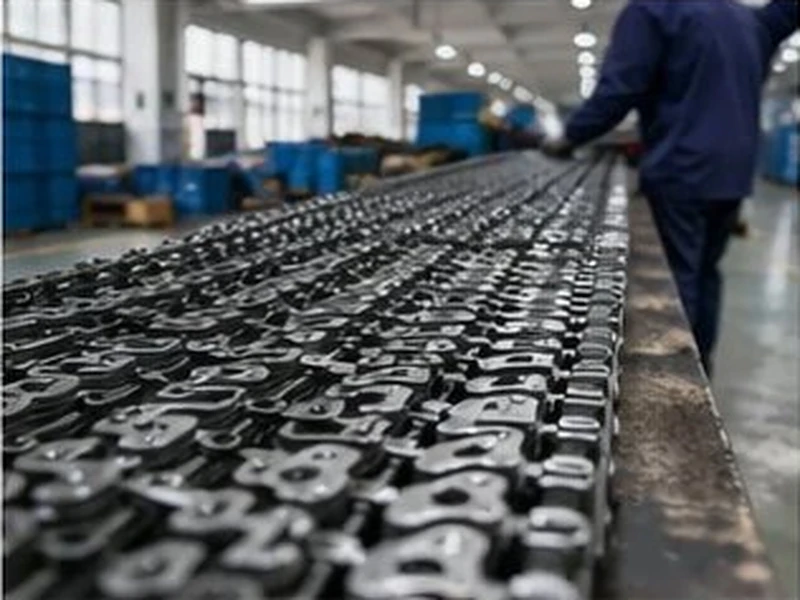
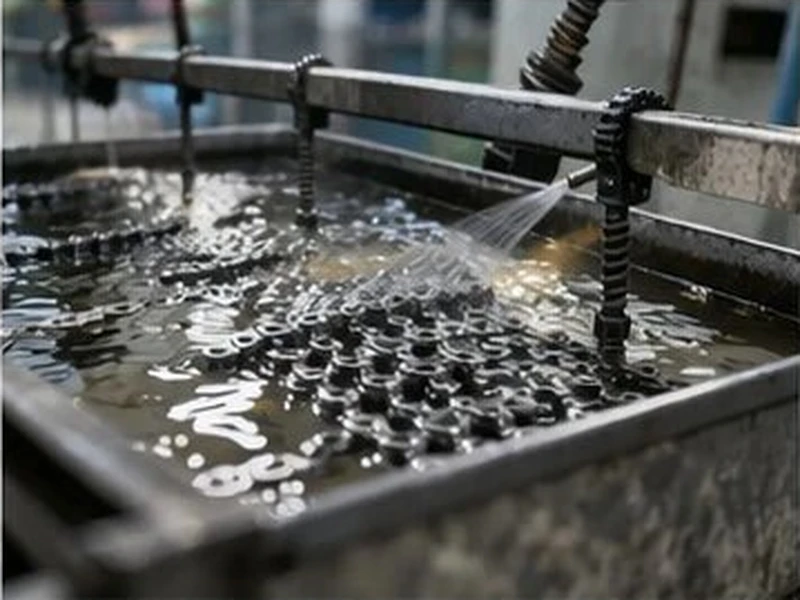
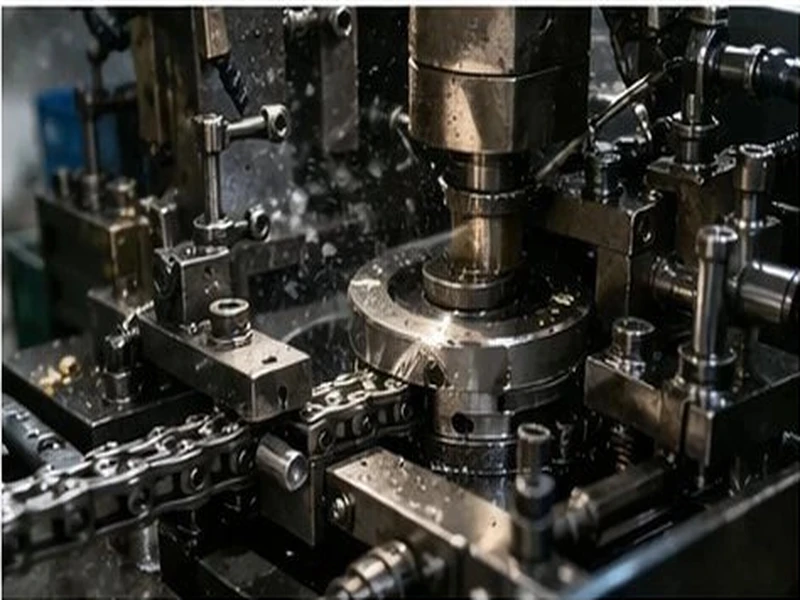
Motocross and off-road chains are produced on the same facilities as our sealed road chains, with dedicated tooling for solid-bore bushing machining. Batch tensile testing, dimensional verification to JIS B 1801, and articulation inspection are standard across all off-road variants.



Korea Ever-Power Motorcycle Chain Co., Ltd. — ISO 9001-certifierad · 5 produktionsanläggningar
Off-Road and Motocross Chains — In Stock
Motocross, enduro, and dual-sport chain specifications stocked in 428 and 520 pitch. Stocked variants dispatch within 3–7 business days. No minimum order.
520MX at 36.0 kN · Short sessions
Up to 28.0 kN · 600–1,000 km lube
520H-X at 34.0 kN · 800–1,200 km lube
Non-sealed upgrade path
Kedjehjul →
Vanliga frågor
Ready to Spec the Right Off-Road Chain?
Korea Ever-Power stocks the full off-road range — MX solid-bore non-sealed, O-ring, and X-ring sealed variants — in 428 and 520 pitch. Send us your machine’s make, model, and discipline and we confirm the correct specification before you order.
Redaktör: Cxm