What Sport Bike Chain Selection Is Actually About
The engineering constraints on a sport bike motorcycle chain are different from those on a commuter or touring machine. Peak engine output in the 400–600cc sport class involves high-rpm sustained loading — the chain articulates at higher frequency than on a low-revving parallel twin, and the instantaneous chain tension during hard acceleration from a corner exit is a significant fraction of the chain’s rated capacity on a powerful machine.
At the same time, a sport-oriented engineer’s instinct is to minimise rotating mass — the chain forms part of the final drive’s rotational inertia, and while a chain mass difference of 100–150 g between a 520 and a 530 variant is imperceptible on a touring machine, it is more significant on a 170 kg sport bike where every gram of rotating mass affects high-rpm acceleration response.
The sport bike chain selection therefore optimises for three things simultaneously: adequate tensile strength for the engine’s peak output, minimum rotating mass for the pitch required, and — for machines used on the road rather than exclusively on track — a practical maintenance specification that fits the sport rider’s more variable service schedule.

Why 520 Is the Standard Sport Bike Pitch
The 520 pitch — 15.875 mm between adjacent pins, 6.35 mm inner width — is the OEM specification for the vast majority of 400–600cc sport bikes: the Honda CBR600RR, Kawasaki ZX-6R, Yamaha YZF-R6, Suzuki GSX-R600, and their current-generation equivalents, along with many 250–400cc supersport machines.
The choice of 520 over 525 or 530 in this application is deliberate. The 520’s 6.35 mm inner width is the narrowest of the three 15.875 mm pitch variants — it produces the lowest chain mass at 0.91 kg/m standard weight. For a 170 kg sport bike revving to 14,000+ rpm, minimising rotational inertia in the final drive is a genuine engineering priority that touring and commuter machine designers do not share to the same degree.
The 520 pitch carries more than enough tensile strength for 600cc sport applications: A peak-output 600cc inline-four producing around 120 Nm of rear-wheel torque generates a maximum chain tension of approximately 4.5–6.0 kN under full-load acceleration, depending on sprocket ratio and tyre radius. The 520H-X at 34.0 kN provides a safety factor of 5.7–7.6× over maximum working load — well above any design requirement. The limiting factor in chain selection for sport bikes is not tensile strength but rotating mass and service life.
520 Chain Variants for Sport Use — Choosing the Right Grade
520 Standard — For Dedicated Track Use
For a machine used exclusively or predominantly on circuit — where the chain is replaced on a fixed interval of race sessions rather than mileage, and where lubrication is performed after every session — the standard non-sealed 520 at 26.5 kN and 0.91 kg/m is the correct and most cost-effective choice. No sealed chain advantage applies on a machine that is serviced post-session on the paddock floor and replaced at each tyre change.
520H-X — The Dominant Road Sport Specification
The 520H-X at 34.0 kN and 1.21 kg/m is the most rational specification for a sport bike used on the road, for track days, and for spirited weekend riding. The H-grade plate delivers 28.5% more tensile strength than the standard 520. The X-ring seal extends the lubrication interval to 800–1,200 km and eliminates the maintenance vulnerability of a non-sealed chain used between irregular service events. At 1.21 kg/m, it weighs more than the standard 520’s 0.91 kg/m — but this 300 g difference over a 120-link chain (360 g total) is not perceptible in road riding and is a worthwhile trade for the protection and service life the X-ring provides.
520-SX — For Sport Touring at 15,000+ km/year
A sport rider covering 15,000+ km per year in mixed conditions — including motorway commuting, weekend sport riding, and occasional longer trips — benefits from the Super X-ring’s extended 1,000–1,500 km lubrication interval. The 520-SX provides the same pitch and sprocket compatibility as the 520 standard and 520H-X, with the triple-lip seal for maximum service intervals and the highest tensile in the 520 family. For a high-mileage sport rider who wants minimum maintenance events without compromising on chain specification, the 520-SX is the top-of-range choice.
The Rotating Mass Question — Does Chain Weight Actually Matter?
Chain weight contributes to the final drive’s rotational inertia — the resistance to changes in rotational speed. Reducing chain mass reduces rotational inertia, which theoretically improves high-rpm acceleration response and allows the engine to rev more freely to its power peak. This is the engineering rationale for 520-class chains on sport bikes rather than the heavier 525 or 530 variants.
In practice, the difference between a 520 standard chain at 0.91 kg/m and a 520H-X at 1.21 kg/m — 0.30 kg/m additional mass — translates to approximately 180 g extra for a 120-link chain. This is measurable on a dynamometer under controlled conditions but is not perceptible by a rider on the road or a typical track day. The marginal rotating mass difference between chain variants within the same pitch class is irrelevant to road performance.
The rotating mass argument does have validity when comparing pitch classes — the decision to fit a 520 instead of a 530 on a 600cc sport bike saves approximately 110 g per metre of chain (0.91 vs 1.09 kg/m standard), which is 66 g over a 120-link chain. For a professional race team optimising every component, this is a real saving. For a road rider, it is not measurable in normal riding.
Mass Comparison — 120-Link Chain
~1,092 g
~1,452 g
~1,308 g
~1,440 g
Difference between 520 standard and 520H-X: ~360 g. Not perceptible in road riding.
Sprocket Ratio Changes — How Chain Pitch Affects Options
Many sport riders change their sprocket ratio from OEM — typically dropping one tooth on the front sprocket to improve acceleration at the expense of top-speed gearing, or adding rear sprocket teeth for a similar effect. The chain pitch determines which sprockets are compatible, and a sprocket ratio change for a 520-pitch machine requires 520-pitch sprockets.
Changing the sprocket ratio also changes the required chain length — fewer teeth on the front sprocket shortens the chain line slightly, typically requiring the removal of one or two links to maintain correct slack. When ordering a replacement chain after a ratio change, confirm the required link count by measuring the existing chain or consulting a sprocket ratio to chain length calculator for your specific machine model and ratio combination.
If you are converting an OEM 530-pitch machine to 520 pitch for weight saving — a common modification on older 600cc sport bikes originally equipped with 530 — this requires changing both the front and rear sprockets to 520-pitch items, confirming the new chain line clears the swingarm and chain guides, and ordering the correct link count for the new configuration.

Sport Bike Chain Specification Reference
| Chain | Pitch | Seal | Tensile | Weight | Lube Interval | Sport Application |
|---|---|---|---|---|---|---|
| 520 standard | 15.875 mm | None | 26.5 kN | 0.91 kg/m | 400–600 km | Track/circuit with per-session service |
| 520H | 15.875 mm | None | 29.0 kN | ~0.98 kg/m | 400–600 km | Tuned engine, non-sealed preferred |
| 520H-O | 15.875 mm | O-Ring | 28.0 kN | 1.14 kg/m | 600–1,000 km | Road sport, budget sealed option |
| 520H-X ★ | 15.875 mm | X-Ring | 34.0 kN | 1.21 kg/m | 800–1,200 km | Road sport / track day — best all-round |
| 520-SX | 15.875 mm | Super X-Ring | Higher kN | ~1.15 kg/m | 1,000–1,500 km | High mileage sport, maximum life |
Sport Rider Chain Maintenance — What the High-Speed Use Demands
High-speed riding generates more centrifugal force on the chain lubricant than low-speed commuting, meaning externally applied lubricant flings off faster from a chain operating at 100+ km/h. Wax-based or high-viscosity chain lubricants are preferable for sport use over thin oil formulations — they adhere better to the chain surface at speed and do not create the spray pattern that oil-based lubricants produce at sustained motorway speeds, which transfers lubricant to the rear tyre sidewall.
After a Track Day
- →Clean chain with O-ring-safe cleaner — the chain has been through high heat cycles at sustained speed
- →Inspect for stiff links — high-load track sessions can reveal weak joints not apparent in normal road riding
- →Apply chain lubricant to the inner roller faces after cleaning, allow to penetrate overnight before return to road use
- →Measure 20-link elongation — track use accelerates wear and the threshold may be reached faster than road mileage alone suggests
Sport Road Riding
- →Sealed chain (520H-X): lubricate every 800–1,200 km or after any wet ride
- →Use wax-based lubricant for high-speed riding — less fling-off, no tyre contamination risk
- →Check chain tension monthly — sport riding’s harder acceleration and braking cycles can stretch the chain faster than touring use
- →Replace 15.875 mm pitch chain at 327 mm (20-link measure) — do not exceed this threshold on a sport machine that may see track day use

Production Quality for High-Performance Applications
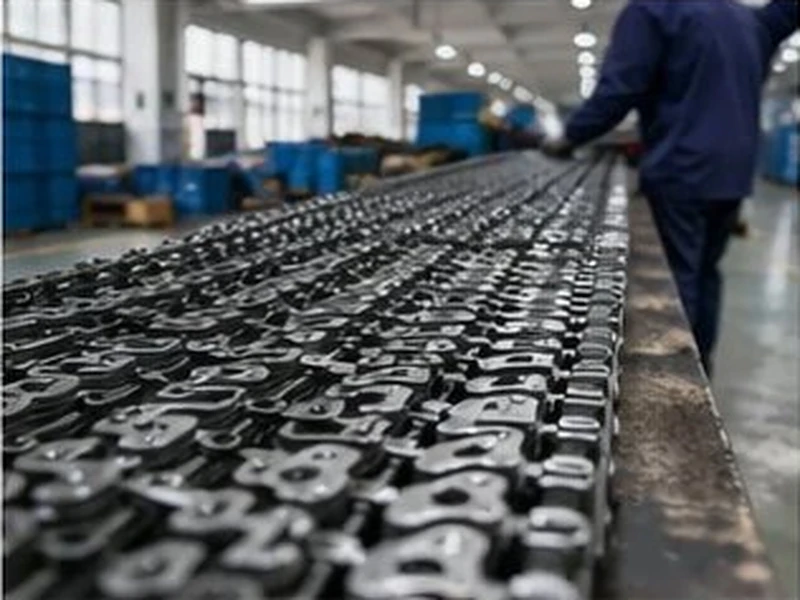
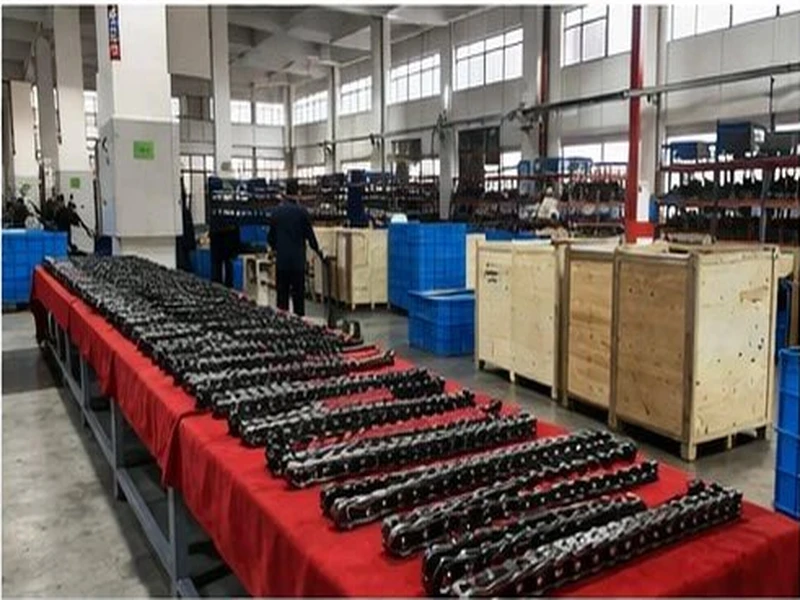
Sport bike chains undergo identical quality controls to all Korea Ever-Power chain variants — carburized pin treatment, batch tensile testing, JIS B 1801 dimensional verification, and articulation inspection before dispatch.



Korea Ever-Power Motorcycle Chain Co., Ltd. — ISO 9001 certified · 5 production facilities
Sport Bike Chain Series — In Stock
520 and 525 pitch sport chains available in standard, H-grade, X-ring, and Super X-ring. Dispatch within 3–7 business days. No minimum order.
Sprockets →
Frequently Asked Questions
Ready to Spec Your Sport Bike Chain?
Korea Ever-Power stocks 520 and 525 pitch sport chains in standard, H-grade, X-ring, and Super X-ring. Send us your chain number or machine model and we confirm the correct specification before you order.
Editor: Cxm