What Touring Actually Does to a Motorcycle Chain
Long-distance touring creates a chain loading profile that is distinct from both commuting and sport riding. The load is not particularly high in peak terms — a touring motorcycle does not accelerate as aggressively as a sport bike. But the load is sustained: hours of motorway cruising at constant throttle with full luggage and often a pillion means the chain operates at a significant fraction of its rated working load continuously, rather than in brief acceleration pulses separated by coasting.
A fully-laden large-displacement touring motorcycle — machine weight, two riders, tankbag, panniers, and top box — can exceed 450 kg combined. At motorway speeds, chain tension in steady-state cruising on such a machine is substantially higher than the same machine ridden solo with no luggage at the same speed. This sustained high tension is what fatigues the chain plates and accelerates pin-bushing wear over the tour.
The second touring-specific factor is maintenance opportunity. On a 2,000 km tour across multiple countries, a chain lubrication service every 600 km means three stops specifically for chain maintenance on a seven-day trip. A motorcycle chain for touring and long distance with 1,000–1,500 km service intervals means one lubrication event, or possibly none, on the same trip. For riders who tour seriously, this service interval difference has practical daily significance.
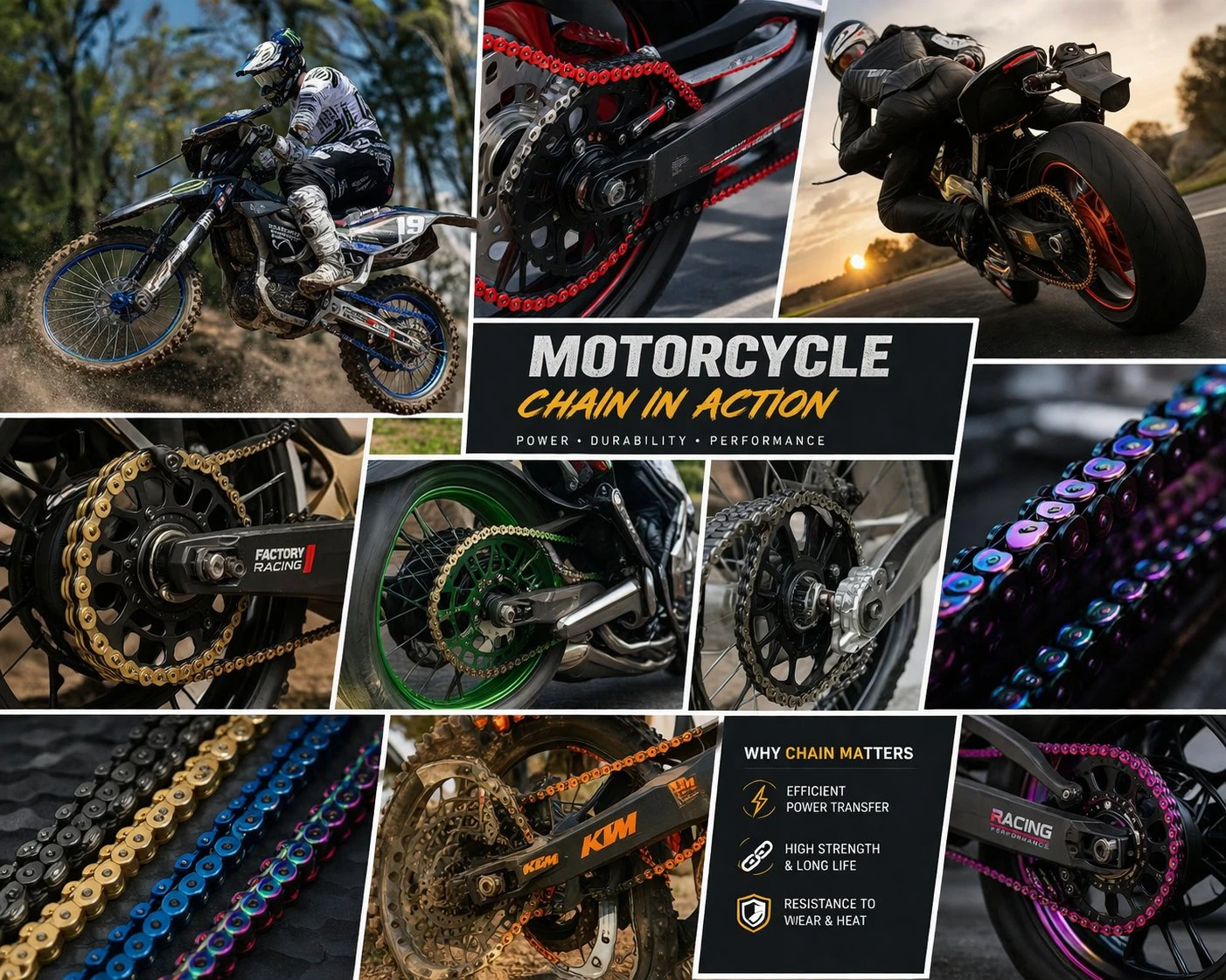
Why the Super X-Ring Is the Touring Chain Standard
The Super X-ring (SX) seal has three contact lips per side — one more than the standard X-ring’s two. This additional lip provides a third independent sealing line between the internal grease and the external environment. As the outer lip gradually conforms to the plate surface over thousands of kilometres of high-load operation, the middle and inner lips maintain sealing integrity independently.
This triple-lip design enables external lubrication intervals of 1,000–1,500 km — the longest of any sealed roller chain type. For a tourer covering 500 km per day, this means a three-day riding segment is possible between lubrication services. For riders who cover 15,000–25,000 km per year, the number of chain service events per year drops to 10–15, compared to 15–25 for an O-ring chain or 25–37 for a standard non-sealed chain.
Combined with the H-grade plate specification and solid-bore bushing construction of the SX variants, the result is the highest tensile strength, longest service life, and minimum maintenance frequency of any chain type in the standard roller chain format.

Choosing the Right Touring Chain — by Machine Type
🏍️ Sport Tourer — 600–750cc, 15,000+ km/year
Machines like the Yamaha MT-09 SP, Triumph Tiger 900, or Honda CB750 Hornet used for long-distance sport touring — where performance matters alongside comfort and range. Typically 520 or 525 pitch, ridden hard but not always with full luggage load.
The 520H-X at 34.0 kN or 525H-SX at 40.0 kN (depending on OEM pitch) balances weight and seal performance. For 15,000+ km per year with variable conditions, the SX variant’s extended service intervals reduce annual maintenance events while the H-grade plates handle the engine’s torque output with appropriate margin.
🗺️ Adventure Touring — 800–1200cc, Mixed Paved/Unpaved
Large adventure machines — BMW R 1250 GS, Honda Africa Twin Adventure Sports, KTM 1290 Super Adventure — ridden on long tours with luggage and occasional gravel or track sections. Typically 525 pitch on the parallel twins, sometimes 530 on the large single-cylinder and V-twin variants.
The 525H-SX at 40.0 kN or the 530-SX at 43.0 kN depending on OEM pitch specification. For adventure riding that includes genuine off-road sections, the solid-bore bushing of both SX variants provides the shock resistance needed for track and gravel use, while the triple-lip seal handles the contamination from those sections without requiring immediate post-ride chain maintenance.
🏖️ Heavyweight Tourer and Cruiser — 900cc–1800cc, Full Load
Chain-driven large-displacement tourers and cruisers — Honda Gold Wing, Indian Chief, BMW K 1600 GTL, Kawasaki Vulcan — operated at or near maximum load with two riders and full luggage. 530 pitch is the OEM specification across this category, and the 530-SX at 43.0 kN is the highest-specification chain available in this pitch from Korea Ever-Power.
At 43.0 kN, the 530-SX provides the structural margin that a fully-laden 450+ kg touring machine demands at sustained motorway speeds. The triple-lip seal’s 1,000–1,500 km external lubrication interval means that a 5,000 km touring run requires three or four lubrication events — one every few days rather than once every 600 km. For riders covering 20,000+ km per year, this reduces annual chain service events from 33+ (standard) to 13–20 (530-SX).
Touring Chain Specifications — Reference Table
| Chaîne | Pas | Joint | traction | Poids | Intervalle de lubrification | Touring Class |
|---|---|---|---|---|---|---|
| 520H-X | 15,875 mm | Anneau en X | 34,0 kN | 1.21 kg/m | 800–1 200 km | Sport touring, 250–600cc |
| 525H-X | 15,875 mm | Anneau en X | 34,0 kN | 1.33 kg/m | 800–1 200 km | Adventure, 650–800cc naked |
| 525H-SX | 15,875 mm | Super X-Ring | 40,0 kN | 1.38 kg/m | 1 000 à 1 500 km | Adventure touring, 800–1000cc |
| 530H-O | 15,875 mm | Joint torique | 30.4 kN | 1.40 kg/m | 600–1 000 km | Heavyweight tourer, budget sealed |
| 530H-X | 15,875 mm | Anneau en X | 34,0 kN | 1.45 kg/m | 800–1 200 km | Heavyweight tourer, standard upgrade |
| 530-SX | 15,875 mm | Super X-Ring | 43,0 kN | 1.20 kg/m | 1 000 à 1 500 km | Configuration maximale — voyage intensif, chargement complet |
Note on the 530-SX weight: At 1.20 kg/m, the 530-SX is actually lighter than the 530H-X at 1.45 kg/m despite its higher tensile strength. The SX seal geometry, combined with the specific plate profile optimised for the triple-lip groove, produces a chain that is both stronger and lighter than the equivalent X-ring variant. This makes the 530-SX the dominant choice for performance-oriented heavy tourers where both structural capability and mass management matter.
On-Tour Chain Maintenance — Practical Guide for Long Rides
Long-distance touring changes the practical constraints of chain maintenance. You are away from home, potentially in countries where your preferred chain lube is unavailable, and opportunities for proper chain cleaning are limited to petrol station forecourts or hotel car parks. Choosing the right chain before departure is therefore more important for tourers than for riders who can service the chain in their own garage every two weeks.
What to carry on tour:
- ▸Chain lubricant (small aerosol): A 200 ml travel-size aerosol is sufficient for 3–4 applications, weighs under 250 g, and fits in any side pocket. Wax-based lubricants are preferred for touring — they do not fling off at motorway speeds as readily as oil-based formulations.
- ▸Chain measurement tool or ruler: A 30 cm steel rule is sufficient to measure 20-link elongation. For a chain that is 80% through its service life at departure, knowing when replacement is due prevents being stranded by unexpected chain failure.
- ▸Spare master link: The correct master link for your chain type (clip or press-fit, matched to the chain variant). A master link weighs under 20 g. The ability to join a broken chain section on the road prevents a day’s lost touring if a link fails.
On-tour service routine:
- 1.Apply lubricant at the end of each riding day (or every 1,000 km if using an SX chain) — not first thing in the morning. End-of-day application allows the lubricant to penetrate the roller-bushing interface overnight before the next day’s riding.
- 2.After rain: wait for the chain surface to dry, then apply. Applying lubricant immediately after rain to a wet chain dilutes the lubricant before it penetrates. 15 minutes of air-drying after a wet ride is sufficient.
- 3.Check slack weekly. Temperature changes across different climates affect chain tension slightly. Most touring motorcycles have a slotted rear axle for adjustment — confirm the correct slack specification from the service manual before departure.

Pre-Tour Chain Inspection Checklist
Before any long-distance tour, the chain and sprockets should be checked regardless of recent service history. A chain that is 70% through its service life at departure may reach its replacement threshold during the tour — planning for this is preferable to sourcing a replacement chain in an unfamiliar location.
Chain — Pass if:
- ✓20-link measurement is below replacement threshold
- ✓No stiff links in full chain circuit
- ✓Seals (O-ring or X-ring) are intact — no cracked or missing rings
- ✓No rust on inner plates or rollers
- ✓Chain does not pull away from rear sprocket to expose tooth root
Sprockets — Pass if:
- ✓Tooth tips are symmetrical — not hook-shaped or bent
- ✓Tooth height is consistent across all teeth
- ✓No cracked or missing teeth
- ✓Front sprocket bolt and locking mechanism secure
Replace before touring if:
- ✗Chain is within 500 km of its replacement threshold
- ✗Sprocket teeth show visible hook wear
- ✗Any stiff links found during inspection
- ✗Seal damage visible on O-ring or X-ring chain

Korea Ever-Power — Built for High-Mileage Applications
Touring chains are produced on the same lines as all other Korea Ever-Power chain variants, with identical quality checkpoints: incoming steel certification, carburizing temperature recording per batch, tensile testing of every production batch, dimensional verification to JIS B 1801, and articulation inspection before packaging.


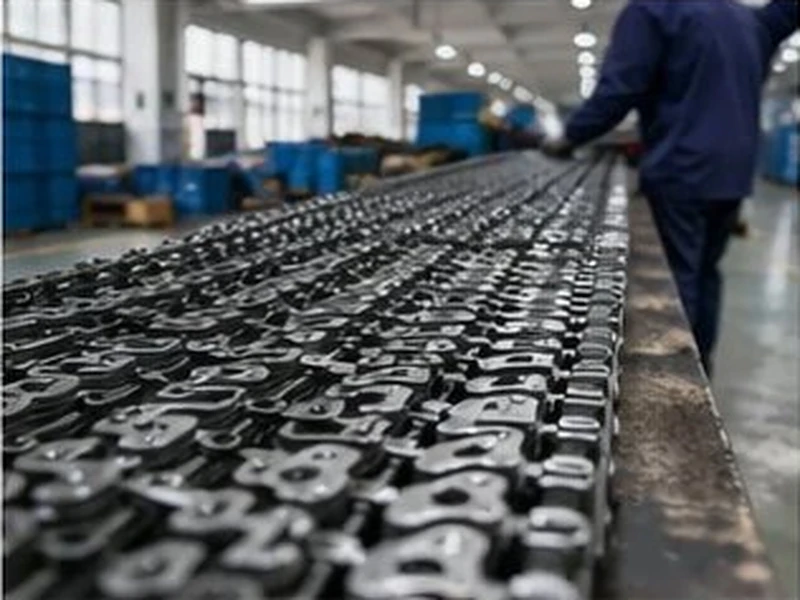
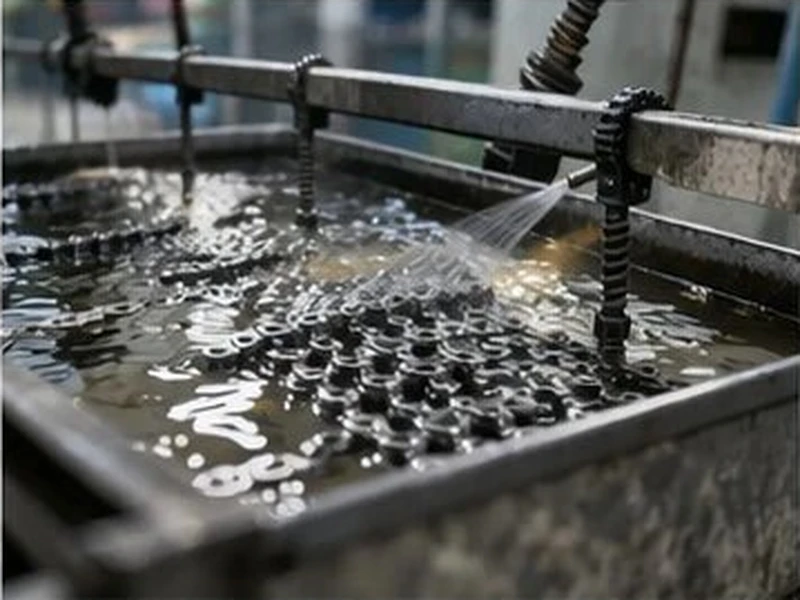


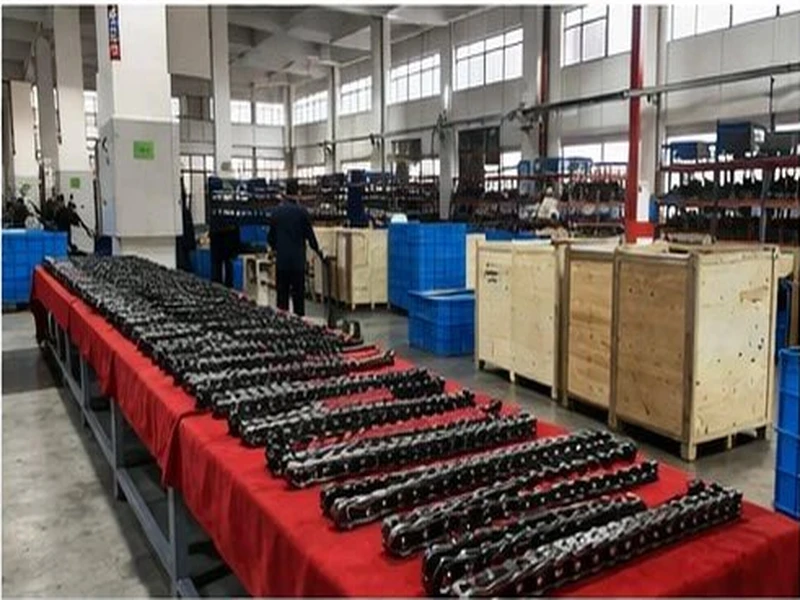
Korea Ever-Power Motorcycle Chain Co., Ltd. — ISO 9001 certified · 5 production facilities
Touring Chain Series — In Stock for Direct Dispatch
X-Ring and Super X-Ring variants in 520, 525, and 530 pitch. Dispatch within 3–7 business days. No minimum order.
800–1,200 km lube · Dual lip seal
1,000–1,500 km lube · Triple lip seal
Budget sealed touring option
Pignons →
Foire aux questions
Ready for a Long-Distance Chain?
Korea Ever-Power stocks the full touring chain range — X-ring and Super X-ring in 520, 525, and 530 pitch — with batch tensile testing and JIS B 1801 compliance. Send us your chain number or machine model and we confirm the correct specification before you order.
Éditeur : Cxm