Why the Three Share a Pitch and Still Require Different Sprockets
The 520, 525, and 530 are all members of the 5/8-inch pitch family — pin-centre to pin-centre distance of 15.875 mm in every case, standardised under JIS B 1801. This shared pitch means the chain links engage sprocket teeth at the same angular spacing regardless of which of the three sizes is fitted. A sprocket designed for 520 pitch has the same tooth spacing as one designed for 525 or 530 pitch — they are not interchangeable because the tooth face width and groove width change with the inner width, but the rotational engagement geometry at the pitch circle is the same.
Where the three sizes differ is in the inner width of the chain and the diameter of the roller. The roller fills the space between the inner link plates and contacts the sprocket tooth face. Wider inner width = wider roller = broader contact area across the sprocket tooth. This broader contact distributes the chain tension load — and therefore the stress — across a larger area of the tooth face, which is the engineering reason why wider chains are specified for higher-output engines and heavier machines.
The practical consequence: you cannot fit a 525 chain on 520 sprockets (the narrower groove cannot accept the wider roller), and you cannot fit a 520 chain on 530 sprockets (the narrow roller would sit between the tooth faces rather than seating against them, causing immediate abnormal wear and rapid sprocket damage). Each size requires its own matched sprocket set.

Each Size in Detail


Complete Side-by-Side Specification Table
| Especificación | 520 Series | 525 Series | 530 Series |
|---|---|---|---|
| Paso | 15,875 mm | 15,875 mm | 15,875 mm |
| Inner Width | 6.35 mm | 7.94 mm | 9.53 mm |
| Roller Diameter | 10.14 mm | 10.14 mm | 10.14 mm |
| Standard Tensile | 26.5 kN | 26.5 kN | 26.5 kN |
| H-X Variant Tensile | 520H-X: 34.0 kN | 525H-X: 34.0 kN | 530H-X: 34.0 kN |
| SX Variant Tensile | — | 525H-SX: 40.0 kN | 530-SX: 43.0 kN |
| Standard Weight | 0.91 kg/m (lightest) | 0.98 kg/m | 1.09 kg/m |
| Sprocket compatibility | 520-tooth profile only | 525-tooth profile only | 530-tooth profile only |
| Can change variant without new sprockets | Yes — within 520 family | Yes — within 525 family | Yes — within 530 family |
| Typical OEM application | 250–600cc sport, naked, MX | 400–750cc adventure, twin | 600cc+ touring, cruiser |
Why All Three Show 26.5 kN at Standard Grade
At the standard (non-sealed, curled-bush) specification level, all three variants use similar plate gauges and produce the same break load: 26.5 kN. The wider roller of the 530 does not produce higher tensile strength than the 520’s narrower roller at standard grade — the plate geometry and pin dimensions dominate the break-load calculation, and at standard grade those are closely equivalent across the 520/525/530 family.
The strength differentiation between the three sizes appears in the H-grade and sealed variants, where the wider plate geometry of the 525 and 530 families allows for heavier plate gauges and different seal groove profiles. At the SX-grade peak: 530-SX reaches 43.0 kN versus 525H-SX at 40.0 kN — a 3 kN difference attributable to the wider plate cross-section of the 530 accommodating a larger plate gauge in the SX specification.
What the width difference actually controls at standard grade: not total tensile strength, but the contact stress per unit area at the sprocket tooth face. A 530-pitch chain’s wider roller distributes 26.5 kN of chain tension across a broader tooth face — reducing peak stress at the tooth-roller contact point. This reduced peak stress is why the 530 is specified for high-torque large-displacement engines even though its standard-grade tensile strength is identical to the 520.

Which Size for Which Machine — Application Guide
520 — Sport Bikes, Inline-Fours, Weight-Conscious Builds
250–600cc inline-four sport bikes are the natural home of the 520. Engineers at Japanese and Korean manufacturers specify 520 on machines like the Honda CBR600RR, Kawasaki ZX-6R, and similar because the 520’s narrow roller minimises rotational inertia — important at the high sustained rpm these engines operate at. A 520H-X at 34.0 kN provides ample tensile strength for a 600cc sport bike with a safety factor that makes the standard 520’s 26.5 kN look modest.
The 520 is also the dominant choice for motocross and enduro machines in the 250–450cc class, where weight matters for handling as much as for performance — the 520MX motocross variant delivers 36.0 kN at just 0.91 kg/m.
525 — Adventure Bikes, Parallel Twins, Sport Tourers
The 650–750cc class — Yamaha MT-07, Kawasaki Z650, BMW F 750 GS, Triumph Trident 660, and similar parallel-twin naked and adventure bikes — is the primary domain of the 525. These machines produce more sustained torque than a 600cc sport bike at the same rpm, and they are often ridden two-up or with luggage, increasing chain loading. The 525’s wider roller handles this load profile more appropriately than the 520, without the full weight addition of the 530.
For adventure riders, the 525H-SX at 40.0 kN provides sealed performance, heavy plate gauge strength, and 1,000–1,500 km lubrication intervals — practical for long-distance travel where service infrastructure may be limited.
530 — Large Displacement Touring, Cruisers, V-Twins
Machines producing sustained high torque at low-to-mid rpm — V-twin cruisers, large-displacement inline-fours, heavyweight touring motorcycles — use the 530’s broad roller contact to distribute that torque across the maximum sprocket tooth face area within the standard roller chain format. At standard specification, the 530’s 26.5 kN matches the other two variants, but the 530-SX at 43.0 kN represents a structural capability that gives comfortable margins on machines where combined laden weight regularly exceeds 400 kg.
The 530-SX’s 1,000–1,500 km lubrication interval is particularly practical for touring riders who cover 15,000+ km per year — fewer service events over the annual riding calendar, even on a machine with high chain loading.
Converting Between Sizes — What Is and Isn’t Practical
Converting from a 530 to a 525 or 520 (“down-pitching”) to reduce rotating mass is technically possible but requires replacing both front and rear sprockets. The sprocket tooth profile must match the chain roller width — a 525 roller in 530 sprocket grooves will not seat correctly and will wear rapidly.
For a sport-oriented machine where the manufacturer specified 530, the conversion to 520 saves approximately 180 g per metre of chain — on a 120-link chain, roughly 110 g total. This is measurable as a reduction in rotating inertia on a 200cc race bike. On a 200 kg street bike, it is not perceptible in normal riding conditions.
What you can always change without touching sprockets: the chain variant within the same size family. Moving from 520 standard to 520H-X — or from 530 standard to 530-SX — requires only the chain itself. No sprocket change, no alignment issues, no tooth compatibility concerns.
✓ No sprocket change needed
- 520 standard → 520H-X
- 520H → 520H-O or 520-SX
- 525 standard → 525H-SX
- 530 standard → 530-SX
- Any variant within the same size
✗ Both sprockets must change
- 520 → 525 or 530
- 525 → 520 or 530
- 530 → 520 or 525
- Any cross-family change
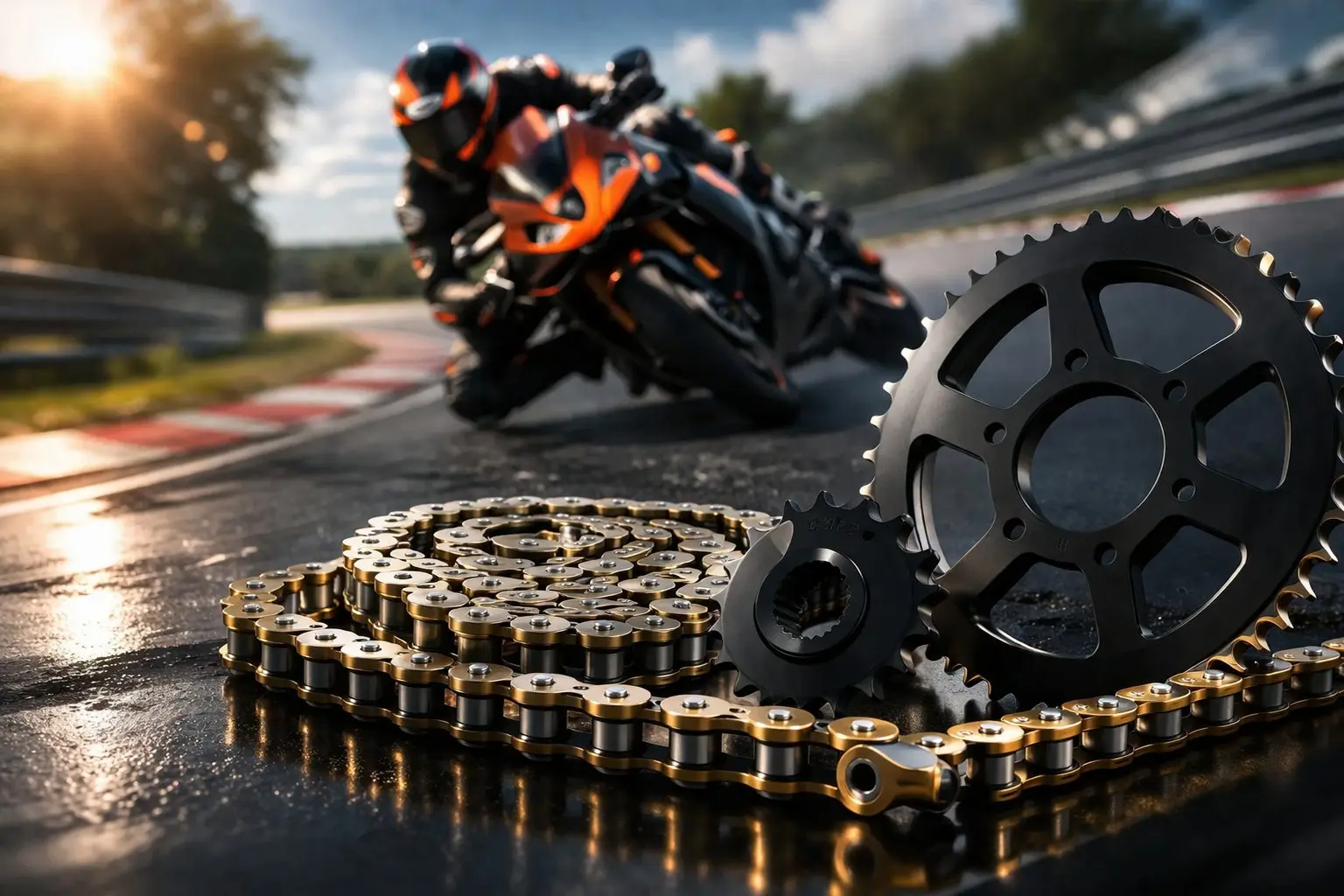
All Three Sizes Manufactured to JIS B 1801
520, 525, and 530 chains are produced on dedicated lines. Dimensional verification against JIS B 1801 reference gauges covers pitch, inner width, roller diameter, and plate height. Tensile testing on every production batch. Five facilities, ISO 9001 certified.


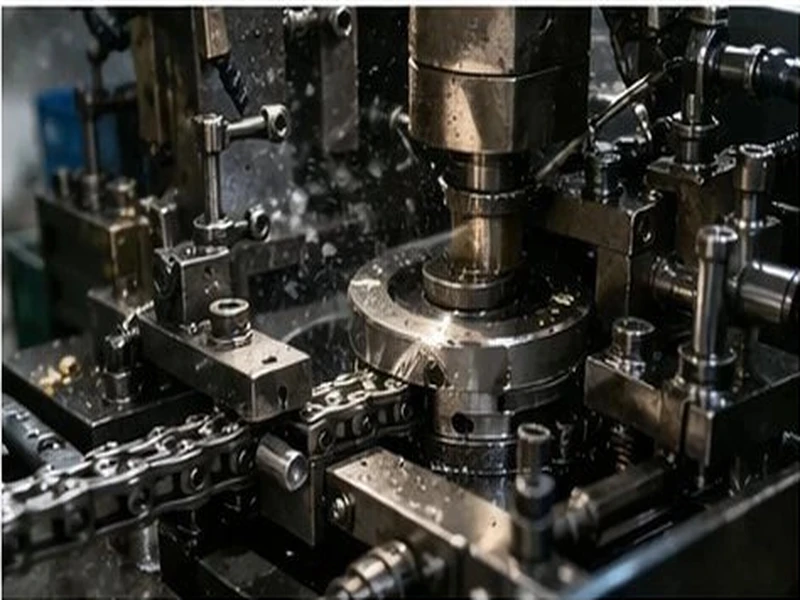

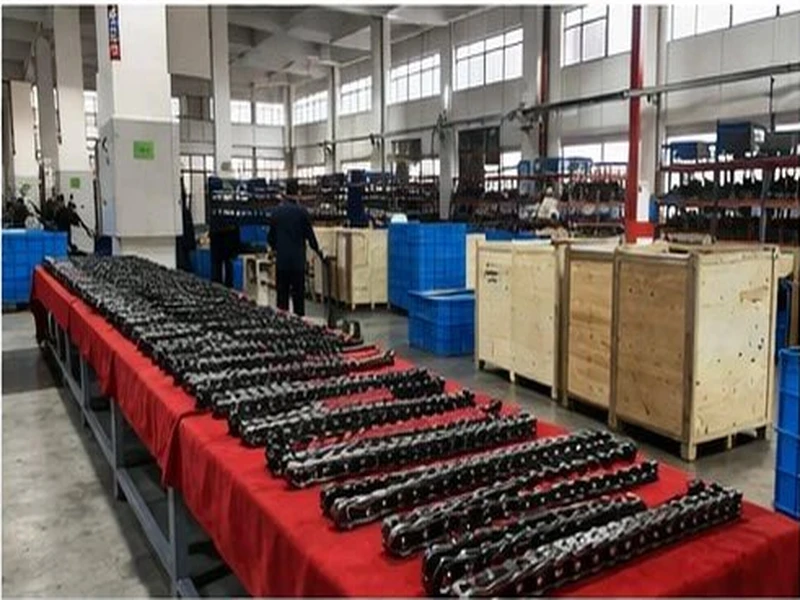
Korea Ever-Power Motorcycle Chain Co., Ltd. — production facilities, ISO 9001 certified
520, 525, and 530 Chain Series — In Stock
All three pitch sizes available in standard, H-grade, O-ring, X-ring, and Super X-ring. Stocked variants dispatch within 3–7 business days. No minimum order.
Piñones →
Preguntas frecuentes
Confirm Your Pitch Before You Order
Korea Ever-Power stocks all three 5/8-inch pitch families — 520, 525, and 530 — in standard, H-grade, O-ring, X-ring, and Super X-ring. Send us the chain number or your motorcycle model and we confirm the correct size and variant before you order.
Editor: Cxm