Why Chain and Sprockets Are a System, Not Separate Components
ΕΝΑ motorcycle chain and sprocket set wears as a matched system. As the chain’s pin-bushing joints elongate — the gap between adjacent pins growing by fractions of a millimetre — the chain’s effective pitch increases slightly. A correctly-sized sprocket’s tooth spacing is designed for the chain’s nominal pitch. As the chain elongates, the rollers no longer seat perfectly in the tooth valleys; instead they ride progressively higher up the tooth flanks. This changes the contact geometry and accelerates tooth wear in a specific pattern: the leading face of each tooth wears faster than the trailing face, eventually producing the characteristic “hook” profile of a worn sprocket.
Once the sprocket has developed this hook profile, fitting a new chain on the same sprockets reverses the problem: the new chain’s rollers — seated at nominal pitch spacing — now engage sprocket teeth shaped for a longer chain. The hook-shaped teeth act as ramps under chain tension, lifting the rollers rather than seating them, and the new chain is pulled into a wear pattern within the first few thousand kilometres that mirrors the old chain’s elongated condition.
In practical terms: a new quality chain on correctly-profiled sprockets can be expected to reach 15,000–20,000+ km (sealed type) before elongation requires replacement. The same new chain on hook-worn sprockets often reaches replacement threshold in 6,000–8,000 km. The sprockets effectively halve the chain’s service life — and the money saved by not replacing the sprockets is spent on more frequent chain replacements.

Correct: roller seated in tooth valley, even load distribution across tooth face

Matched replacement: new chain on new sprockets — system starts from correct geometry
How Sprockets Wear — Front vs Rear
Front (Countershaft) Sprocket
The front sprocket has fewer teeth (typically 13–17) and rotates faster than the rear. Because each tooth engages the chain more frequently per kilometre than a rear tooth, the front sprocket typically wears 2–3 times faster than the rear. On a high-mileage street bike, the front sprocket is almost always due for replacement at the same time as the chain, and often the front sprocket needs replacing even before the rear.
Rear (Wheel) Sprocket
The rear sprocket has more teeth (typically 40–50) and rotates slower than the front — each tooth engages the chain less frequently per kilometre. Rear sprockets therefore typically last longer than front sprockets but still develop the same hook-tooth wear pattern over time. On machines with smaller rear sprockets or particularly hard riding styles, the rear may approach replacement threshold at the same time as the front.
Practical rule: Replace the front sprocket every time the chain is replaced. Replace the rear sprocket every one to two chain replacements — or whenever tooth inspection reveals hook wear. This approach eliminates the scenario of a new chain on worn sprockets, without necessarily replacing all three components on every service cycle.
How to Inspect Sprockets for Replacement
Sprocket inspection requires viewing the tooth profile from the side — not the face. The side view shows the tooth tip geometry and the asymmetry of wear between leading and trailing faces. A new tooth has a symmetrical, slightly rounded profile. A worn tooth has a pronounced “hook” on the leading face (the face the chain roller pushes against under drive) with the trailing face remaining relatively unworn.
The tip of each tooth is centred between the leading and trailing faces, or only mildly asymmetric. Minor asymmetry after one chain replacement is normal.
Consistent height across all teeth indicates even engagement. Uneven height suggests the sprocket has been damaged or engagement issues have caused localised accelerated wear.
The leading face of the tooth has a sharp hook pointing in the chain travel direction. This is the definitive visual indicator of a sprocket that needs replacement — a new chain on this sprocket will fail in 6,000–8,000 km regardless of chain quality.
If the chain skips or jumps over teeth during hard acceleration, the sprocket wear is severe enough that the roller is no longer seating in the valley. This is a safety condition — replace immediately. Do not ride until both chain and sprockets are replaced.

Decision Guide — What to Replace and When
| Scenario | Αλυσίδα | Front Sprocket | Rear Sprocket |
|---|---|---|---|
| Chain at elongation threshold, sprockets look good | Replace | Replace | Inspect — replace if any hook wear visible |
| Chain at threshold, both sprockets show hook wear | Replace | Replace | Replace |
| Second chain replacement — first chain was 20,000+ km | Replace | Replace | Replace |
| Chain failing due to contamination or accident damage only | Replace | Replace | Inspect carefully — may be reusable if mileage is low |
| Pre-purchase inspection — all components unknown age | Replace | Replace | Replace |
| Sprocket ratio change for gearing modification | Replace | Replace (new ratio) | Replace (new ratio) |
The economy argument for replacing all three: On a machine where a chain replacement costs, for example, 50,000 KRW and the front and rear sprockets add another 60,000 KRW, the total set cost is 110,000 KRW. A new chain on worn sprockets that reaches replacement threshold in 8,000 km rather than 18,000 km requires 2.25 chain replacements per sprocket replacement interval instead of one. Total 18,000 km cost without replacing sprockets: 2.25 × 50,000 = 112,500 KRW — more than the full set cost with new sprockets included.
Sprocket Compatibility — Pitch and Width Must Both Match
Sprockets must match the chain in both pitch and inner width. A 520-pitch chain will not correctly seat in a 525-pitch sprocket’s tooth valleys — the narrower roller sits loosely between the wider tooth faces rather than contacting them. A 428-pitch sprocket will not engage a 520-pitch chain at all — the tooth spacing is a different value entirely (12.70 mm vs 15.875 mm).
Within the same size family (e.g. all 520-pitch chains and sprockets), the different sealed variants (520 standard, 520H-O, 520H-X) all share the same JIS B 1801 pitch and inner width and are compatible with the same 520-pitch sprockets. You can upgrade from a 520 standard chain to a 520H-X without changing the sprockets — the variant suffix changes the seal type and plate gauge, not the sprocket compatibility dimensions.
When ordering a replacement chain and sprocket set, confirm: (1) pitch matches the OEM specification on the existing chain or service manual, (2) tooth count on both sprockets is correct for your machine or your intended ratio change, and (3) the front sprocket bore and spline count matches the countershaft shaft on your specific model.
Quick Compatibility Check
420 ↔ 420H · 428 ↔ 428H-X · 520 ↔ 520H-O · 525 ↔ 525H-SX · 530 ↔ 530-SX (same base size, any variant)
420 → 428 · 428 → 520 · 520 → 525 · 525 → 530 · Any cross-pitch change
Korea Ever-Power — Chain and Sprocket Production
Both motorcycle chains and matching sprockets are produced in Korea Ever-Power’s five facilities. Chains are batch tensile-tested and dimensionally verified. Sprockets are tooth-profile checked and gear-cut to matched pitch tolerances for each chain family.


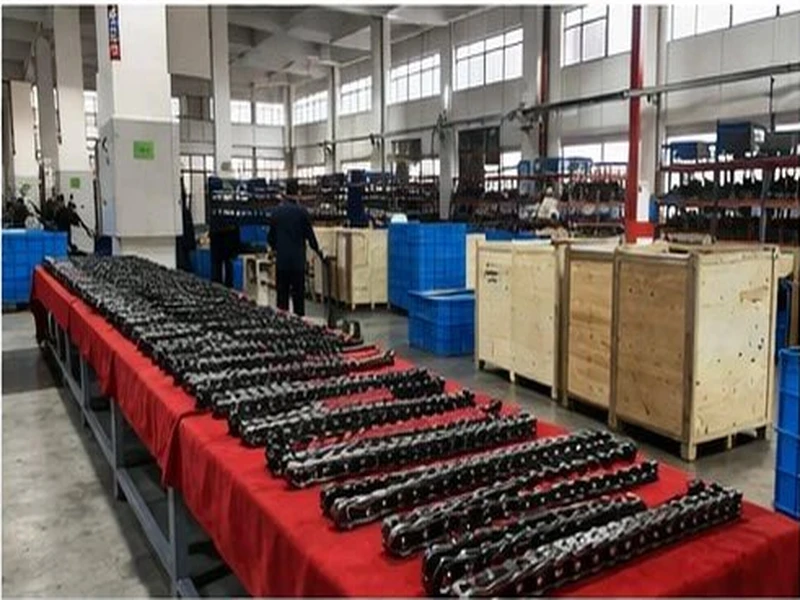
Korea Ever-Power Motorcycle Chain Co., Ltd. — Πιστοποίηση ISO 9001 · 5 εγκαταστάσεις παραγωγής
Chain and Sprocket Sets — All Pitches In Stock
Order chain and sprockets together for correct pitch compatibility and simplified service. Dispatch within 3–7 business days. Contact us with your motorcycle make, model, and year and we confirm both chain specification and sprocket tooth count before ordering.
Συχνές ερωτήσεις
Order Chain and Sprockets Together
Korea Ever-Power supplies both motorcycle chains and matching sprockets for all standard pitches — 420 through 530. Send us your motorcycle make, model, and year and we confirm the correct chain type, tooth counts, and compatibility before you order.
Επιμέλεια: Cxm