La réponse honnête : cela dépend de trois choses
La durée de vie d'une chaîne de moto est l'un des paramètres d'entretien les plus variables en moto. Interrogez dix motards différents et vous obtiendrez des réponses allant de 5 000 km à plus de 30 000 km ; et toutes ces estimations peuvent être exactes en fonction du type de chaîne, des habitudes d'entretien et des conditions de conduite. Il est impossible de répondre à la question « combien de temps dure une chaîne de moto ? » par un simple chiffre sans préciser ces trois facteurs.
L'allongement de la chaîne — la variation mesurable de sa longueur sur 20 maillons qui déclenche son remplacement — est dû à l'usure à l'interface axe-bague à l'intérieur de chaque joint. La norme JIS B 1801 définit le seuil de remplacement à 3% au-dessus de la longueur nominale de 20 maillons : 327 mm pour les chaînes au pas de 15,875 mm (longueur nominale : 317,5 mm) et 261,6 mm pour les chaînes au pas de 12,70 mm (longueur nominale : 254,0 mm). Chaque variable influant sur la rapidité avec laquelle ce seuil est atteint — homogénéité de la lubrification, exposition aux contaminants, charge, type de joint, conception de la bague — détermine la durée de vie pratique de la chaîne.
Durée de vie réaliste — selon le type de chaîne et l'entretien
| Type de chaîne | Maintenance disciplinée | Maintenance réaliste | Irrégulier / négligé |
|---|---|---|---|
| Standard non scellé | 12 000 à 18 000 km | 8 000 à 12 000 km | 3 000 à 6 000 km |
| Grade H non scellé | 15 000 à 22 000 km | 10 000 à 15 000 km | 4 000 à 8 000 km |
| Joint torique scellé | 20 000 à 28 000 km | 15 000 à 22 000 km | 8 000 à 14 000 km |
| Joint torique scellé | 24 000 à 32 000 km | 18 000 à 26 000 km | 10 000 à 18 000 km |
| Super X-Ring scellé | 28 000 à 38 000 km | 22 000 à 32 000 km | 14 000 à 22 000 km |
Conditions supposées : Ces chiffres concernent une utilisation sur route principalement goudronnée, pour les moteurs de 125 à 250 cm³ (norme H) et de 400 à 600 cm³ (versions biturbo). En tout-terrain, sur circuit ou avec un passager chargé, la consommation sera nettement réduite. Dans des conditions de conduite sèches, propres et bien entretenues, elle sera plus élevée.
Facteur 1 — Consistance de la lubrification
La lubrification est le facteur déterminant de la durée de vie des chaînes non étanches. L'interface axe-bague fonctionne sous forte pression de contact sans lubrification externe ; chaque articulation sous charge enlève des particules de métal microscopiques des deux surfaces. Tant que le film lubrifiant à cette interface est maintenu, le frottement et l'usure sont faibles. S'il s'assèche ou disparaît, l'usure augmente fortement.
Conséquence pratique : une chaîne standard 428 lubrifiée systématiquement tous les 400 à 500 km peut durer de 15 000 à 18 000 km. La même chaîne, lubrifiée tous les 1 500 à 2 000 km selon les besoins du motard, ne doit généralement être remplacée qu’après 6 000 à 8 000 km. Un manque total de lubrification pendant une période prolongée peut entraîner la mise à la casse d’une chaîne standard en moins de 3 000 km sur une moto de route de 250 cm³. Ce n’est pas une exagération : une chaîne sèche et non étanche s’use plusieurs fois plus vite qu’une chaîne correctement lubrifiée.
Les chaînes étanches (à joints toriques, à joints en X, à joints en X renforcés) sont beaucoup moins sensibles à la fréquence de lubrification externe car la graisse appliquée en usine à l'interface axe-bague assure une lubrification interne continue, quelles que soient les conditions d'utilisation. Une chaîne étanche qui manque trois lubrifications consécutives continue de protéger l'interface d'usure critique. Dans la même situation, une chaîne non étanche se retrouve sans graisse au niveau de la bague.
Facteur 2 — Type de chaîne et conception du joint
Le type de chaîne est le deuxième facteur déterminant de sa durée de vie, et c'est celui qui peut être choisi avant même de commencer à rouler. La différence entre une chaîne standard non étanche et une chaîne étanche Super X-ring, dans les mêmes conditions et avec le même programme d'entretien, réside dans le fait que le seuil d'allongement 3% sera atteint soit à 12 000 km, soit à plus de 30 000 km.
Standard — Bague enroulée, sans joint
L'interface axe-bague dépend entièrement d'un lubrifiant appliqué de l'extérieur. Entre deux lubrifications, le film lubrifiant s'amincit. Après la pluie, il est lessivé. Après une sortie sur chaussée mouillée, il peut avoir complètement disparu. L'usure entre les opérations de maintenance est importante et, sous une charge prolongée, la jointure de la bague incurvée peut s'ouvrir légèrement, accélérant ainsi l'usure de l'axe.
Joint torique — Bague pleine, joint à simple lèvre
La graisse appliquée en usine assure l'étanchéité de chaque joint dès l'assemblage. La bague à alésage plein garantit une géométrie d'alésage constante. L'interface axe-bague est lubrifiée en permanence, indépendamment de la fréquence d'entretien externe. Le taux d'usure est nettement inférieur à celui d'une chaîne non étanche dans des conditions comparables. Durée de vie 2 à 3 fois supérieure à la normale dans des conditions identiques.
Joint torique en X — Joint à double lèvre, rétention améliorée
Deux lèvres d'étanchéité de chaque côté assurent une meilleure rétention de la graisse à long terme que la lèvre unique d'un joint torique, car le joint épouse la surface de la plaque au fil du temps. Un frottement d'étanchéité réduit (environ 20% de moins qu'un joint torique) limite la génération de chaleur à l'interface d'étanchéité pendant toute la durée de vie de la chaîne. Durée de vie 3 à 4 fois supérieure à la durée de vie standard.
Super X-Ring — Triple lèvre, rétention maximale
Trois lèvres de contact par côté assurent l'étanchéité malgré l'usure des lèvres extérieures sur un kilométrage élevé ; la lèvre intérieure continue d'assurer l'étanchéité tandis que les lèvres extérieures épousent progressivement la surface de la plaque. Ce mécanisme permet d'espacer les entretiens jusqu'à 1 000 à 1 500 km et offre la durée de vie totale la plus longue de la gamme des chaînes à rouleaux standard. Durée de vie 3 à 5 fois supérieure à la durée de vie standard.
Facteur 3 — Conditions de conduite et charge
Les conditions de conduite influent sur la durée de vie de la chaîne par deux mécanismes : la contamination et la charge. Sur des routes propres, sèches et goudronnées, à vitesse modérée, l’usure de la chaîne est minimale : le lubrifiant externe reste plus longtemps en contact avec la chaîne, aucun abrasif ne pénètre dans la zone axe-bague, et la tension de la chaîne en conduite urbaine normale est bien inférieure à sa capacité nominale.
La pluie, l'eau salée et les saletés de la route chassent le lubrifiant externe et introduisent des agents corrosifs à l'interface galet-pignon. La boue et le sable sont directement abrasifs : les particules abrasives coincées entre le galet et la dent du pignon accélèrent simultanément l'usure des dents et du galet. Une seule sortie sur le sable de la plage ou dans la poussière agricole après la récolte peut enlever davantage de matière de la zone de guidage des axes d'une chaîne non lubrifiée que des centaines de kilomètres sur un asphalte propre.
La charge influe sur l'usure de la chaîne par le biais de sa tension. Une moto de tourisme chargée génère une tension de chaîne plusieurs fois supérieure à celle de la même moto pilotée seul, sans bagages, à la même position d'accélérateur. Le transport d'un passager, de bagages lourds et les fortes accélérations prolongées augmentent la tension moyenne de la chaîne et, par conséquent, l'usure des axes de la chaîne.
- Routes pavées propres et sèches
- Programme de lubrification régulier
- Voyage en solo, sans bagages
- Conduite souple, accélération progressive
- Type de chaîne étanche
- Pluie, routes salées, exposition à la boue
- Lubrification sporadique ou interrompue
- Conduire à deux avec des bagages lourds
- Accélération agressive, freinage brutal
- Chaîne non étanche dans des conditions variables

Comment mesurer l'usure d'une chaîne — La méthode définitive à 20 maillons
L'inspection visuelle ne suffit pas à déterminer quand une chaîne doit être remplacée. Une chaîne peut paraître propre et sans rouille tout en étant considérablement allongée ; l'aspect extérieur des maillons ne renseigne en rien sur l'usure des axes et des bagues. Seule la mesure est un indicateur fiable.
- 1
Trouvez le point le plus étroit : Faites tourner lentement la roue arrière d'un tour complet tout en exerçant une légère pression vers le haut sur la chaîne à mi-longueur. Le point où la chaîne est la plus tendue correspond à l'endroit où le jeu est minimal. L'usure de la chaîne étant irrégulière en raison d'une légère excentricité du pignon, la mesure effectuée à ce point précis donne la valeur d'allongement la plus représentative. - 2
Mesurez 20 liens consécutifs : Placez le zéro d'une règle en acier au centre d'une goupille, puis mesurez la distance jusqu'au centre de cette goupille, 20 maillons plus loin. Appliquez une légère tension sur le segment de chaîne mesuré ; laissez la gravité agir naturellement, sans tirer. - 3
Comparer au seuil de remplacement : Pour un pas de 15,875 mm (séries 520/525/530) : valeur nominale 317,5 mm, remplacement à 327 mm. Pour un pas de 12,70 mm (série 428) : valeur nominale 254,0 mm, remplacement à 261,6 mm. Ces seuils sont définis par la norme JIS B 1801 comme la limite d’allongement 3% au-delà de laquelle la géométrie d’engrènement du pignon est compromise. - 4
Prévoir le remplacement avant le seuil, pas après : Dès qu'une chaîne atteint le seuil de 3%, la géométrie d'engagement chaîne-pignon est compromise : la chaîne remonte sur la dent et l'usure des extrémités des dents du pignon s'accélère. Un remplacement à un allongement de 2,5% (avant ce seuil) préserve les pignons et évite un remplacement d'urgence de la chaîne.

Autres signaux indiquant qu'il faut remplacer maintenant, et non plus tard.
La mesure à 20 maillons est le principal indicateur de remplacement, mais plusieurs autres conditions nécessitent un remplacement immédiat indépendamment de la mesure d'allongement :
Lien rigide
Tout maillon qui ne fléchit pas librement sur toute son amplitude de mouvement est tordu ou endommagé. Un maillon rigide ne peut pas s'engager correctement sur le pignon et finira par provoquer le saut de la chaîne sous charge ; remplacez-le immédiatement.
La chaîne est très haute sur le pignon
Si la chaîne peut être suffisamment écartée du pignon arrière pour exposer plus de la moitié de la hauteur de la base de la dent, son allongement est excessif. La chaîne ne repose plus correctement dans le creux de la dent et l'usure du pignon s'accélère rapidement.
Présence de rouille visible sur les surfaces internes
La présence de rouille sur les rouleaux, les plaques intérieures ou entre les plaques indique une corrosion à l'interface axe-bague. Un joint rouillé présente une usure importante de la surface de contact ; la résistance à la traction réelle de la chaîne peut donc être bien inférieure à sa valeur nominale.
Dommages au joint d'étanchéité de la chaîne scellée
Des joints toriques ou en X fissurés, manquants ou usés indiquent une défaillance du joint d'étanchéité interne au niveau de ces articulations. La chaîne continuera de fonctionner, mais ces articulations ne seront plus étanches, ce qui entraîne une usure accrue. Si plusieurs joints sont endommagés, leur remplacement est nécessaire.

Remplacez toujours les pignons par la chaîne : Les dents usées d'un pignon forment un crochet ou un profil asymétrique qui accélère l'usure de la chaîne neuve dès le premier kilomètre. Une chaîne neuve montée sur des pignons usés peut atteindre le seuil de remplacement en deux fois moins de kilomètres que la distance d'entretien normale. Lors du remplacement de la chaîne, inspectez les pignons avant et arrière. Le pignon avant (arbre intermédiaire) est plus petit et s'use généralement plus vite ; en cas de doute, remplacez-le en même temps que la chaîne. Consultez notre guide complet. chaîne et pignon de moto Gamme de remplacement adaptée à tous les terrains.
La qualité avant tout — Testé par lot avant expédition
La qualité initiale de la chaîne est également importante. Axes en acier allié cémenté, essais de traction par lots, vérification dimensionnelle selon les normes JIS B 1801 et contrôle de l'articulation des maillons rigides : ce sont les points de contrôle de production qui déterminent le niveau de qualité maximal de la chaîne avant que la maintenance et les conditions d'utilisation n'influencent sa durée de vie réelle.


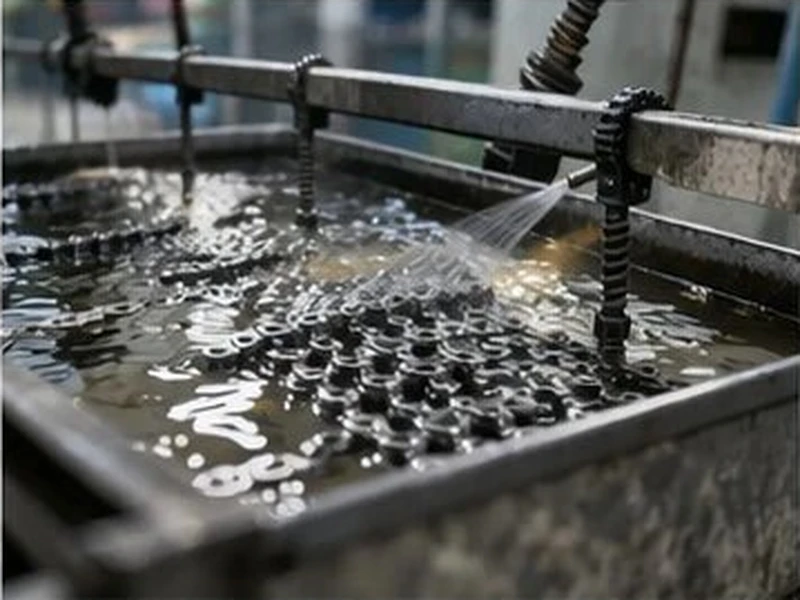

Korea Ever-Power Motorcycle Chain Co., Ltd. — Certifiée ISO 9001 · 5 sites de production
Choisissez le type de chaîne qui correspond à vos habitudes d'entretien réelles.
Tous les types de chaînes sont en stock — du 420 au 530, standard au Super X-ring. Expédition sous 3 à 7 jours ouvrables.
Foire aux questions
Choisissez une chaîne qui dure plus longtemps
Korea Ever-Power propose tous les types de chaînes, de la standard à la Super X-ring, dans tous les pas de 420 à 530. Envoyez-nous le numéro de votre chaîne ou le modèle de votre moto et nous confirmerons le type adapté à vos habitudes d'entretien et à vos conditions de conduite avant que vous ne passiez commande.
Éditeur : Cxm