Produktbeschreibung
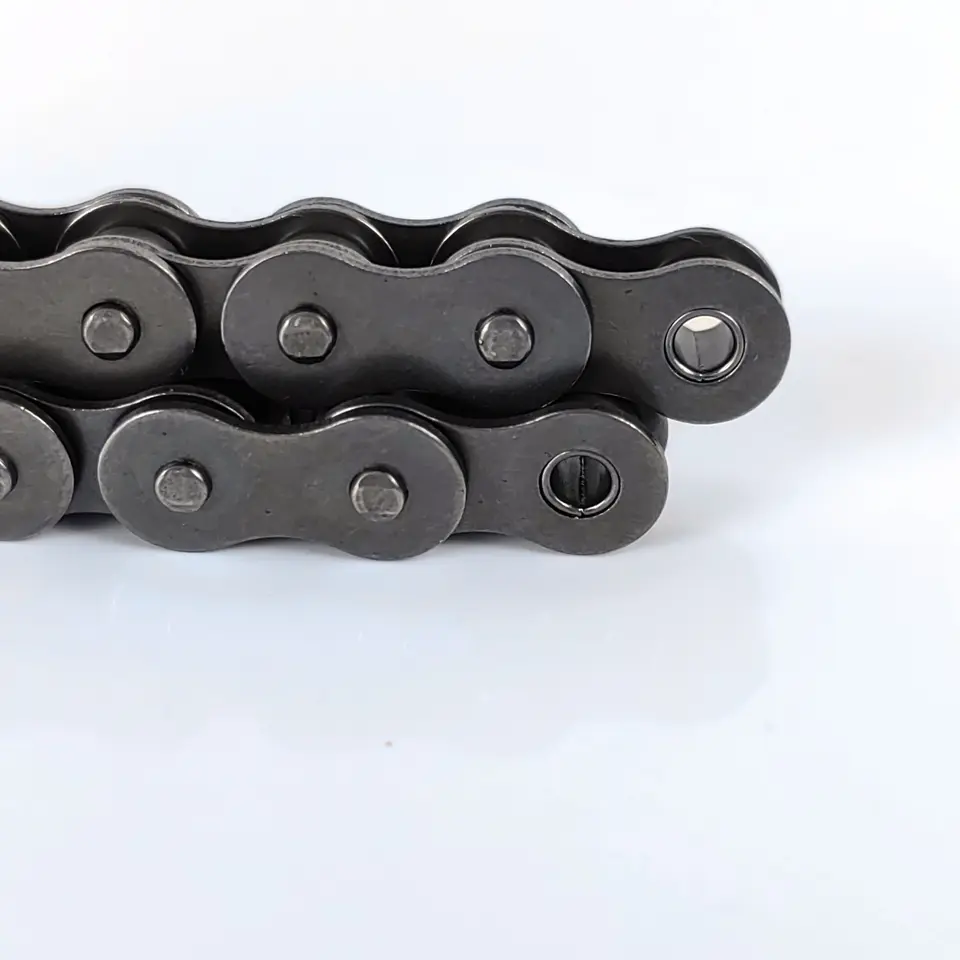
| 1)Typ | Rollenkette |
| 2) Materialien | Stahl: 40Mn (Platte), 30CrMnTi (Stift), 20Mn (Buchse), Mn10 (Rolle), 65Mn (Klammer) |
| 3)Kettennummer | 420h/428h/520h/525h/530h |
| 4)Lebenslang | 30000 km |
| 5) Funktion | Antriebskette |
| 6) Mindestbestellmenge | 100 Meter |
| 7) Versorgungsfähigkeit | 100.000 Meter pro Jahr |
| 8) Zugfestigkeit | Standard |
| 9) Lieferzeit | innerhalb von 30 Tagen nach Eingang Ihrer 30%-Einlagen |
| 10) Zahlungsbedingungen | 30%deposit and balanced by L/C,T/T |
| 11) Verpackung | Kettenverpackung in Polybeutel und Farbbox, Verpackung nach Ihren Wünschen möglich. |
Unsere Dienstleistungen
Vorverkauf:
1. OEM- und ODM-Service
2. Jede Ihrer Anfragen wird innerhalb von 24 Stunden beantwortet.
3. Vollständige Produktinformationen werden angeboten.
4. Auf Wunsch senden wir Ihnen gerne ein kostenloses Muster zu.
5. Alle weiteren angemessenen Anforderungen gemäß Anfrage
Während der Produktion bieten wir Folgendes an:
1. Produktionsplan
2. Es wird ein Bild aus der Massenproduktion angeboten.
3. Alle weiteren angemessenen Anforderungen gemäß Anfrage
Produktion abschließen:
1. Sendungsverfolgungsnummer des Kurierdienstes
2. Benötigte Dokumente
3. Schutz Ihres Verkaufsgebiets, Ihrer Designideen und all Ihrer vertraulichen Informationen.
Häufig gestellte Fragen:
Frage 1: Führen Sie eine Qualitätskontrolle der fertigen Produkte durch?
A: Ja, jeder Produktionsschritt und die fertigen Produkte werden vor dem Versand von der Qualitätskontrolle geprüft.
Frage 2: Welche Garantie bieten Sie für Ihre Produkte?
A: Normalerweise gewähren wir eine Garantie von einem Jahr ab Lieferdatum, dies hängt jedoch vom jeweiligen Produkt ab.
Frage 3: Sind Sie ein Hersteller oder ein Handelsunternehmen?
A: Beides trifft auf uns zu. Wir sind seit fast 20 Jahren im Motorradteilegeschäft tätig.
Frage 4: Wie kann ich die Fabrik besichtigen?
A: Hinterlassen Sie uns eine Nachricht, und wir holen Sie kostenlos mit dem Auto ab.
Frage 5: Können Sie ein individuelles Logo auf die Kette anbringen?
A: Ja, wir können individuelle Logos im Formverfahren herstellen. Wir benötigen Ihr Autorisierungsschreiben.
| Typ: | Kette |
|---|---|
| Material: | Stahl |
| Zertifizierung: | ISO9001:2001 |
| Zeilennummer: | Einzelreihe |
| Oberflächenbehandlung: | Sandstrahlen, Ölen |
| Transportpaket: | Polybeutel + Farbbox + Karton |
| Proben: |
US$ 0/Stück
1 Stück (Mindestbestellmenge) | |
|---|
| Anpassung: |
Verfügbar
| Kundenspezifische Anfrage |
|---|

Kann eine Motorkette auch für Anwendungen mit vertikaler Bewegung eingesetzt werden?
Ja, Motorketten können auch in Anwendungen mit vertikaler Bewegung eingesetzt werden. Vertikale Bewegung bezeichnet Anwendungen, bei denen die Kette Lasten vertikal hebt oder senkt. Motorketten werden häufig in verschiedenen Systemen mit vertikaler Bewegung verwendet, beispielsweise in Aufzügen, Vertikalförderern, Hebevorrichtungen und Brückenkränen.
Bei der Verwendung einer Motorkette für vertikale Bewegungen sind folgende Faktoren zu berücksichtigen:
1. Tragfähigkeit:
Stellen Sie sicher, dass die Motorkette über eine ausreichende Tragfähigkeit verfügt, um das Gewicht der zu hebenden oder abzusenkenden Last zu tragen. Die Wahl einer Kette mit geeigneter Tragfähigkeit ist entscheidend für einen sicheren und effizienten Betrieb.
2. Vorspannung und Ausrichtung:
Bei Anwendungen mit vertikaler Bewegung sind die korrekte Spannung und Ausrichtung der Motorkette entscheidend. Die Kette muss ausreichend gespannt sein, um übermäßiges Spiel oder Durchhängen zu vermeiden, da dies ihre Leistung beeinträchtigen und das Risiko einer Entgleisung erhöhen kann.
3. Sicherheitsmechanismen:
Um einen sicheren Betrieb zu gewährleisten und Unfälle bei Anwendungen mit vertikaler Bewegung zu vermeiden, sollten geeignete Sicherheitsmechanismen wie Endschalter oder Überlastschutzvorrichtungen implementiert werden. Diese Mechanismen helfen, abnormale Zustände wie übermäßige Last oder Kettenspannung zu erkennen und darauf zu reagieren.
4. Schmierung und Wartung:
Regelmäßige Schmierung und Wartung sind für die einwandfreie Funktion und lange Lebensdauer der Motorkette bei vertikalen Bewegungsanwendungen unerlässlich. Achten Sie auf eine ausreichende Schmierung der Kette, um Reibung und Verschleiß zu minimieren.
5. Einhaltung der Vorschriften:
Stellen Sie sicher, dass die Motorkette und die zugehörigen Komponenten den geltenden Sicherheits- und Branchenvorschriften für Anwendungen mit vertikaler Bewegung entsprechen. Dies umfasst die Einhaltung von Normen und Richtlinien hinsichtlich Tragfähigkeit, Materialien, Konstruktion und Installation.
Unter Berücksichtigung dieser Faktoren und Einhaltung ordnungsgemäßer Installations- und Wartungspraktiken kann eine Motorkette effektiv in Anwendungen mit vertikaler Bewegung eingesetzt werden und bietet eine zuverlässige und effiziente Leistung.
Wie schmiert und wartet man eine Motorkette richtig?
Die richtige Schmierung und Wartung sind unerlässlich für die optimale Leistung und Langlebigkeit einer Motorkette. Hier sind die Schritte zur richtigen Schmierung und Wartung einer Motorkette:
1. Kette reinigen: Reinigen Sie die Motorkette vor dem Schmieren, um Schmutz, Ablagerungen und altes Schmiermittel zu entfernen. Verwenden Sie ein geeignetes Reinigungsmittel und eine Bürste oder ein Tuch, um die Kette vorsichtig zu schrubben. Stellen Sie sicher, dass die Kette vollständig trocken ist, bevor Sie fortfahren.
2. Wählen Sie das richtige Schmiermittel: Verwenden Sie ein speziell für Motorketten entwickeltes Schmiermittel. Berücksichtigen Sie bei der Auswahl Faktoren wie Betriebsbedingungen, Temperatur und Belastungsanforderungen. Beachten Sie die Empfehlungen des Herstellers oder holen Sie gegebenenfalls professionellen Rat ein.
3. Schmiermittel auftragen: Tragen Sie das Schmiermittel gleichmäßig auf die gesamte Motorkette auf. Verwenden Sie einen geeigneten Applikator oder eine Sprühflasche, um eine vollständige Abdeckung zu gewährleisten. Achten Sie besonders auf die Kontaktstellen zwischen Kette und Kettenrädern.
4. Überschüssiges Schmiermittel entfernen: Lassen Sie das Schmiermittel nach dem Auftragen einige Minuten in die Kette einziehen. Wischen Sie anschließend überschüssiges Schmiermittel mit einem Tuch ab. Dies verhindert, dass sich Schmutz und Ablagerungen an der Kette ansammeln.
5. Regelmäßige Inspektion: Überprüfen Sie die Motorkette regelmäßig auf Verschleiß, Korrosion oder Beschädigungen. Achten Sie auf Längung, Risse in den Kettengliedern, beschädigte Bolzen oder übermäßiges Spiel. Sollten Sie Mängel feststellen, ergreifen Sie entsprechende Maßnahmen, z. B. den Austausch der Kette oder die Reparatur der beschädigten Bauteile.
6. Kettenspannung einstellen: Überprüfen Sie regelmäßig die Kettenspannung. Eine falsche Spannung kann zu übermäßigem Verschleiß führen und die Kettenleistung beeinträchtigen. Beachten Sie die Herstellerangaben oder wenden Sie sich an einen Fachmann, um die korrekte Kettenspannung sicherzustellen.
7. Wartung planen: Erstellen Sie einen Wartungsplan für die Motorkette. Dieser umfasst regelmäßige Reinigung, Schmierung, Inspektion sowie alle notwendigen Justierungen oder Austauscharbeiten. Halten Sie sich an den Wartungsplan, um die Kette in optimalem Zustand zu halten.
Durch Befolgen dieser Schritte und die Durchführung regelmäßiger Wartungsarbeiten können Sie die Leistung und Lebensdauer Ihrer Motorkette maximieren.

Worin unterscheidet sich eine Motorkette von einer normalen Kette?
Eine Motorkette, auch Kraftübertragungskette genannt, unterscheidet sich von einer herkömmlichen Kette hinsichtlich ihrer Konstruktion und ihres Verwendungszwecks. Hier die wichtigsten Unterschiede:
1. Belastbarkeit: Motorketten sind speziell für höhere Belastungen im Vergleich zu herkömmlichen Ketten ausgelegt. Sie dienen der Kraft- und Bewegungsübertragung zwischen verschiedenen Komponenten in mechanischen Systemen.
2. Präzision und Genauigkeit: Motorketten verfügen oft über präzise Zahnprofile oder Rollensysteme, die eine genaue Positionierung und Synchronisierung der Komponenten gewährleisten. Dies ist wichtig in Anwendungen wie Motoren, wo präzises Timing entscheidend ist.
3. Langlebigkeit und Festigkeit: Motorketten sind für hohe Belastungen, hohe Drehzahlen und Dauerbetrieb ausgelegt. Sie werden aus hochwertigen Materialien und unter Anwendung fortschrittlicher Fertigungstechniken hergestellt, um Langlebigkeit und Festigkeit zu gewährleisten.
4. Schmierung und Wartung: Motorketten benötigen unter Umständen eine spezielle Schmierung, um Reibung und Verschleiß zu reduzieren und einen reibungslosen Betrieb zu gewährleisten. Regelmäßige Wartungsarbeiten, wie z. B. die periodische Inspektion und Schmierung, sind wichtig, um die Kette in optimalem Zustand zu halten.
5. Anwendungsspezifisches Design: Motorketten werden für spezifische Anwendungen wie die Kraftübertragung in Motoren, Fördersystemen oder Hebezeugen entwickelt. Sie werden so konstruiert, dass sie die besonderen Anforderungen dieser Anwendungen erfüllen, wobei Faktoren wie Tragfähigkeit, Drehzahl, Umgebungsbedingungen und Betriebsbedingungen berücksichtigt werden.
Es ist wichtig zu beachten, dass Motorketten zwar für spezifische Anwendungen entwickelt werden, aber hinsichtlich ihrer grundlegenden Konstruktion und Funktionalität Ähnlichkeiten mit herkömmlichen Ketten aufweisen können. Motorketten sind jedoch so konstruiert, dass sie höhere Lasten bewältigen, eine präzise Kraftübertragung gewährleisten und in anspruchsvollen industriellen Umgebungen zuverlässig funktionieren.


Bearbeitet von CX am 11.08.2023