Product Description
Product Description
Product Parameters
| Standard | GB, ISO, ANSI, DIN |
| Type | Standard A and standard B precision roller chain, conveyor chain; |
| special chain with accessories, welding chain, leaf chain and sprocket | |
| ANSI chain No. | 40,50,60,80,100,120,140,160,180,200,240; |
| C40,C50,C60,C80,C100,C120,C140,C160; | |
| DIN/ISO chain No. | 08A,10A,12A,16A,20A,24A,28A,32A,36A,40A,48A; |
| C08A,C10A,C12A,C16A,C20A,C24A,C28A,C32A; | |
| Application | Food processing, pharmaceutical and chemical industries, electronics, machinery; |
| household appliances, automotive manufacturing, metallurgy, sewage treatment | |
| Series | A series,B series |
More Products
Advantage
Certifications
DETAILS ABOUT CZPT CHAIN
Exhibition
Workshop
Application
Packaging Details
Shipping
Contact Information
FAQ
1. Are you manufacturer or trade Company?
We are a factory founded in 1997 with trade team for international service.
2. What terms of payment you usually use?
T/T 30% deposit and 70% against document, Western Union, L/C at sight
3. What is your lead time for your goods?
Normally 35 days after confirmed order. 30 days could be available in low season for some items (during May to July), and 45 days during new year and hot season ( Jan to March).
4. Samples
For customers who need sample confirmation before ordering, please bear in mind that the following policy will be adopted:
1) All samples are free of charge with the maximum value not exceeding USD 100.
2) The courier cost for the first-time sample sending will be charged for by the consignee. We will send the samples with freight to be collected. So please inform your account with FedEx, UPS, DHL or TNT so that we can proceed promptly.
3) The first-time courier cost will be totally deducted from the contract value of the trial cooperation.
4) OEM/ODM are both available.
| Usage: | Transmission Chain, Drag Chain, Conveyor Chain, Dedicated Special Chain |
|---|---|
| Material: | Stainless steel |
| Surface Treatment: | Polishing |
| Feature: | Heat Resistant |
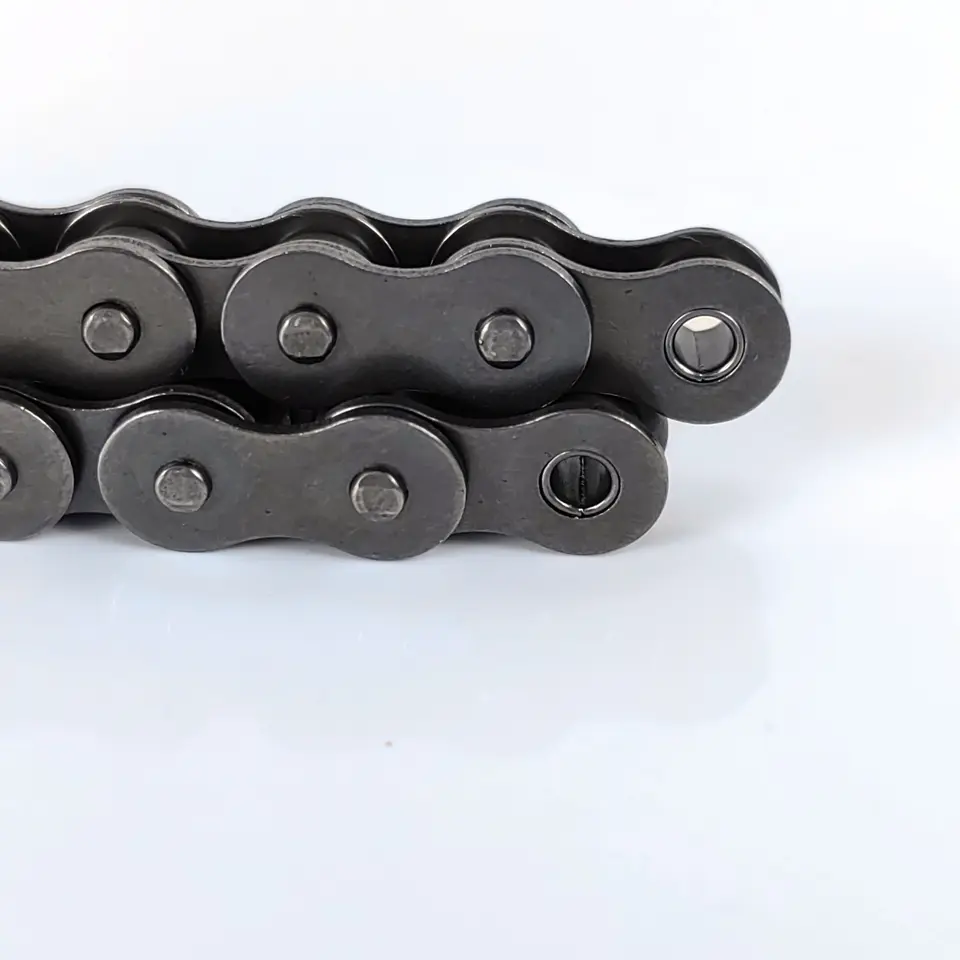
| Chain Size: | 1/2"*11/128" |
| Structure: | Roller Chain |
| Samples: |
US$ 1/Meter
1 Meter(Min.Order) | |
|---|
| Customization: |
Available
| Customized Request |
|---|

Can a motor chain be used in vertical motion applications?
Yes, a motor chain can be used in vertical motion applications. Vertical motion refers to applications where the chain is responsible for lifting or lowering loads vertically. Motor chains are commonly used in various vertical motion systems, such as elevators, vertical conveyors, lifting mechanisms, and overhead cranes.
When using a motor chain for vertical motion, it is important to consider the following factors:
1. Load Capacity:
Ensure that the motor chain has sufficient load-carrying capacity to handle the weight of the load being lifted or lowered. It is crucial to select a chain with a suitable working load limit to ensure safe and efficient operation.
2. Tensioning and Alignment:
Proper tensioning and alignment of the motor chain are critical in vertical motion applications. The chain should be adequately tensioned to prevent excessive slack or sag, which can affect its performance and increase the risk of derailment.
3. Safety Mechanisms:
Implement appropriate safety mechanisms, such as limit switches or overload protection devices, to ensure safe operation and prevent accidents in vertical motion applications. These mechanisms help detect and respond to abnormal conditions, such as excessive load or chain tension.
4. Lubrication and Maintenance:
Regular lubrication and maintenance are essential for the proper functioning and longevity of the motor chain in vertical motion applications. Ensure that the chain is properly lubricated to minimize friction and wear.
5. Compliance with Regulations:
Ensure that the motor chain and associated components comply with relevant safety and industry regulations for vertical motion applications. This includes adherence to standards and guidelines for load capacity, materials, design, and installation.
By considering these factors and following proper installation and maintenance practices, a motor chain can be effectively used in vertical motion applications, providing reliable and efficient performance.
How do you properly lubricate and maintain a motor chain?
Proper lubrication and maintenance are essential for ensuring the optimal performance and longevity of a motor chain. Here are the steps to properly lubricate and maintain a motor chain:
1. Clean the chain: Before lubricating, clean the motor chain to remove any dirt, debris, or old lubricant. Use a suitable cleaning agent and a brush or cloth to gently scrub the chain. Ensure that the chain is completely dry before proceeding.
2. Choose the right lubricant: Select a lubricant specifically designed for motor chains. Consider factors such as the operating conditions, temperature, and load requirements when choosing the lubricant. Consult the manufacturer’s recommendations or seek professional advice if necessary.
3. Apply the lubricant: Apply the lubricant evenly to the entire length of the motor chain. Use a suitable applicator or a spray bottle to ensure thorough coverage. Pay special attention to the contact points between the chain and the sprockets.
4. Remove excess lubricant: After applying the lubricant, allow it to penetrate the chain for a few minutes. Then, use a cloth or rag to wipe off any excess lubricant. This helps prevent the accumulation of dirt and debris on the chain.
5. Regular inspection: Regularly inspect the motor chain for signs of wear, corrosion, or damage. Look for elongation, cracked plates, damaged pins, or excessive play. If any issues are found, take appropriate action, such as replacing the chain or repairing the damaged components.
6. Tension adjustment: Check the tension of the motor chain regularly. Improper tension can cause excessive wear and reduce the chain’s performance. Follow the manufacturer’s guidelines or consult a professional to ensure proper tensioning.
7. Schedule maintenance: Establish a maintenance schedule for the motor chain. This includes regular cleaning, lubrication, inspection, and any necessary adjustments or replacements. Adhere to the schedule to keep the chain in optimal condition.
By following these steps and maintaining a regular maintenance routine, you can maximize the performance and service life of your motor chain.
What are the different types of motor chains available?
Motor chains come in various types, each designed to meet specific requirements of different applications. Here are some common types of motor chains:
1. Roller Chains: Roller chains are the most common type of motor chain. They consist of inner and outer plates connected by rollers. These chains are known for their high strength, durability, and ability to handle heavy loads. Roller chains are widely used in industries such as automotive, industrial machinery, and agriculture.
2. Silent Chains: Silent chains, also known as inverted-tooth chains, feature tooth-shaped plates that engage with each other. They provide smooth and quiet operation, making them suitable for applications requiring low noise levels. Silent chains are commonly used in precision machinery, printing presses, and automotive timing systems.
3. Leaf Chains: Leaf chains have flat, interlocking plates connected by pins. They are primarily used in lifting and hoisting applications, such as forklifts and cranes. Leaf chains are known for their high tensile strength and resistance to fatigue.
4. Conveyor Chains: Conveyor chains are specifically designed for conveying materials in conveyor systems. They feature large, wide plates to support the load and provide smooth movement. Conveyor chains are used in industries such as mining, food processing, and packaging.
5. Timing Chains: Timing chains are used in engines to synchronize the rotation of the crankshaft and camshaft. They have precise tooth profiles that ensure accurate timing of valve operation. Timing chains are commonly found in automotive engines and other internal combustion engines.
6. Specialty Chains: There are also specialized motor chains designed for specific applications. Examples include escalator chains, bicycle chains, motorcycle chains, and marine chains.
Motor chains are available in different sizes, materials, and configurations to suit specific requirements. It is important to select the appropriate chain type based on factors such as load capacity, speed, environment, and application-specific needs.


editor by CX 2023-07-20