Product Description
|
Infeed Height: |
Customized |
|
Out-feed Height: |
Max Height 10 Meters |
|
Chain Width: |
304.8mm, 406.4mm, 609.6mm |
|
Conveyor Speed: |
Max 60 m/min (customized) |
|
Application: |
Cosmetic/Food/Beverage/Packaging Industry,etc |
|
Advantage: |
We have our own injection modling facory |
|
Delivery: |
30-40 days after downpayement |
|
Warranty: |
1 year (except human factor) |
|
Motor brand: |
SEW or Made in China or customized |
|
Test: |
working 24 hours for testing |
Spiral plastic top chain with anti-skidding chain conveyor system
Spiral conveyor is a lifting conveying equipment, mostly used in packaging, pharmaceutical, papermaking, chemical industry, food industry and other fields.As a lifting transimission system, screw conveyor has played a great role.It not only can transfer things from the low to high conveying,but also up to down transporting.Spiral lifting conveyor is climbing in the form of screw.
Features of spiral conveyor:
1.conveying, lifting and picking up cartons and boxes;
2.saving energy in low cost with high performance;
3.saving floor space;
4.flexible retention time;
5.continuous and sound proofing full automatic production, saving labor cost.
6.easier controls integration
Materials required for support frame:can be made of carbon steel baking paint or 201 stainless steel or 304 stainless steel material, using welding support climbing fuselage, support legs using square pipe cross welding, can make the screw conveyor more stable.
|
Model |
Wide/mm |
Radius/mm |
Weight |
|
|
1873-P-K1250/SS1873-P-K1600 |
320 |
150 |
3.0 |
|
|
1873-P-K2400/SS1873-P-K2400 |
609.6 |
150 |
4.0 |
|
|
1873-P-K1600/SS1873-P-K1600 |
406.4 |
150 |
4.1 |
|
|
1873-P-K2400/SS1873-P-K2400 |
609.6 |
125 |
4.8 |
Gravity roller free spiral conveyor
Free roller spiral conveyor is also 1 of screw vertical lifting conveyor,the frame support can be carbon steel,if you have higher budget,stainless steel frame is better.The roller is cone type stainless steel roller.
Spiral conveyor for cases Features
* Continuous transferring, high efficiency;
* Driven by only 1 motor under height of 10m;
* Can be customized, variety of models;
* Widely application, stable and reliable;
* Easy to operate and maintain.
Plastic flexible chain spiral conveyor
The Spiral Flex Conveyor is a proven reliable concept in vertical conveying. It is designed to conserve valuable floor space. The
Spiral Flex Conveyor transports up or down in a continuous flow. With a speed of 45m/minute and loads up to 10 kg/m the single
lane facilitates a high continuous throughput.
Spiral cooling tower
Modular belt spiral conveyor
For more details, please write to us.
Why Choose US
Q1. Are you trading company or manufacturer?
A: We’re manufacturer. We have our own factory and experienced technicans.
Q2. What is your terms of payment?
A: T/T 30% as deposit, and 70% before delivery. We’ll show you the photos of the products and packages before you pay the balance.
Q3. What is your terms of delivery and delivery time?
A: EXW, FOB, CFR, CIF, DDU, etc.
Generally, it will take7 to 20 days after receiving your advance payment. The specific delivery time depends on the items and the quantity of your order.
Q4. Can you produce according to the samples?
A: Yes, we can produce by your samples or technical drawings. We can build the molds and fixtures.
Q5. What is your sample policy?
A: We can supply some certain small sample if we have ready parts in stock, but the customers have to pay the sample cost and the courier cost.
Q6. Do you test all your goods before delivery?
A: Yes, we have 100% test before delivery
Q7: How do you make our business long-term and good relationship?
A:1. We keep good quality and competitive price to ensure our customers benefit ;
2. We respect every customer as our friend and we sincerely do business and make friends with them, no matter where they come from.
For more details, please write to us.
| After-sales Service: | Online Support and Supply Conveyor Parts |
|---|---|
| Warranty: | Online Support and Supply Conveyor Parts |
| Structure: | Roller Conveyor |
| Material: | Stainless Steel |
| Material Feature: | Heat Resistant |
| Application: | Chemical Industry, Grain Transport, Power Plant |
| Samples: |
US$ 180/Meter
1 Meter(Min.Order) | |
|---|
| Customization: |
Available
| Customized Request |
|---|
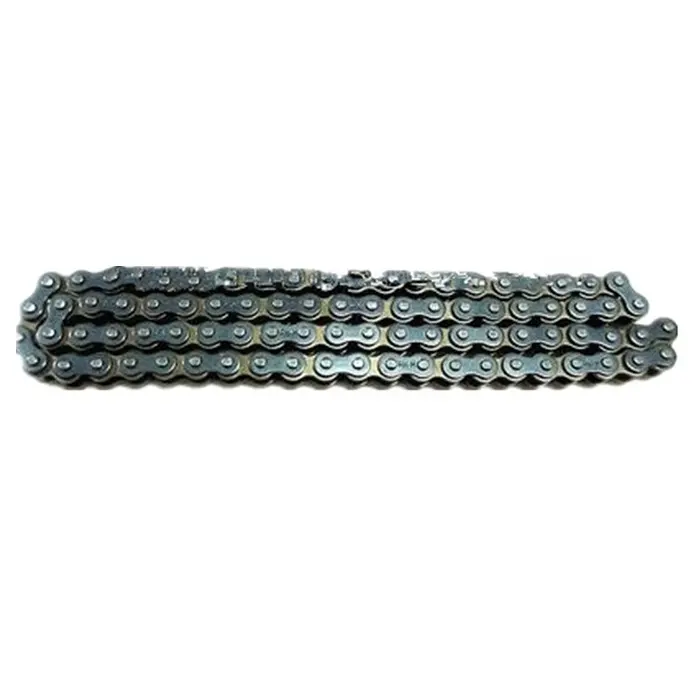
What are the signs of wear and tear in a motor chain?
Over time, a motor chain can experience wear and tear due to usage, environmental factors, and lack of proper maintenance. It’s important to monitor the condition of the motor chain regularly to identify signs of wear and address them promptly. Here are some common signs of wear and tear in a motor chain:
1. Chain elongation: One of the most noticeable signs of wear in a motor chain is elongation. The chain may appear longer than its original length due to stretching and wear of the pins, bushings, and rollers. Excessive chain elongation can cause poor performance, increased noise, and affect the overall efficiency of the system.
2. Increased chain noise: As a motor chain wears, it can produce more noise during operation. Excessive noise can indicate worn-out or damaged components, such as pins, bushings, or rollers. It’s important to investigate and address the source of the noise to prevent further damage and ensure smooth operation.
3. Chain slack or looseness: If the motor chain exhibits excessive slack or looseness, it may indicate wear and elongation. Proper tension is essential for the efficient transfer of power, and a loose chain can cause slippage and decreased performance.
4. Visible signs of damage: Inspect the motor chain visually for any visible signs of damage, such as broken links, cracked plates, or worn-out pins and bushings. These signs indicate significant wear and may require immediate attention or replacement of the chain.
5. Uneven wear: Uneven wear patterns on the chain’s components, such as unevenly worn pins or bushings, can indicate misalignment or other issues. Identifying and addressing the cause of uneven wear is crucial to prevent further damage and ensure proper chain performance.
Regular inspection and maintenance can help identify these signs of wear and tear in a motor chain. If any of these signs are observed, it is recommended to consult a professional or the chain manufacturer for further evaluation and guidance on appropriate maintenance or replacement.

Can a motor chain be repaired if it gets damaged?
Yes, in some cases, a motor chain can be repaired if it gets damaged. However, the repairability of a motor chain depends on the extent and type of damage. Here are some common types of motor chain damage and their potential repair options:
1. Chain elongation: If the motor chain has experienced elongation due to wear or improper tension, it may be possible to adjust the tension or remove a damaged link to restore the chain’s length. However, excessive elongation may indicate significant wear and require chain replacement.
2. Broken or damaged links: If a few links in the motor chain are broken or damaged, it may be possible to replace those specific links or repair them using chain repair tools or specialized techniques. However, if the damage is extensive or affects multiple links, it is generally more cost-effective to replace the entire chain.
3. Cracked or damaged plates: If the chain plates are cracked or significantly damaged, repair may not be feasible or advisable. Cracked plates compromise the chain’s strength and integrity, and replacing the chain is usually the recommended solution.
4. Damaged pins or bushings: If the pins or bushings in the motor chain are damaged or worn out, they can sometimes be replaced individually using appropriate tools and techniques. However, if the damage is extensive or affects multiple pins or bushings, it is best to replace the chain.
It’s important to note that attempting repairs on a motor chain requires knowledge and expertise in chain repair techniques. It is recommended to consult a professional or the chain manufacturer for guidance on whether a repair is possible and advisable based on the specific damage and chain type.

What is a motor chain and how is it used?
A motor chain, also known as a power transmission chain, is a mechanical device used to transmit power from a motor or engine to various parts of a machine or system. It consists of a series of interconnected links that form a flexible and durable chain.
Motor chains are commonly used in a wide range of applications, including automotive, industrial machinery, agricultural equipment, and conveyor systems. They play a vital role in transmitting rotational motion and power from the motor to different components such as wheels, gears, sprockets, or pulleys.
Here’s how a motor chain is typically used:
1. Power Transmission: The primary function of a motor chain is to transmit power from the motor to other parts of the system. When the motor rotates, it drives the chain, which in turn drives the connected components, enabling them to perform their intended functions.
2. Speed and Torque Conversion: Motor chains are designed to transmit power at different speeds and convert the torque between the motor and the driven components. By selecting appropriate sprocket sizes and chain lengths, the rotational speed and torque can be adjusted to suit the requirements of the system.
3. Flexibility and Adaptability: Motor chains are flexible and adaptable, allowing them to be used in various orientations and configurations. They can accommodate misalignment, uneven loads, and changes in direction, making them suitable for complex machinery and systems.
4. Maintenance and Lubrication: Proper maintenance and lubrication are essential for the reliable operation of motor chains. Regular inspection, cleaning, and lubrication help reduce friction, wear, and corrosion, ensuring optimal performance and longevity of the chain.
Motor chains come in different sizes, designs, and materials to suit specific applications. Selecting the right chain for a particular system involves considering factors such as load capacity, speed, environment, and compatibility with other components. It is important to follow the manufacturer’s guidelines and industry standards to ensure safe and efficient operation.


editor by CX 2023-09-12